
콘텐츠로 건너뛰기
Atlas Anatolia
디그
뉴스술라웨시 빙하기 치아에서 빈랑 사용 25,000년 전까지 소급카스타모누 폼페이오폴리스 바실리카에서 로마 모자이크와 에로스 두상 발견
Temple columns and monumental gate at Uzuncaburç

Wikimedia Commons (CC BY-SA)

도시

Uzuncaburc

Seyfi Cem Baskin

300 기원전 – 700 서기

The ancient city of Olba/Diocaesarea, featuring an impressive Hellenistic temple of Zeus, a monumental Roman gate, colonnaded streets, and one of the most intact ancient cityscapes in Mediterranean Turkey.

312
관심 33

위치

Mersin · Mediterranean · 튀르키예

36.60°N · 33.95°E · 아시아

Temple of Zeus Olbios

One of earliest Corinthian temples (c. 300 BCE)

Political System

Ruled by dynasty of priest-kings

Roman Gate

Monumental triple-arched entrance (1st century CE)

Standing Columns

30 columns of the Zeus temple partially intact

Water Infrastructure

Features a well-preserved Roman aqueduct and a monumental nymphaeum (fountain house) from the 2nd century CE.

Epigraphic Corpus

Over 200 Greek and Latin inscriptions have been recorded, detailing civic life, religious dedications, and the priest-king dynasty.

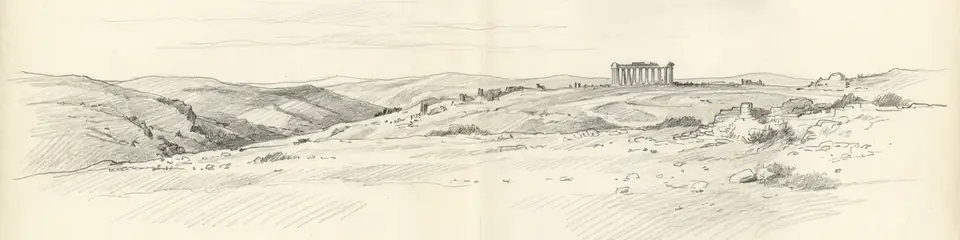
Graphite pencil sketch banner of Uzuncaburc

“The Temple of Zeus Olbios is architecturally significant as one of the earliest known uses of the Corinthian order in temple architecture — predating many of the more famous Corinthian temples of the Roman world.”

위키백과에서

Uzuncaburc (ancient Olba/Diocaesarea) is an ancient city in Mersin Province, Turkey, known for its Hellenistic Temple of Zeus Olbios and well-preserved Roman cityscape.

위키백과에서 전체 기사 읽기 →

위치

개요

Uzuncaburc — ancient Olba, later renamed Diocaesarea — is one of the most atmospherically complete ancient city sites in Turkey. Situated on a limestone plateau in the foothills of the Taurus Mountains north of Silifke, the site preserves a remarkable concentration of Hellenistic and Roman architecture that gives the visitor a vivid sense of walking through an ancient city.

The Temple of Zeus Olbios, built around 300 BCE, is one of the earliest Corinthian-order temples known and one of the few Hellenistic temples in Anatolia that still stands to significant height. Its thirty columns — some still bearing their capitals and architrave — dominate the site.

"The temple of Zeus Olbios is a magnificent structure of the Hellenistic age, with columns of the Corinthian order."
— Strabo, Geographica (c. 20 BC - 23 AD)

A monumental triple-arched Roman gate from the 1st century CE marks the entrance to the city and leads to colonnaded streets lined with the remains of shops and public buildings. A well-preserved Roman theatre, nymphaeum, and tower tombs add to the cityscape, while an early Christian basilica attests to the site's continued importance into the Byzantine period.

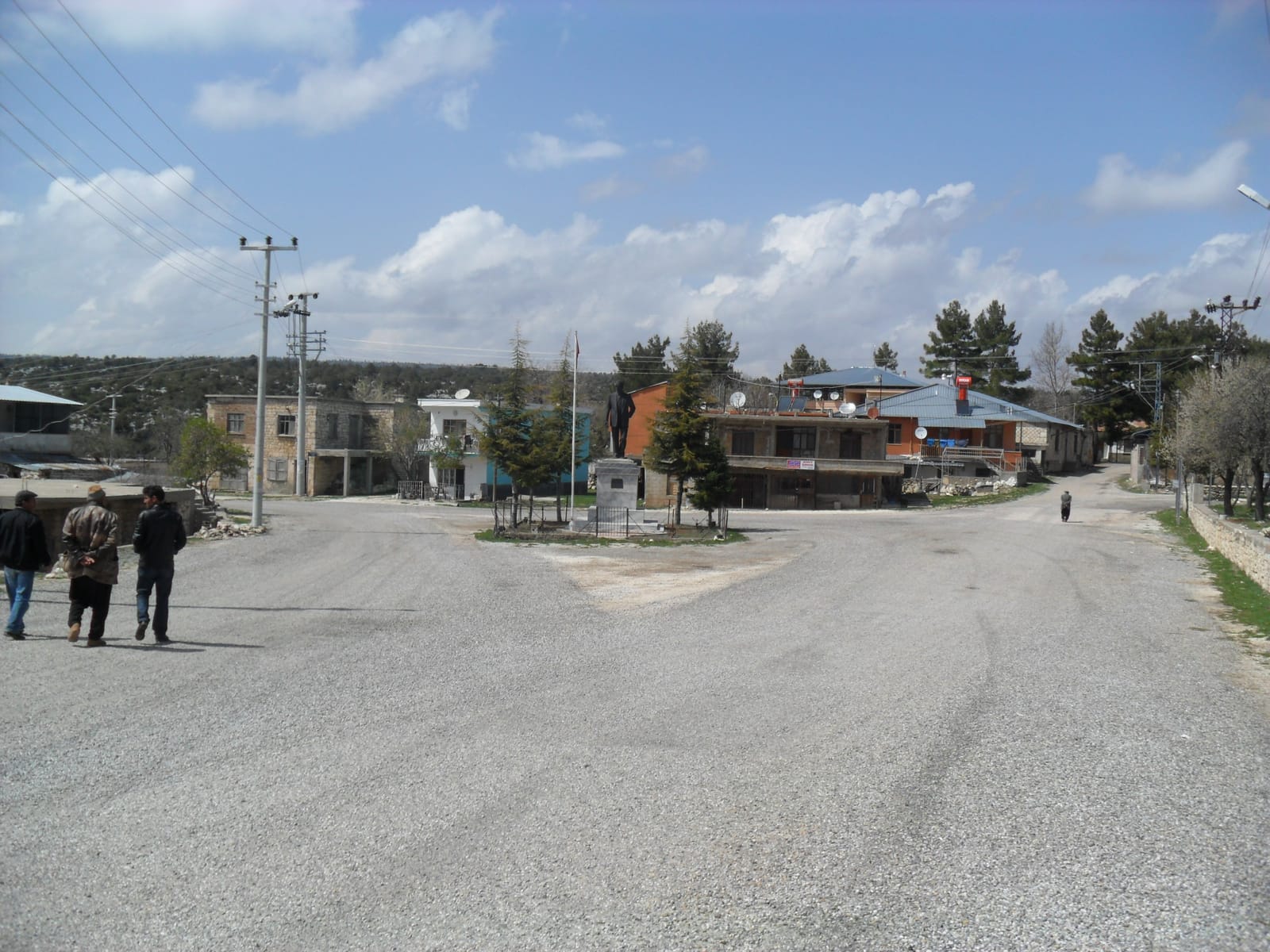
The dynasty of priest-kings who ruled from Olba controlled the surrounding territory of Rough Cilicia and maintained a degree of autonomy even under Roman rule. Their fortress at nearby Ura (modern Uzuncaburc village) served as the administrative center of this semi-independent priestly state.
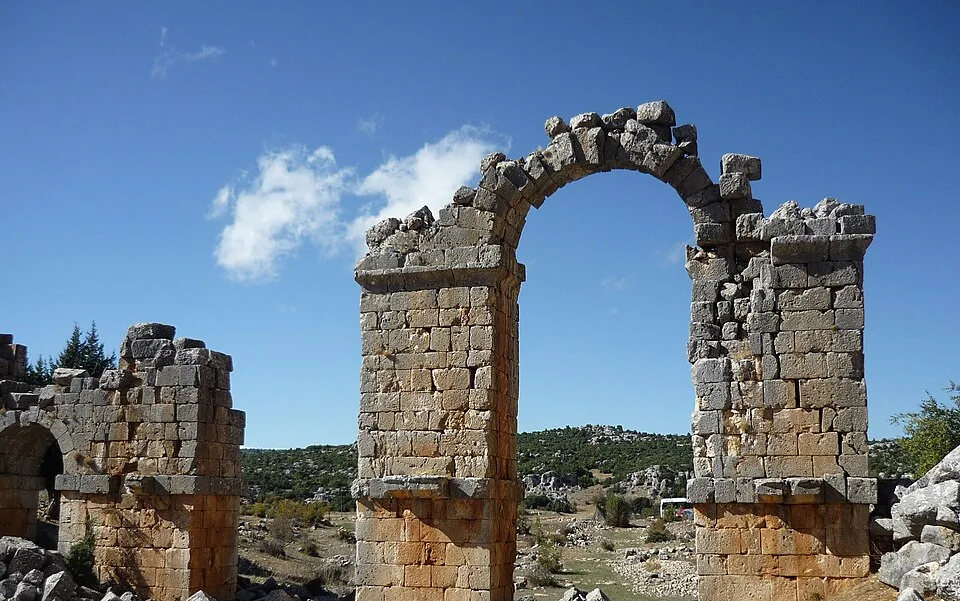
Olba ancient city Roman aqueduct ruins 2
Olba ancient city Roman aqueduct ruins 2 | Cobija (CC BY-SA 3.0)

Beyond its monumental core, the city's urban fabric reveals a sophisticated infrastructure. A Roman aqueduct channeled water from mountain springs to a central nymphaeum (fountain house) and throughout the settlement, supporting daily life and public baths. The colonnaded street, lined with shops and civic buildings, formed the commercial and social spine of Diocaesarea. The city's prosperity was underpinned by its control over strategic mountain passes connecting the coastal plain to the Anatolian plateau, facilitating trade in timber, olive oil, and wine. Following the site's peak in the Roman Imperial period, Uzuncaburc transitioned into a significant Byzantine bishopric. This phase is marked by the conversion of the Temple of Zeus into a three-aisled Christian basilica in the 5th century CE, a powerful symbol of the region's religious transformation. The city's gradual decline began after the 7th century, likely due to Arab raids and a shift in trade routes, leading to its eventual abandonment and preservation as a remarkably intact archaeological landscape.

중요성

The Temple of Zeus Olbios is architecturally significant as one of the earliest known uses of the Corinthian order in temple architecture — predating many of the more famous Corinthian temples of the Roman world. The site demonstrates how this architectural order, which would come to dominate Roman monumental building, had roots in the Hellenistic East. The priest-kings of Olba represent a fascinating political model — a theocratic dynasty that maintained autonomy within the larger Hellenistic and Roman systems. Their story illuminates the complex power arrangements of Rough Cilicia, a region notorious in antiquity for piracy and political independence.

증거와 해석

확립된 사실과 논쟁 중인 사항을 구분합니다.

잘 확립된 사실

3
  • The Temple of Zeus Olbios dates to approximately 300 BCE based on architectural analysis, making it one of the earliest Corinthian-order temples in the ancient world.
  • Inscriptions and coins attest to a dynasty of priest-kings (tyrants) who ruled the territory of Olba from the Hellenistic period into Roman times.
  • Strabo (Geography 14.5.10) describes the priestly dynasty of Olba and its control over Rough Cilicia.

학술적 추론

1
  • The wealth required to build the monumental temple likely derived from the priest-kings' control of the timber trade and piracy revenue from the Cilician coast.

논쟁 중인 해석

2
  • Whether the priestly dynasty of Olba predates the Hellenistic period or was established by the Seleucids as a client dynasty remains debated.
  • The original function of the monumental 'Tycheion' building, located near the Temple of Zeus, is debated, with interpretations ranging from a temple to Tyche to a heroon for the priest-kings.

발견과 발굴

1890

First European survey

지휘 J. Theodore Bent

J. Theodore Bent surveyed the ruins and published descriptions of the temple and surrounding structures.

1938–1950

Turkish excavations

Early Turkish archaeological work documented the temple, gate, and colonnaded streets.

2001–2015

University-led excavations

지휘 Emel Erten

Emel Erten of Mersin University led systematic excavations and conservation of the temple, basilica, and civic buildings.

2012

Nymphaeum and Aqueduct Excavations

지휘 Prof. Dr. Ümit Aydınoğlu, Mersin University

Systematic excavations of the Roman nymphaeum and its water channels, clarifying the city's sophisticated water supply system.

커뮤니티 사진

당신의 경험을 공유하세요

이 유적지를 방문하셨나요? 다른 탐험가들을 위해 사진을 업로드해 보세요.

이 페이지 인용 방법

Atlas Anatolia. (300). Uzuncaburc. Atlas Anatolia. https://atlasanatolia.com/ko/site/uzuncaburc

콘텐츠는 CC BY-SA 4.0 라이선스에 따라 제공됩니다 — 재사용 시 출처 표시가 필요합니다.

출처

  • Olba/Diocaesarea and the Priest-Kings of Cilicia — Matthew Trundle (2007)
  • Rough Cilicia: New Historical and Archaeological Approaches — Michael C. Hoff & Rhys F. Townsend (2013)
  • Wikipedia — Uzuncaburc링크

자주 묻는 질문

Uzuncaburc은(는) 어디에 위치해 있나요?

Uzuncaburc은(는) Mersin, Mediterranean, Türkiye에 위치해 있습니다.

Uzuncaburc의 연대는 언제인가요?

Uzuncaburc의 연대는 대략 300 기원전 – 700 서기로 거슬러 올라갑니다.

Uzuncaburc과(와) 관련된 고대 문명은 무엇인가요?

Uzuncaburc은(는) Greek, Roman, Byzantine 문명과 관련이 있습니다.

Uzuncaburc이(가) 중요한 이유는 무엇인가요?

The Temple of Zeus Olbios is architecturally significant as one of the earliest known uses of the Corinthian order in temple architecture — predating many of the more famous Corinthian temples of the Roman world.

Uzuncaburc은(는) 유네스코 세계유산인가요?

Uzuncaburc은(는) 현재 유네스코 세계유산 목록에 등재되어 있지 않습니다.