
콘텐츠로 건너뛰기
Atlas Anatolia
디그
뉴스술라웨시 빙하기 치아에서 빈랑 사용 25,000년 전까지 소급카스타모누 폼페이오폴리스 바실리카에서 로마 모자이크와 에로스 두상 발견
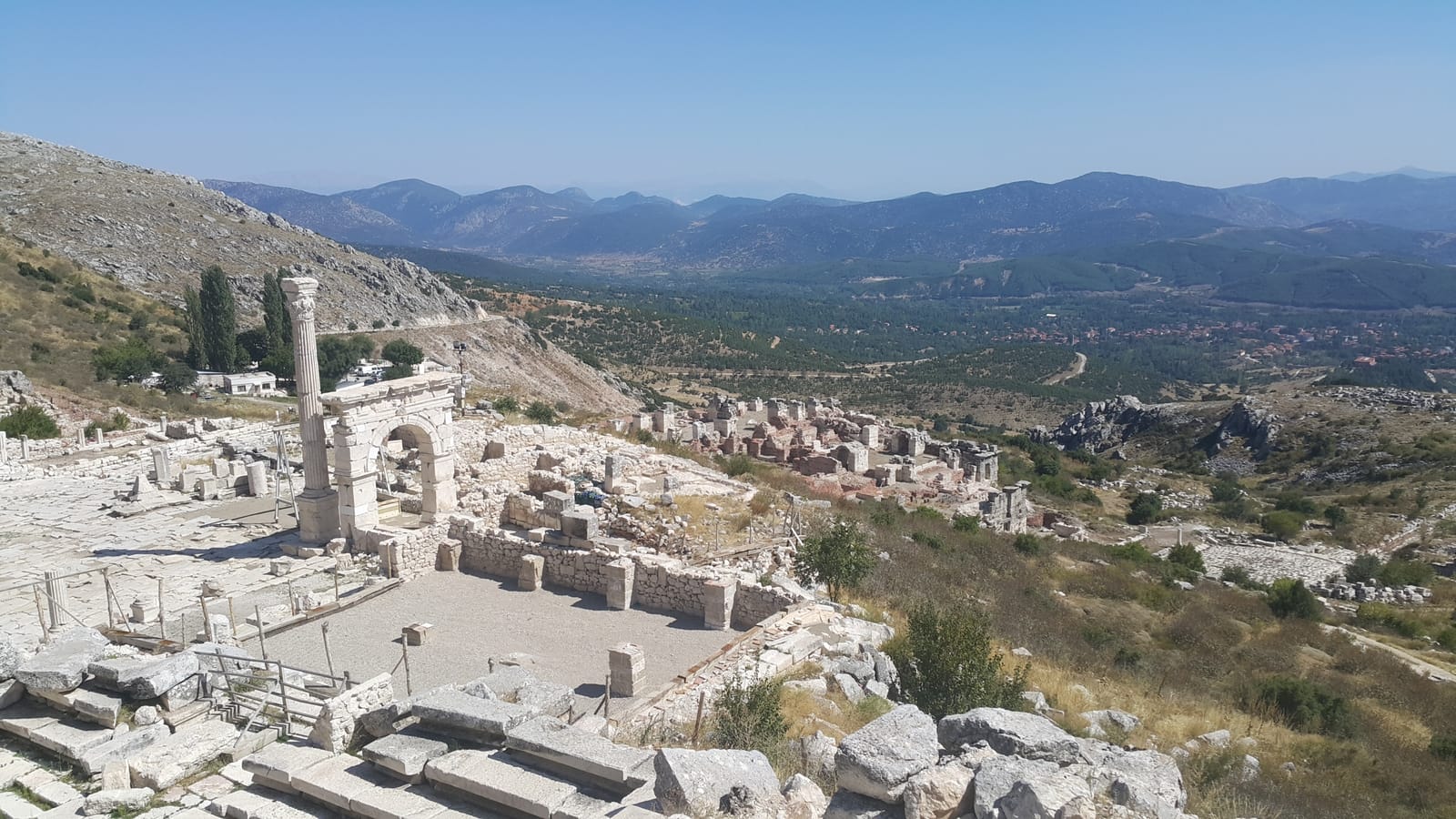
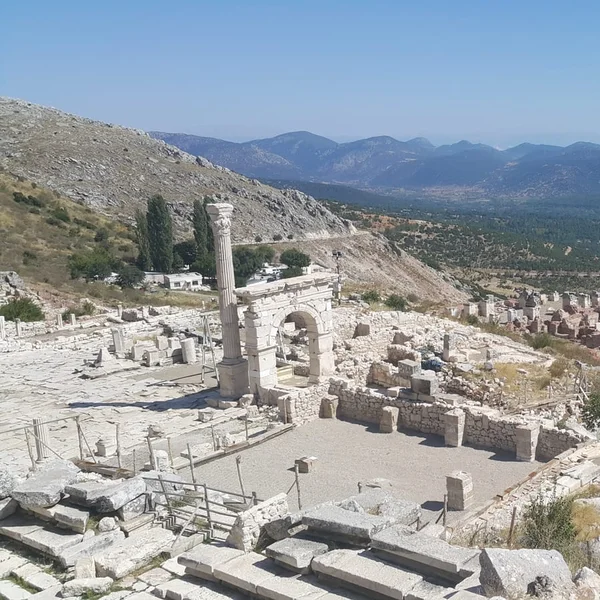
The reconstructed Antonine Nymphaeum at Sagalassos with mountains behind

Wikimedia Commons (CC BY-SA)

도시

Sagalassos

Seyfi Cem Baskin

500 기원전 – 700 서기

The best-preserved Roman city in Turkey, perched at 1,500 meters in the Taurus Mountains, where a colossal fountain, monumental baths, and a theatre overlooking a cloud-filled valley reveal a city that rivaled any in the empire.

411
관심 50

위치

Burdur · Mediterranean · 튀르키예

37.68°N · 30.52°E · 아시아

Altitude

1,450-1,700 meters

Key Monument

Antonine Nymphaeum (reconstructed)

Bath Cold Pool

1,300 m²

Excavation Since

1990 (Belgian team)

Theatre Capacity

Approximately 9,000 spectators, one of the largest in Pisidia.

Major Earthquake

Final destruction by a major earthquake circa 590-620 CE, confirmed by coin hoards and destruction layers.

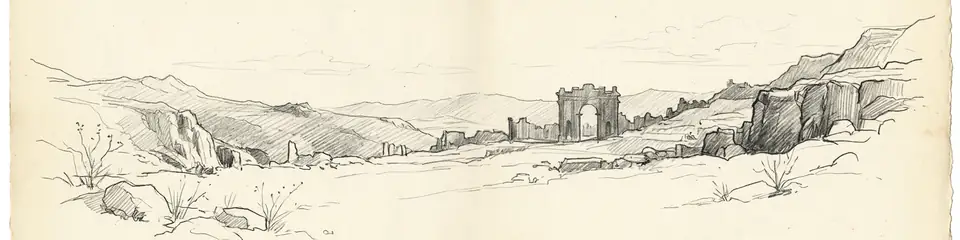
Graphite pencil sketch banner of Sagalassos

“Sagalassos offers an unmatched opportunity to study a Roman provincial city in its entirety.”

위키백과에서

Sagalassos is an archaeological site in southwestern Turkey, one of the best-preserved ancient cities in the Mediterranean, known for its monumental fountain and Roman-era urban remains.

위키백과에서 전체 기사 읽기 →

위치

개요

Sagalassos is a revelation. Perched at 1,500 meters on the slopes of the Taurus Mountains in Burdur Province, this Roman city is arguably the best-preserved ancient urban center in Turkey — and among the best in the entire eastern Mediterranean. Its altitude and remoteness protected it from the stone-robbing that diminished so many lowland cities.

The Antonine Nymphaeum, a monumental fountain dedicated during the reign of Marcus Aurelius, has been spectacularly reconstructed. Standing over 9 meters tall with flowing water once again cascading through its niches, it is one of the most impressive Roman fountain restorations anywhere. The Upper Agora, flanked by the Bouleuterion and a heroon, provides a complete picture of Roman civic architecture.

"The Pisidians, a warlike people, inhabit the highlands, and among them is Sagalassos, a city of great strength and elevation."
— Strabo, c. 7 BCE - 23 CE

The Roman baths of Sagalassos were among the largest in Asia Minor, with a cold pool that measured 1,300 square meters — larger than many modern Olympic swimming pools. The library, macellum (market hall), and colonnaded streets complete the urban fabric.

Sagalassos was destroyed by a series of earthquakes in the 7th century CE and abandoned, leaving the remains largely undisturbed. Belgian-led excavations since 1990 have made it one of the most meticulously documented archaeological sites in the Mediterranean, combining traditional archaeology with environmental science, ceramics analysis, and digital reconstruction.
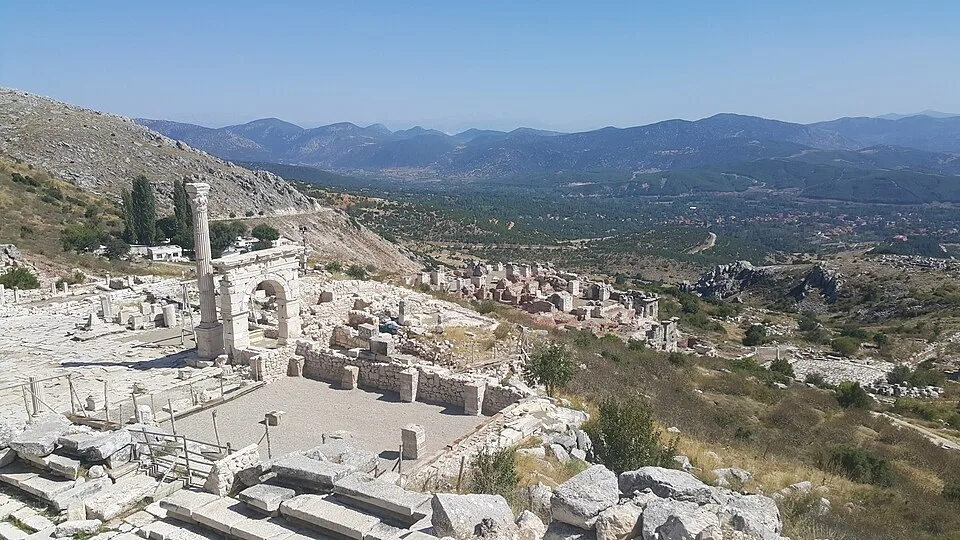
Sagalassos Antik Kenti 03
Sagalassos Antik Kenti 03 | BerkhanTr (CC BY-SA 4.0)

The city's urban fabric reveals a sophisticated infrastructure, including a complex aqueduct system that channeled water from mountain springs into the city's fountains, baths, and public latrines. The Upper Agora, framed by a Doric portico and a bouleuterion (council house), was the civic heart. Daily life centered on the production of its famous Red Slip Ware pottery, with industrial kiln complexes operating for centuries. Sagalassos was a key node in regional trade, exporting its pottery and importing goods like Egyptian glass and Italian wine amphorae. Its decline was a protracted process. Following the devastating 7th-century CE earthquakes, the urban core was largely abandoned. A small, fortified settlement persisted on the site into the 13th century, evidenced by Byzantine glazed pottery and a chapel built into the ruins of the Temple of Apollo Klarios.

중요성

Sagalassos offers an unmatched opportunity to study a Roman provincial city in its entirety. Because it was abandoned after earthquake destruction and never substantially rebuilt or robbed, the archaeological record is exceptionally complete — from monumental public buildings to everyday workshops and homes. The Belgian excavation project, led by Marc Waelkens for over three decades, has set new standards for interdisciplinary archaeological research, combining excavation with archaeobotany, archaeozoology, geomorphology, and digital modeling. Sagalassos is a benchmark for how modern archaeology should be conducted.

증거와 해석

확립된 사실과 논쟁 중인 사항을 구분합니다.

잘 확립된 사실

4
  • The Antonine Nymphaeum was dedicated during the reign of Marcus Aurelius (161-180 CE) based on inscriptions found in situ.
  • A series of earthquakes in the 7th century CE destroyed the city, as evidenced by collapsed structures and seismic damage patterns.
  • Sagalassos was a major producer of tableware pottery (Sagalassos Red Slip Ware) distributed across the eastern Mediterranean from the 1st to 7th centuries CE.
  • Environmental analysis reveals that the surrounding area was heavily deforested during the Roman period for construction and fuel.

학술적 추론

1
  • The city's prosperity under Rome was partly driven by its position on trade routes connecting the Mediterranean coast with the Anatolian interior.

논쟁 중인 해석

1
  • Whether Alexander the Great personally besieged Sagalassos in 333 BCE or bypassed it is debated, though Arrian's account suggests direct engagement.

발견과 발굴

1706

First European visit

French traveler Paul Lucas was the first European to describe the ruins of Sagalassos.

1824

Identification by Arundell

Reverend Francis Arundell correctly identified the ruins as ancient Sagalassos.

1990

Belgian excavations begin

지휘 Marc Waelkens

Marc Waelkens of KU Leuven began the long-term interdisciplinary excavation project.

2008

Nymphaeum reconstruction

The Antonine Nymphaeum was reconstructed and water flowed through it once again.

2010–2020

Ongoing interdisciplinary research

Continued excavation combined with archaeobotany, ceramics studies, and digital 3D modeling.

커뮤니티 사진

당신의 경험을 공유하세요

이 유적지를 방문하셨나요? 다른 탐험가들을 위해 사진을 업로드해 보세요.

이 페이지 인용 방법

Atlas Anatolia. (500). Sagalassos. Atlas Anatolia. https://atlasanatolia.com/ko/site/sagalassos

콘텐츠는 CC BY-SA 4.0 라이선스에 따라 제공됩니다 — 재사용 시 출처 표시가 필요합니다.

World History Encyclopedia에서 전체 기사 읽기
World History Encyclopedia · CC BY-NC-SA

출처

  • Sagalassos: City of Dreams — Marc Waelkens & Jeroen Poblome (2011)
  • Sagalassos Archaeological Research Project링크
  • Roman Provincial Urbanism in the Eastern Mediterranean — Hugh Elton (2005)

자주 묻는 질문

Sagalassos은(는) 어디에 위치해 있나요?

Sagalassos은(는) Burdur, Mediterranean, Türkiye에 위치해 있습니다.

Sagalassos의 연대는 언제인가요?

Sagalassos의 연대는 대략 500 기원전 – 700 서기로 거슬러 올라갑니다.

Sagalassos과(와) 관련된 고대 문명은 무엇인가요?

Sagalassos은(는) Greek, Roman, Byzantine 문명과 관련이 있습니다.

Sagalassos이(가) 중요한 이유는 무엇인가요?

Sagalassos offers an unmatched opportunity to study a Roman provincial city in its entirety.

Sagalassos은(는) 유네스코 세계유산인가요?

Sagalassos은(는) 현재 유네스코 세계유산 목록에 등재되어 있지 않습니다.