
콘텐츠로 건너뛰기
Atlas Anatolia
디그
뉴스술라웨시 빙하기 치아에서 빈랑 사용 25,000년 전까지 소급카스타모누 폼페이오폴리스 바실리카에서 로마 모자이크와 에로스 두상 발견
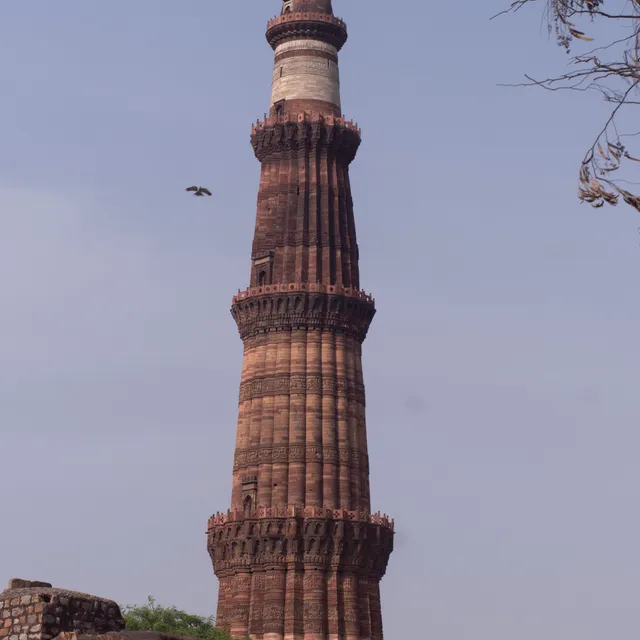
The Qutb Minar tower and Quwwat-ul-Islam mosque ruins, Delhi

Wikimedia Commons

유산복합 단지유네스코주요

Qutb Minar

Seyfi Cem Baskin

क़ुतुब मीनार1192 서기 – 1316 서기

The 72-metre tapering victory tower and mosque complex at Mehrauli, Delhi — begun by Qutb al-Din Aibak after 1192 — marking the arrival of Indo-Islamic architecture in northern India and among the most visited ASI monuments in the country.

21
관심 77

위치

인도

28.52°N · 77.19°E · 아시아

Minar height

~72.5 m; five storeys of sandstone and marble

Begun

1192 CE after Tarain; mosque by Qutb al-Din Aibak

Iron Pillar

Gupta-era pillar (~402 CE) with Sanskrit inscription

UNESCO

Qutb Minar and its Monuments (1993)

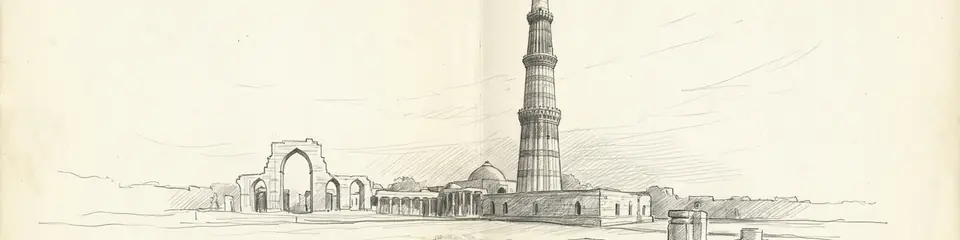
Graphite pencil sketch banner of Qutb Minar

“The Qutb Minar is the earliest major Indo-Islamic monument in India — the physical beginning of Sultanate and Mughal Delhi.”

위치

개요

The Qutb Minar complex occupies Mehrauli in south Delhi, the site of Lal Kot, an earlier Hindu and Jain city. After Muhammad of Ghor's victory at Tarain (1192), his general Qutb al-Din Aibak established Delhi Sultanate power and began the Quwwat-ul-Islam mosque (1192–1193) using spolia from demolished temples — visible in carved columns in the courtyard. The minar itself was started by Aibak and completed by Iltutmish and later rulers; the five-storey red sandstone and marble tower rises about 72.5 metres with projecting balconies.

The complex includes the Alai Darwaza gate (1311), Alai Minar (unfinished), the Iron Pillar of Chandragupta II (Gupta, 4th century CE, moved here), and tombs of Iltutmish and Imam Zamin. Earthquakes and lightning damaged upper storeys; Firoz Shah Tughlaq and the British restored sections in the 14th and 19th centuries.

UNESCO listed the Qutb Minar and its Monuments, Delhi in 1993 alongside Humayun's Tomb. The tower is the defining silhouette of early Sultanate Delhi and a mandatory stop on India's Golden Triangle route.

중요성

The Qutb Minar is the earliest major Indo-Islamic monument in India — the physical beginning of Sultanate and Mughal Delhi. Its reuse of temple spolia documents both destruction and creative adaptation at the moment of political transition in the Ganges plain.

증거와 해석

확립된 사실과 논쟁 중인 사항을 구분합니다.

잘 확립된 사실

2
  • Inscriptions name Qutb al-Din Aibak, Iltutmish, and later sultans as builders and restorers of the minar and mosque.
  • Architectural analysis confirms reused Hindu–Jain carved columns in the mosque courtyard and Sultanate arcuate forms.

논쟁 중인 해석

1
  • Whether the minar was primarily a victory tower, call to prayer, or solar observatory remains discussed in art-historical literature.

커뮤니티 사진

당신의 경험을 공유하세요

이 유적지를 방문하셨나요? 다른 탐험가들을 위해 사진을 업로드해 보세요.

이 페이지 인용 방법

Atlas Anatolia. (1192). Qutb Minar. Atlas Anatolia. https://atlasanatolia.com/ko/site/qutb-minar

콘텐츠는 CC BY-SA 4.0 라이선스에 따라 제공됩니다 — 재사용 시 출처 표시가 필요합니다.

출처

  • Architecture of Mughal India — Asher, Catherine B. (1992)
  • UNESCO — Qutb Minar링크

자주 묻는 질문

Qutb Minar은(는) 어디에 위치해 있나요?

Qutb Minar은(는) India에 위치해 있습니다.

Qutb Minar의 연대는 언제인가요?

Qutb Minar의 연대는 대략 1192 서기 – 1316 서기로 거슬러 올라갑니다.

Qutb Minar과(와) 관련된 고대 문명은 무엇인가요?

Qutb Minar은(는) Islamic / Medieval, Delhi Sultanate 문명과 관련이 있습니다.

Qutb Minar이(가) 중요한 이유는 무엇인가요?

The Qutb Minar is the earliest major Indo-Islamic monument in India — the physical beginning of Sultanate and Mughal Delhi.

Qutb Minar은(는) 유네스코 세계유산인가요?

예 — Qutb Minar은(는) 유네스코 세계유산으로 등재되어 있습니다.