
콘텐츠로 건너뛰기
Atlas Anatolia
디그
뉴스술라웨시 빙하기 치아에서 빈랑 사용 25,000년 전까지 소급카스타모누 폼페이오폴리스 바실리카에서 로마 모자이크와 에로스 두상 발견
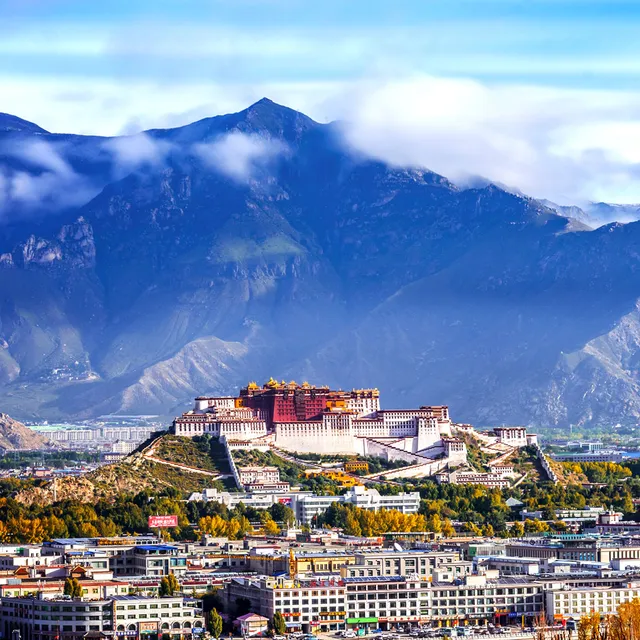
The Potala Palace on Red Hill above Lhasa, Tibet

Wikimedia Commons

Country Record

Known by the Most Names in China

유산복합 단지유네스코주요

Potala Palace

Seyfi Cem Baskin

པོ་ཏ་ལ637 서기 – 1959 서기

The fortress-palace rising 13 storeys on Red Mountain above Lhasa — winter residence of the Dalai Lamas since the 7th century and symbol of Tibetan Buddhism — whose white and red wings, golden roofs, and chapels dominate the Himalaya skyline at 3,700 metres.

21
관심 78

위치

중국

29.66°N · 91.12°E · 아시아

Elevation

~3,700 m above sea level on Red Hill

Height

13 storeys; over 1,000 rooms (traditional count)

Major rebuild

17th century under the Fifth Dalai Lama

UNESCO

Historic Ensemble of the Potala Palace (1994)

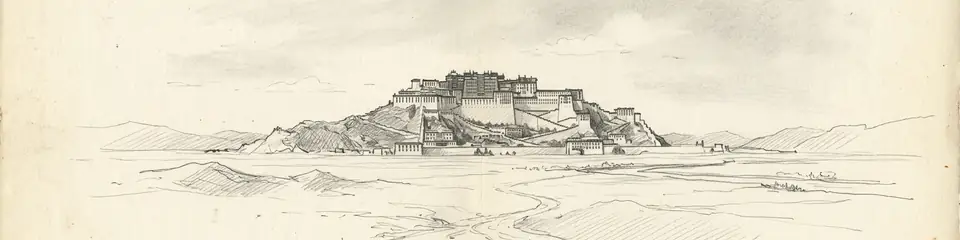
Graphite pencil sketch banner of Potala Palace

“The Potala is the supreme architectural expression of Tibetan Buddhist governance — a palace-temple whose scale and altitude embody the unique fusion of spiritual and temporal authority in the Himalaya.”

위치

개요

The Potala Palace crowns Marpo Ri (Red Hill) in the centre of the Lhasa Valley, Tibet Autonomous Region, China, at roughly 3,700 metres elevation. Tradition associates the hill with Songtsen Gampo (7th century), who built a palace for his marriage alliances; the present monumental complex largely reflects the 17th-century reconstruction under the Fifth Dalai Lama, Ngawang Lobsang Gyatso, with major expansion continuing under the Thirteenth Dalai Lama.

The White Palace (Phodrang Karpo) contains the Dalai Lama's residential and administrative quarters; the Red Palace (Phodrang Marpo) houses chapels, stupas of successive Dalai Lamas, and assembly halls dense with murals, thangkas, and gilded tombs. The building integrates fortress walls, sloping stone foundations, and timber superstructure engineered for seismic and alpine conditions.

The UNESCO Historic Ensemble of the Potala Palace, Lhasa (1994, extended 2000–2001) also includes Jokhang Temple and Norbulingka summer palace. The Potala remains among the most photographed monuments in Asia and a focal point of Tibetan cultural identity.

중요성

The Potala is the supreme architectural expression of Tibetan Buddhist governance — a palace-temple whose scale and altitude embody the unique fusion of spiritual and temporal authority in the Himalaya. Its 1994 UNESCO listing anchored international recognition of Tibetan heritage conservation at a moment of rapid modernisation in Lhasa.

증거와 해석

확립된 사실과 논쟁 중인 사항을 구분합니다.

잘 확립된 사실

2
  • Tibetan chronicles and copper inscriptions document 17th-century expansion under the Fifth Dalai Lama and subsequent Dalai Lama burials in the Red Palace.
  • Architectural survey confirms layered timber–masonry construction, sloping batter walls, and chapel layouts typical of Ganden Phodrang-period building.

학술적 추론

1
  • Early 7th-century occupation of Red Hill by Songtsen Gampo is supported by tradition and limited archaeology; extent of his original structure is uncertain.

커뮤니티 사진

당신의 경험을 공유하세요

이 유적지를 방문하셨나요? 다른 탐험가들을 위해 사진을 업로드해 보세요.

이 페이지 인용 방법

Atlas Anatolia. (637). Potala Palace. Atlas Anatolia. https://atlasanatolia.com/ko/site/potala-palace

콘텐츠는 CC BY-SA 4.0 라이선스에 따라 제공됩니다 — 재사용 시 출처 표시가 필요합니다.

출처

  • The Temples of Lhasa — Alexander, André (2005)
  • UNESCO — Potala Palace링크

자주 묻는 질문

Potala Palace은(는) 어디에 위치해 있나요?

Potala Palace은(는) China에 위치해 있습니다.

Potala Palace의 연대는 언제인가요?

Potala Palace의 연대는 대략 637 서기 – 1959 서기로 거슬러 올라갑니다.

Potala Palace과(와) 관련된 고대 문명은 무엇인가요?

Potala Palace은(는) Tibetan 문명과 관련이 있습니다.

Potala Palace이(가) 중요한 이유는 무엇인가요?

The Potala is the supreme architectural expression of Tibetan Buddhist governance — a palace-temple whose scale and altitude embody the unique fusion of spiritual and temporal authority in the Himalaya.

Potala Palace은(는) 유네스코 세계유산인가요?

예 — Potala Palace은(는) 유네스코 세계유산으로 등재되어 있습니다.