
콘텐츠로 건너뛰기
Atlas Anatolia
디그
뉴스술라웨시 빙하기 치아에서 빈랑 사용 25,000년 전까지 소급카스타모누 폼페이오폴리스 바실리카에서 로마 모자이크와 에로스 두상 발견
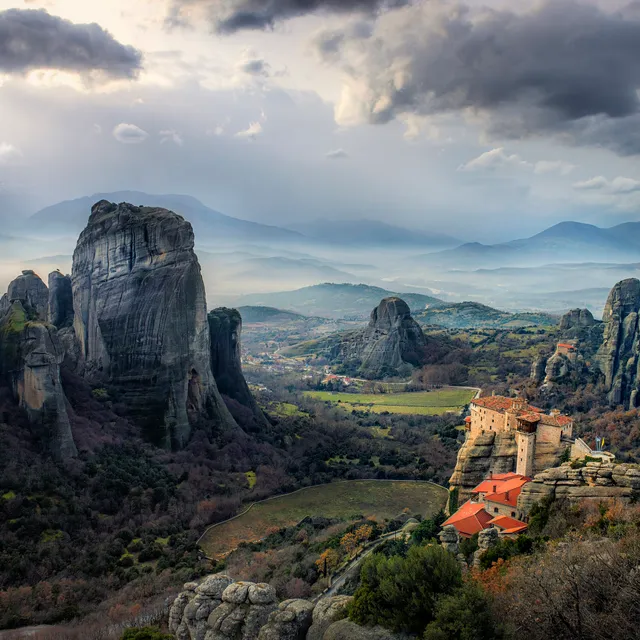
Byzantine monasteries perched on rock pillars at Meteora, Greece

Wikimedia Commons

성소유네스코

Meteora

Seyfi Cem Baskin

Μετέωρα1100 서기 – 1900 서기

A forest of sandstone pinnacles in Thessaly, Greece — crowned by Byzantine and post-Byzantine monasteries reached by stairs and bridges — among the most dramatic religious landscapes in Europe and a UNESCO site drawing millions of visitors and pilgrims.

21
관심 77

위치

그리스

39.72°N · 21.63°E · 유럽

Geology

Sandstone pinnacles formed by weathering of Thessaly plateau

Monasteries

6 active of 24 historical foundations

Great Meteoron

Founded c. 1340 by Athanasios of Meteora

UNESCO

World Heritage Site (1988)

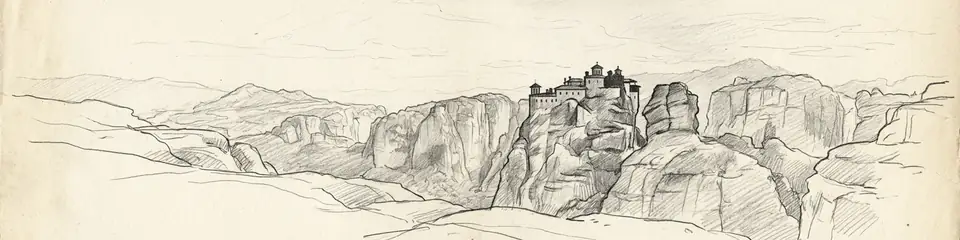
Graphite pencil sketch banner of Meteora

“Meteora is the extreme case of Byzantine monastic adaptation to inaccessible terrain — architecture as spiritual withdrawal elevated literally above the plain.”

위치

개요

Meteora ("suspended in the air") names a group of immense sandstone pillars and cliffs in central Thessaly, Greece, near the town of Kalabaka (Kalambaka). Hermits occupied caves in the rocks from at least the 11th century; organized monastic communities developed in the 14th century as Athonite monks fled political instability. The Great Meteoron Monastery (Megalo Meteoro), founded by Athanasios of Meteora around 1340, set the model for later foundations.

At the peak of the monastic community in the 16th century, 24 monasteries clung to the pinnacles; six remain active today — Great Meteoron, Varlaam, Rousanou, St. Nicholas Anapausas, St. Stephen, and Holy Trinity — linked by steps, bridges, and (since the 20th century) roads. Fresco cycles inside the katholikon churches preserve post-Byzantine painting of high quality.

UNESCO inscribed Meteora in 1988. The site combines geological wonder with living Orthodox monasticism and appears frequently in travel media as one of Greece's most iconic landscapes outside Athens.
중요성

Meteora is the extreme case of Byzantine monastic adaptation to inaccessible terrain — architecture as spiritual withdrawal elevated literally above the plain. Its frescoes and manuscript traditions connect the Athonite world to mainland Greece during Ottoman rule.

증거와 해석

확립된 사실과 논쟁 중인 사항을 구분합니다.

잘 확립된 사실

2
  • Foundation charters, donor inscriptions, and fresco dates document 14th–16th-century monastic building phases.
  • Geological survey confirms pillar formation by erosion of the Thessaly basin sediments after tectonic uplift.

학술적 추론

1
  • Hermit occupation before organized monasteries is attested in hagiography; archaeological evidence in caves is sparse but consistent.

커뮤니티 사진

당신의 경험을 공유하세요

이 유적지를 방문하셨나요? 다른 탐험가들을 위해 사진을 업로드해 보세요.

관련 이야기

이 페이지 인용 방법

Atlas Anatolia. (1100). Meteora. Atlas Anatolia. https://atlasanatolia.com/ko/site/meteora

콘텐츠는 CC BY-SA 4.0 라이선스에 따라 제공됩니다 — 재사용 시 출처 표시가 필요합니다.

그래프

관련 유적지와 스토리로의 연결.

출처

  • The Meteora Monasteries — Nichols, Richard (2000)
  • UNESCO — Meteora링크

자주 묻는 질문

Meteora은(는) 어디에 위치해 있나요?

Meteora은(는) Greece에 위치해 있습니다.

Meteora의 연대는 언제인가요?

Meteora의 연대는 대략 1100 서기 – 1900 서기로 거슬러 올라갑니다.

Meteora과(와) 관련된 고대 문명은 무엇인가요?

Meteora은(는) Greek, Byzantine 문명과 관련이 있습니다.

Meteora이(가) 중요한 이유는 무엇인가요?

Meteora is the extreme case of Byzantine monastic adaptation to inaccessible terrain — architecture as spiritual withdrawal elevated literally above the plain.

Meteora은(는) 유네스코 세계유산인가요?

예 — Meteora은(는) 유네스코 세계유산으로 등재되어 있습니다.