
콘텐츠로 건너뛰기
Atlas Anatolia
디그
뉴스술라웨시 빙하기 치아에서 빈랑 사용 25,000년 전까지 소급카스타모누 폼페이오폴리스 바실리카에서 로마 모자이크와 에로스 두상 발견
Fish-human sandstone sculptures and trapezoid house floors at Lepenski Vir, Serbia

Wikimedia Commons

Continent Record

Oldest Settlement in Europe

정착지

Lepenski Vir

Seyfi Cem Baskin

Лепенски Вир7000 기원전 – 5500 기원전

The most remarkable Mesolithic settlement ever found — a precisely planned riverside village on the Danube in Serbia dating to 7000-5500 BCE whose trapezoid stone houses sheltered enigmatic fish-human sculptures, representing the earliest monumental art tradition in Europe.

31
관심 55

위치

세르비아

44.55°N · 22.02°E · 유럽

Period

c. 7000-5500 BCE (Mesolithic/early Neolithic)

Houses

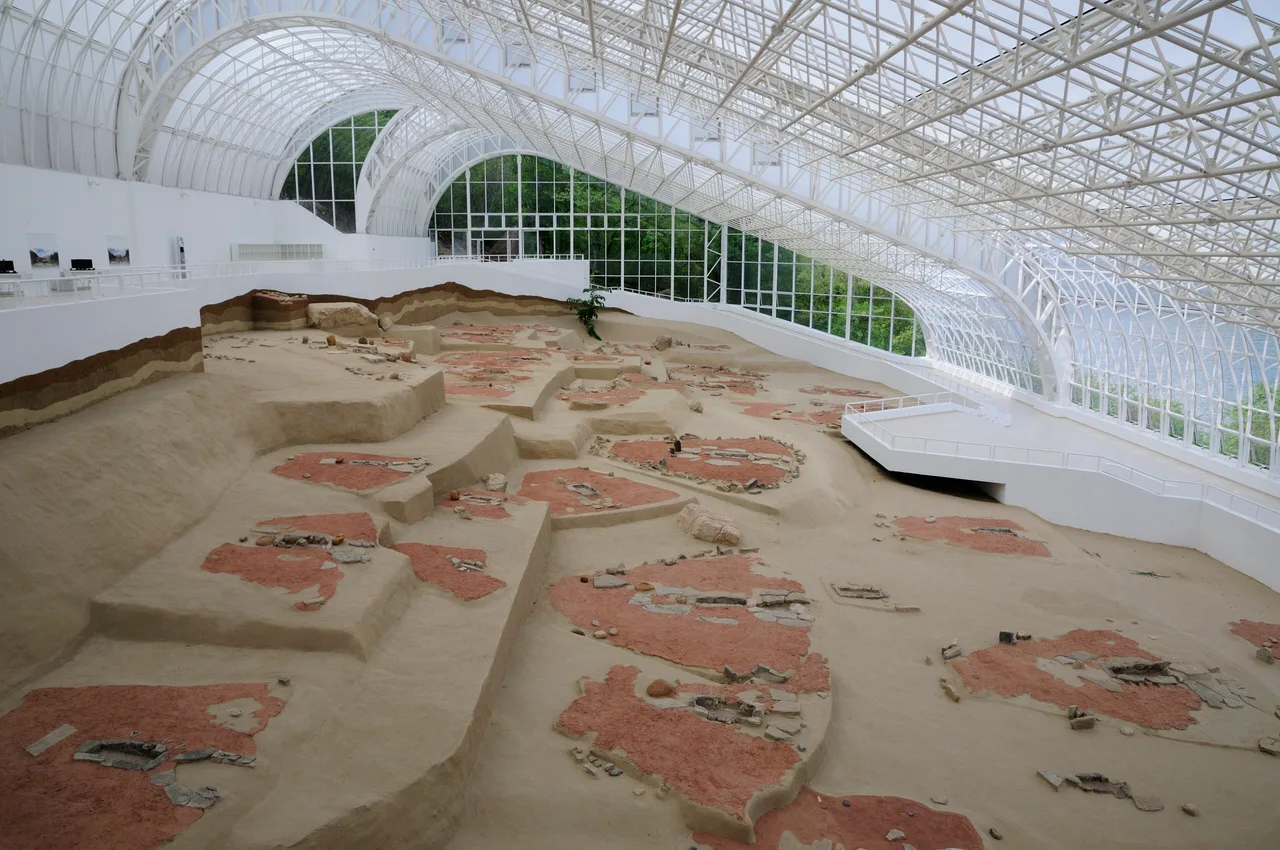
Trapezoid limestone-floor dwellings, precisely planned, oriented to the Danube

Sculptures

69 fish-human hybrid boulder carvings — oldest monumental art in Europe

Economy

Hunter-fishers (not farmers); relied on Danube beluga sturgeon

Discovery

1965; site submerged by dam in 1970 after excavation

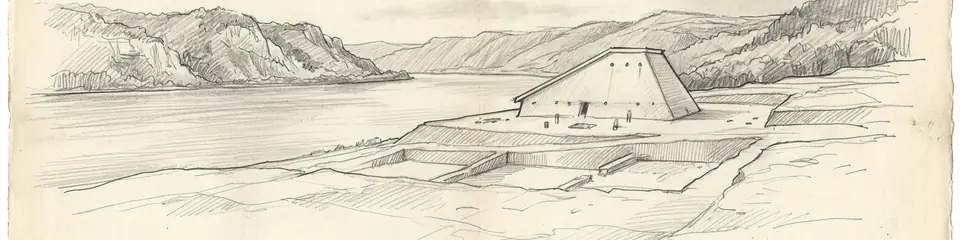
Graphite pencil sketch banner of Lepenski Vir

“Lepenski Vir overturns one of the foundational assumptions of prehistory: that settled life, monumental architecture, and sculptural art required the Neolithic revolution and the adoption of farming.”

위치

개요

Lepenski Vir occupies a natural terrace on the right bank of the Danube in the dramatic Iron Gates gorge at the border of modern Serbia and Romania. It was discovered in 1965 during surveys for a hydroelectric dam and excavated by Dragoslav Srejovic before the site was submerged. The excavated remains were removed to higher ground and are displayed at a museum above the original location.

The settlement was occupied from approximately 7000 to 5500 BCE by hunter-gatherer-fisher communities who lived in a very unusual way for Mesolithic Europe: instead of mobile encampments, they built a precisely planned village of trapezoid-shaped limestone houses arranged in a fan pattern around a central plaza, all oriented toward a distinctive whirlpool in the Danube and a striking mountain peak opposite. Each house had a carefully prepared limestone floor, a central hearth of red limestone slabs, and was built to precise geometric specifications — astonishing evidence of planning and permanence among hunter-gatherers.

The most extraordinary feature of Lepenski Vir is its sculpture. Sixty-nine boulders of Danube sandstone were carved into fish-human hybrid figures — wide-mouthed faces with bulging fish-eyes, combining human features with the appearance of the giant beluga sturgeon that spawned in the Danube gorge. These sculptures, the oldest monumental art in Europe, were found placed in precise positions within the houses, typically at the base of the hearths. Their meaning is unknown, but they appear to combine veneration of the Danube river and its fish with ancestral or spiritual imagery.

Lepenski Vir challenges the assumption that complex art, permanent settlements, and monumental architecture required agriculture: this was a society that built like farmers but lived as hunter-fishers.

중요성

Lepenski Vir overturns one of the foundational assumptions of prehistory: that settled life, monumental architecture, and sculptural art required the Neolithic revolution and the adoption of farming. Its inhabitants were hunter-gatherers who nonetheless built permanent, precisely planned houses, developed a monumental sculptural tradition, and maintained the same settlement for 1,500 years. The fish-human sculptures are not only the oldest monumental art in Europe — they represent a completely independent artistic tradition unlike anything in contemporary Mesolithic or Neolithic Europe, probably rooted in the specific ecology of the Iron Gates gorge and its extraordinary fish resources. Lepenski Vir is a reminder that cultural complexity can arise from many different economic strategies and that the standard Palaeolithic-Neolithic trajectory vastly underestimates the diversity of prehistoric human life.

증거와 해석

확립된 사실과 논쟁 중인 사항을 구분합니다.

잘 확립된 사실

3
  • Radiocarbon dating establishes occupation from c. 7000-5500 BCE; the precisely trapezoid limestone house floors, all oriented the same direction, confirm deliberate planning rather than ad hoc construction.
  • 69 carved sandstone boulders with fish-human hybrid faces have been documented in situ within house floors; their placement at the bases of hearths suggests a ritual or domestic cult role.
  • Animal bone analysis shows the diet was dominated by fish (especially Danube beluga sturgeon and carp), supplemented by red deer and boar — a sedentary economy based on predictable fish spawning runs rather than agriculture.

학술적 추론

1
  • The precise orientation of all houses toward the same Danube whirlpool and mountain peak is interpreted as cosmological or ritual significance — possibly related to the belief that souls of the dead passed through the whirlpool — but no written or oral tradition survives to confirm this.

커뮤니티 사진

당신의 경험을 공유하세요

이 유적지를 방문하셨나요? 다른 탐험가들을 위해 사진을 업로드해 보세요.

이 페이지 인용 방법

Atlas Anatolia. (7000). Lepenski Vir. Atlas Anatolia. https://atlasanatolia.com/ko/site/lepenski-vir

콘텐츠는 CC BY-SA 4.0 라이선스에 따라 제공됩니다 — 재사용 시 출처 표시가 필요합니다.

출처

  • Europe's First Monumental Sculpture: New Discoveries at Lepenski Vir — Srejovic, Dragoslav (1972)
  • Absolute Dating of Metallurgical Innovations in the Vinca Culture of the Balkans — Boric, Dusan (2009)

자주 묻는 질문

Lepenski Vir은(는) 어디에 위치해 있나요?

Lepenski Vir은(는) Serbia에 위치해 있습니다.

Lepenski Vir의 연대는 언제인가요?

Lepenski Vir의 연대는 대략 7000 기원전 – 5500 기원전로 거슬러 올라갑니다.

Lepenski Vir이(가) 중요한 이유는 무엇인가요?

Lepenski Vir overturns one of the foundational assumptions of prehistory: that settled life, monumental architecture, and sculptural art required the Neolithic revolution and the adoption of farming.

Lepenski Vir은(는) 유네스코 세계유산인가요?

Lepenski Vir은(는) 현재 유네스코 세계유산 목록에 등재되어 있지 않습니다.