
콘텐츠로 건너뛰기
Atlas Anatolia
디그
뉴스술라웨시 빙하기 치아에서 빈랑 사용 25,000년 전까지 소급카스타모누 폼페이오폴리스 바실리카에서 로마 모자이크와 에로스 두상 발견
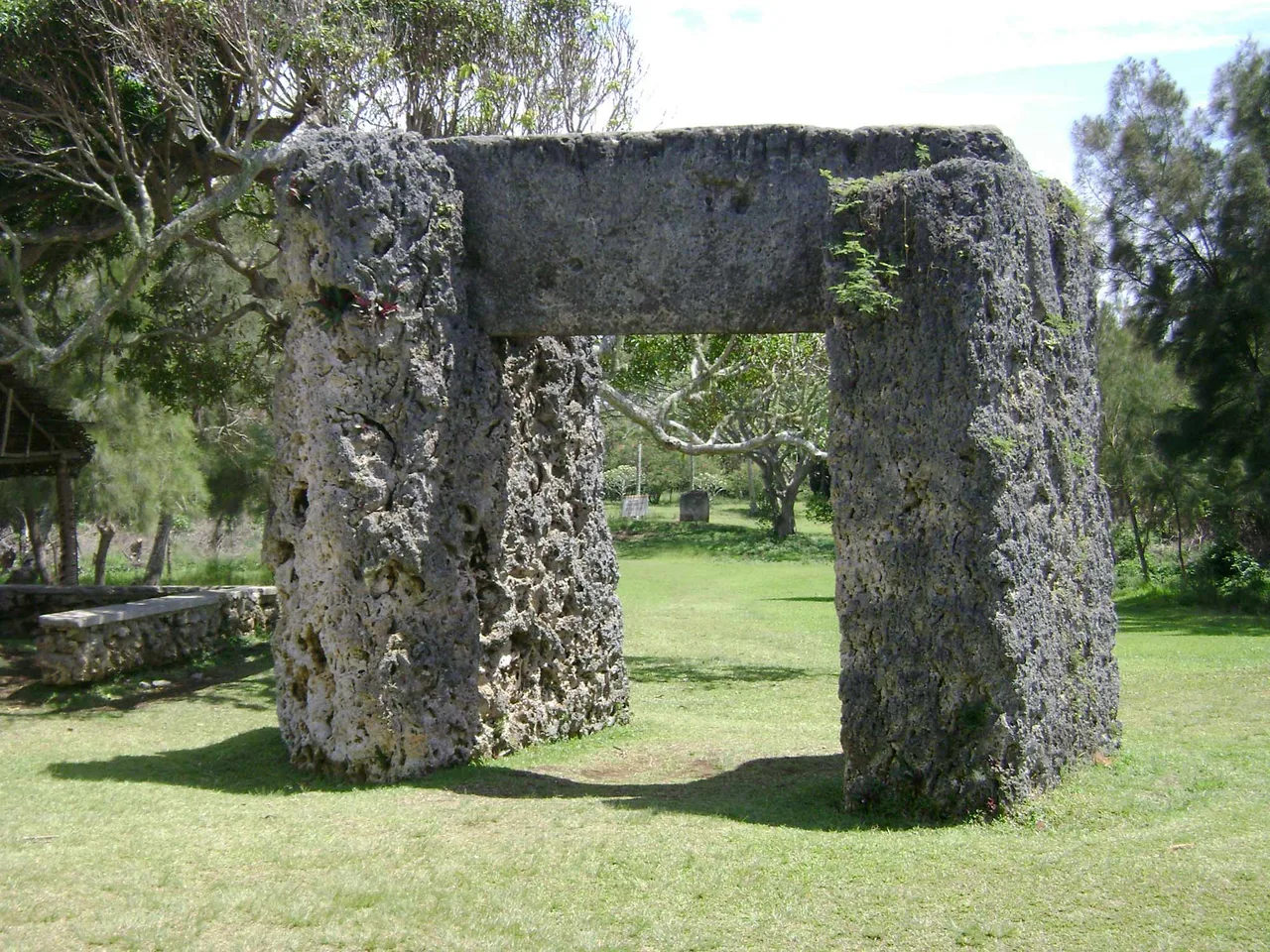
The coral limestone trilithon of Ha'amonga a Maui, Tongatapu, Tonga

Wikimedia Commons

World Record

Westernmost Known Site in the World

기념물

Ha'amonga 'a Maui

Seyfi Cem Baskin

1200 서기 – 1250 서기

A massive coral limestone trilithon on the Tongan island of Tongatapu — three enormous stones forming a gateway arch built around 1200 CE by the Tu'i Tonga king Taufa'ahau, considered the most enigmatic and impressive megalithic monument in the Pacific and known as the Stonehenge of the Pacific.

22
관심 42

위치

통가

21.15°S · 175.07°W · 오세아니아

Built

c. 1200 CE by the 11th Tu'i Tonga, Taufa'ahau

Structure

Coral limestone trilithon: two uprights (4.9 m, 40 tonnes each) + lintel (5.8 m)

Function

Gateway to royal compound at Heketa; possibly a solar calendar

Name

"Burden of Maui" — Polynesian demigod said to have carried the stones from Fiji

Nickname

"Stonehenge of the Pacific"

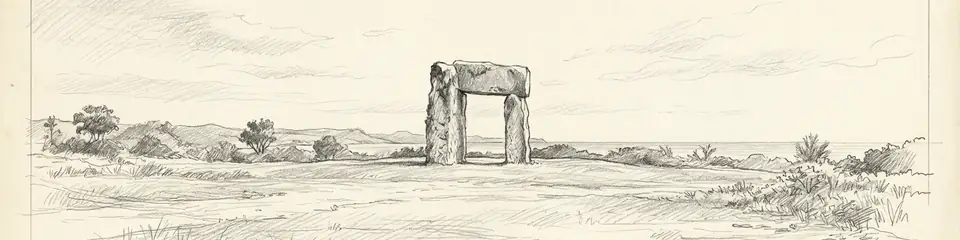
Graphite pencil sketch banner of Ha'amonga 'a Maui

“Ha'amonga 'a Maui is the most architecturally ambitious megalithic monument in the Pacific and a key piece of evidence for the organisational capacity of Polynesian chiefdoms.”

위치

개요

Ha'amonga 'a Maui (Tongan: "Burden of Maui") stands on the northeastern coast of Tongatapu, the main island of the Kingdom of Tonga, near the small town of Niutoua. The monument consists of three massive slabs of coral limestone: two upright posts approximately 4.9 metres tall and weighing around 40 tonnes each, supporting a horizontal lintel stone 5.8 metres long. Together they form a trilithon — a gateway — whose design is remarkably similar to the trilithons of Stonehenge in England, though the two monuments are separated by thousands of years and thousands of miles.

The monument was constructed around 1200 CE, according to Tongan oral tradition, by the 11th Tu'i Tonga (paramount king) Taufa'ahau. It was built as a gateway to the royal royal compound at Heketa, and the lintel bears a groove carved along its top surface that was interpreted in the 1960s by King Taufa'ahau Tupou IV (a Tu'i Tonga descendant) as a solar calendar marker: he proposed that the groove aligns with the rising sun at the summer and winter solstices, allowing the king to determine the agricultural calendar. This interpretation has been widely discussed, though astronomical confirmation is debated.

The name "Burden of Maui" refers to the Polynesian demigod Maui, and tradition holds that he brought the stones from Fiji on a yoke across his shoulders. More prosaically, the coral limestone was quarried nearby, but moving and erecting 40-tonne slabs without metal tools or wheeled vehicles was an extraordinary engineering achievement. Two smaller stone structures near the site — the Langi Heketa royal tombs — suggest the area was a major royal and sacred precinct for the Tu'i Tonga dynasty.

중요성

Ha'amonga 'a Maui is the most architecturally ambitious megalithic monument in the Pacific and a key piece of evidence for the organisational capacity of Polynesian chiefdoms. The ability to quarry, transport, and erect coral slabs weighing 40 tonnes demonstrates that the Tu'i Tonga dynasty commanded substantial human labour — fitting for the Tu'i Tonga empire, which at its peak exerted influence over much of western Polynesia and Melanesia. The monument also raises fascinating questions about the independent emergence of similar megalithic ideas in widely separated cultures. The trilithon form appears in prehistoric Europe, Tonga, and elsewhere — is this convergent invention, diffusion, or coincidence? Ha'amonga 'a Maui, with its possible solar alignment and royal gateway function, sits at the intersection of engineering, astronomy, and political theatre in a way that speaks to universal human concerns about power, cosmos, and the built environment.

증거와 해석

확립된 사실과 논쟁 중인 사항을 구분합니다.

잘 확립된 사실

2
  • Tongan royal oral traditions and genealogical records consistently attribute the monument to the 11th Tu'i Tonga around 1200 CE; the coral limestone has been confirmed as quarried from the local Tongatapu reef geology.
  • The trilithon form — two upright posts supporting a horizontal lintel — is confirmed by direct measurement; the lintel bears a carved groove along its top surface visible in photogrammetric documentation.

학술적 추론

2
  • The solar-calendar function proposed by King Taufa'ahau Tupou IV in the 1960s — that the groove marks solstice sunrise directions — has been tested by astronomers with mixed results; alignment with the summer solstice is plausible but not precisely confirmed.
  • The monument's role as a gateway to a royal compound is inferred from its association with the Langi Heketa royal tombs nearby and the Tongan oral tradition of its function; no pre-European written record of the precinct survives.

커뮤니티 사진

당신의 경험을 공유하세요

이 유적지를 방문하셨나요? 다른 탐험가들을 위해 사진을 업로드해 보세요.

이 페이지 인용 방법

Atlas Anatolia. (1200). Ha'amonga 'a Maui. Atlas Anatolia. https://atlasanatolia.com/ko/site/haamonga-a-maui

콘텐츠는 CC BY-SA 4.0 라이선스에 따라 제공됩니다 — 재사용 시 출처 표시가 필요합니다.

출처

  • Ha'amonga 'a Maui: An Archaeological Survey — Spennemann, Dirk (1990)
  • The Evolution of the Polynesian Chiefdoms — Kirch, Patrick V. (1984)

자주 묻는 질문

Ha'amonga 'a Maui은(는) 어디에 위치해 있나요?

Ha'amonga 'a Maui은(는) Tonga에 위치해 있습니다.

Ha'amonga 'a Maui의 연대는 언제인가요?

Ha'amonga 'a Maui의 연대는 대략 1200 서기 – 1250 서기로 거슬러 올라갑니다.

Ha'amonga 'a Maui과(와) 관련된 고대 문명은 무엇인가요?

Ha'amonga 'a Maui은(는) Tu'i Tonga 문명과 관련이 있습니다.

Ha'amonga 'a Maui이(가) 중요한 이유는 무엇인가요?

Ha'amonga 'a Maui is the most architecturally ambitious megalithic monument in the Pacific and a key piece of evidence for the organisational capacity of Polynesian chiefdoms.

Ha'amonga 'a Maui은(는) 유네스코 세계유산인가요?

Ha'amonga 'a Maui은(는) 현재 유네스코 세계유산 목록에 등재되어 있지 않습니다.