
コンテンツへスキップ
Atlas Anatolia
ニュースIce Age teeth in Sulawesi push betel-nut use back as far as 25,000 yearsRoman mosaic and Eros head uncovered in the basilica at Pompeiopolis, Kastamonu
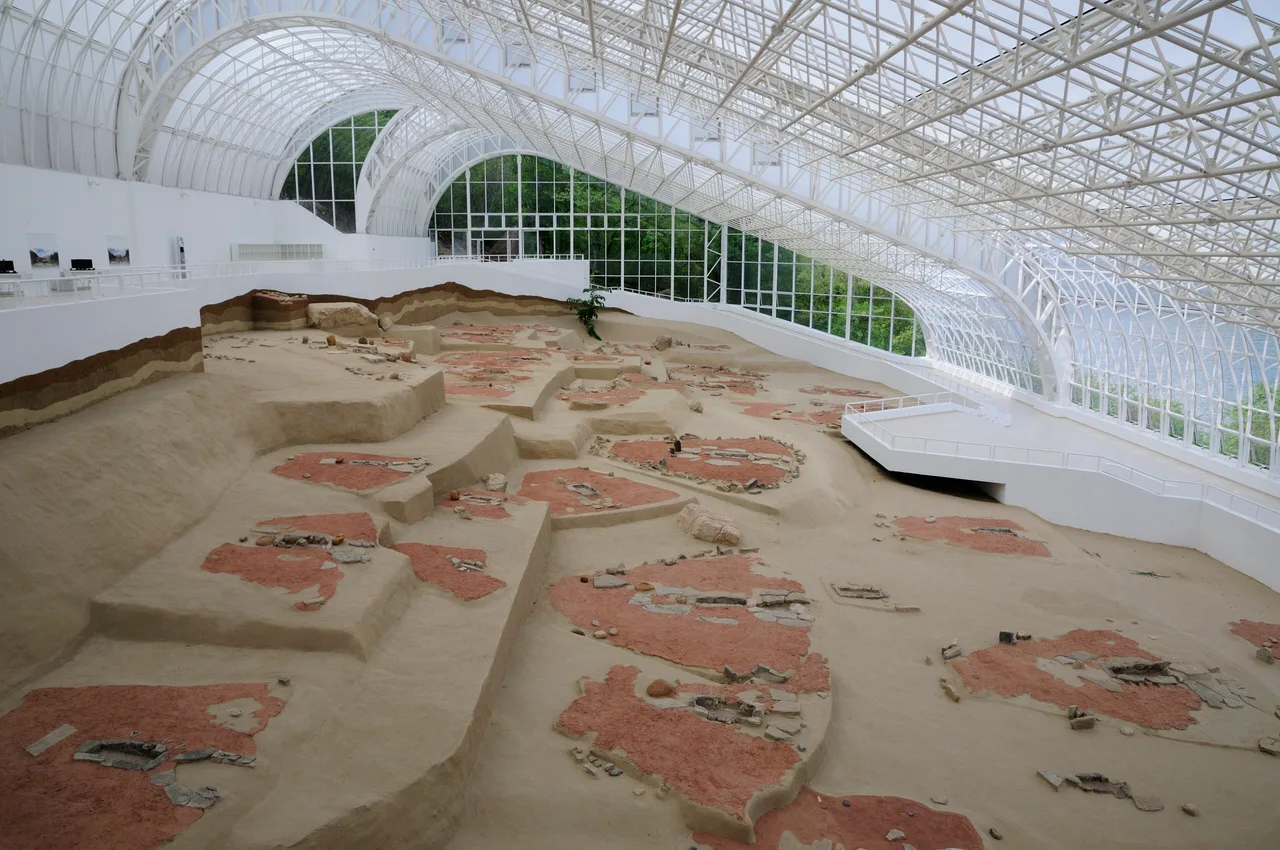
Fish-human sandstone sculptures and trapezoid house floors at Lepenski Vir, Serbia

Wikimedia Commons

Continent Record

Oldest Settlement in Europe

集落

Lepenski Vir

Seyfi Cem Baskin

Лепенски Вир7000 紀元前 – 5500 紀元前

The most remarkable Mesolithic settlement ever found — a precisely planned riverside village on the Danube in Serbia dating to 7000-5500 BCE whose trapezoid stone houses sheltered enigmatic fish-human sculptures, representing the earliest monumental art tradition in Europe.

31
関心 55

所在地

Serbia

44.55°N · 22.02°E · ヨーロッパ

Period

c. 7000-5500 BCE (Mesolithic/early Neolithic)

Houses

Trapezoid limestone-floor dwellings, precisely planned, oriented to the Danube

Sculptures

69 fish-human hybrid boulder carvings — oldest monumental art in Europe

Economy

Hunter-fishers (not farmers); relied on Danube beluga sturgeon

Discovery

1965; site submerged by dam in 1970 after excavation

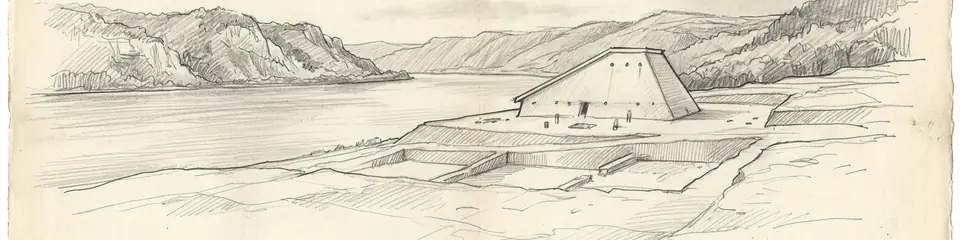
Graphite pencil sketch banner of Lepenski Vir

“Lepenski Vir overturns one of the foundational assumptions of prehistory: that settled life, monumental architecture, and sculptural art required the Neolithic revolution and the adoption of farming.”

所在地

概要

Lepenski Vir occupies a natural terrace on the right bank of the Danube in the dramatic Iron Gates gorge at the border of modern Serbia and Romania. It was discovered in 1965 during surveys for a hydroelectric dam and excavated by Dragoslav Srejovic before the site was submerged. The excavated remains were removed to higher ground and are displayed at a museum above the original location.

The settlement was occupied from approximately 7000 to 5500 BCE by hunter-gatherer-fisher communities who lived in a very unusual way for Mesolithic Europe: instead of mobile encampments, they built a precisely planned village of trapezoid-shaped limestone houses arranged in a fan pattern around a central plaza, all oriented toward a distinctive whirlpool in the Danube and a striking mountain peak opposite. Each house had a carefully prepared limestone floor, a central hearth of red limestone slabs, and was built to precise geometric specifications — astonishing evidence of planning and permanence among hunter-gatherers.

The most extraordinary feature of Lepenski Vir is its sculpture. Sixty-nine boulders of Danube sandstone were carved into fish-human hybrid figures — wide-mouthed faces with bulging fish-eyes, combining human features with the appearance of the giant beluga sturgeon that spawned in the Danube gorge. These sculptures, the oldest monumental art in Europe, were found placed in precise positions within the houses, typically at the base of the hearths. Their meaning is unknown, but they appear to combine veneration of the Danube river and its fish with ancestral or spiritual imagery.

Lepenski Vir challenges the assumption that complex art, permanent settlements, and monumental architecture required agriculture: this was a society that built like farmers but lived as hunter-fishers.

重要性

Lepenski Vir overturns one of the foundational assumptions of prehistory: that settled life, monumental architecture, and sculptural art required the Neolithic revolution and the adoption of farming. Its inhabitants were hunter-gatherers who nonetheless built permanent, precisely planned houses, developed a monumental sculptural tradition, and maintained the same settlement for 1,500 years. The fish-human sculptures are not only the oldest monumental art in Europe — they represent a completely independent artistic tradition unlike anything in contemporary Mesolithic or Neolithic Europe, probably rooted in the specific ecology of the Iron Gates gorge and its extraordinary fish resources. Lepenski Vir is a reminder that cultural complexity can arise from many different economic strategies and that the standard Palaeolithic-Neolithic trajectory vastly underestimates the diversity of prehistoric human life.

証拠と解釈

確立された事実と議論が続く事柄を区別する。

確立された事実

3
  • Radiocarbon dating establishes occupation from c. 7000-5500 BCE; the precisely trapezoid limestone house floors, all oriented the same direction, confirm deliberate planning rather than ad hoc construction.
  • 69 carved sandstone boulders with fish-human hybrid faces have been documented in situ within house floors; their placement at the bases of hearths suggests a ritual or domestic cult role.
  • Animal bone analysis shows the diet was dominated by fish (especially Danube beluga sturgeon and carp), supplemented by red deer and boar — a sedentary economy based on predictable fish spawning runs rather than agriculture.

学術的推論

1
  • The precise orientation of all houses toward the same Danube whirlpool and mountain peak is interpreted as cosmological or ritual significance — possibly related to the belief that souls of the dead passed through the whirlpool — but no written or oral tradition survives to confirm this.

コミュニティ写真

あなたの体験を共有する

この遺跡を訪れたことがありますか?写真をアップロードして魅力を共有しましょう。

このページの引用方法

Atlas Anatolia. (7000). Lepenski Vir. Atlas Anatolia. https://atlasanatolia.com/ja/site/lepenski-vir

コンテンツはCC BY-SA 4.0ライセンスの下で提供されています — 再利用の際は出典表示が必要です。

出典

  • Europe's First Monumental Sculpture: New Discoveries at Lepenski Vir — Srejovic, Dragoslav (1972)
  • Absolute Dating of Metallurgical Innovations in the Vinca Culture of the Balkans — Boric, Dusan (2009)

よくある質問

Lepenski Virはどこにありますか?

Lepenski VirはSerbiaに位置しています。

Lepenski Virの年代はいつ頃ですか?

Lepenski Virはおよそ7000 紀元前 – 5500 紀元前のものとされています。

Lepenski Virが重要な理由は何ですか?

Lepenski Vir overturns one of the foundational assumptions of prehistory: that settled life, monumental architecture, and sculptural art required the Neolithic revolution and the adoption of farming.

Lepenski Virはユネスコ世界遺産ですか?

Lepenski Virは現在ユネスコ世界遺産には登録されていません。