
コンテンツへスキップ
Atlas Anatolia
ニュースIce Age teeth in Sulawesi push betel-nut use back as far as 25,000 yearsRoman mosaic and Eros head uncovered in the basilica at Pompeiopolis, Kastamonu
Caral — Peru

Wikimedia Commons (CC BY-SA)

Continent Record

Oldest City in South America

都市UNESCO注目

Caral

Seyfi Cem Baskin

3000 紀元前 – 1800 紀元前

Caral, a 5,000-year-old urban center in Peru, features monumental pyramids and circular plazas, revealing complex society without pottery or warfare.

422
関心 61

所在地

Lima Region · Supe Valley · ペルー

10.89°S · 77.52°W · 南アメリカ

Built

c. 3000–1800 BCE (main phase 2600–2000 BCE)

Civilization

Caral-Supe (Norte Chico)

Location

Supe Valley, Barranca Province, Peru

Area

66 hectares

Discovered

1948 by Paul Kosok; major excavations since 1994 by Ruth Shady

Status

UNESCO World Heritage Site (2009)

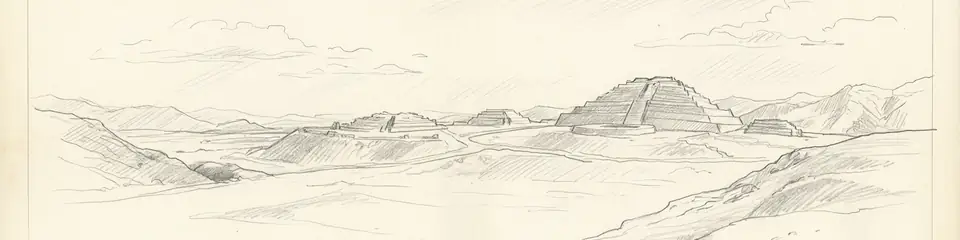
Graphite pencil sketch banner of Caral

“Caral is the oldest known urban center in the Americas, predating the Olmec by over 1,500 years.”

所在地

概要

Discovery and Excavation

Caral was first identified in 1948 by Paul Kosok during a survey of the Supe Valley, who noted its preceramic age and monumental architecture. Systematic archaeological work began in 1994 under Ruth Shady, whose Caral-Supe Special Archaeological Project conducted extensive excavations, mapping, and conservation. The site's remote location and dry conditions preserved organic materials, enabling precise radiocarbon dating and insights into early village life.

Chronology

Radiocarbon dates from reed bags, textiles, and wooden lintels consistently place the main occupation between 3000 and 1800 BCE, with a peak construction phase around 2600–2000 BCE. The city developed over several centuries, with platform mounds expanded and rebuilt in multiple phases. This chronology makes Caral one of the earliest urban centers in the world, contemporaneous with Egyptian pyramids and Mesopotamian ziggurats.
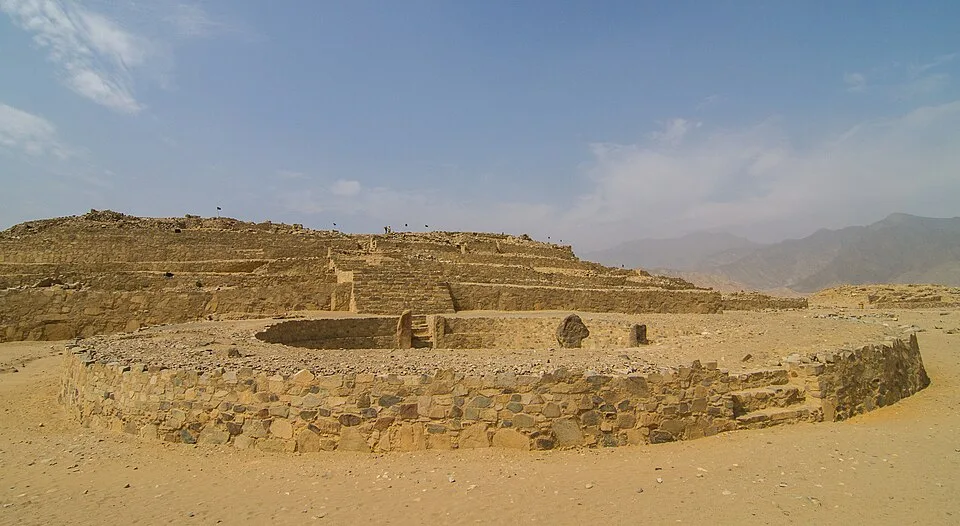
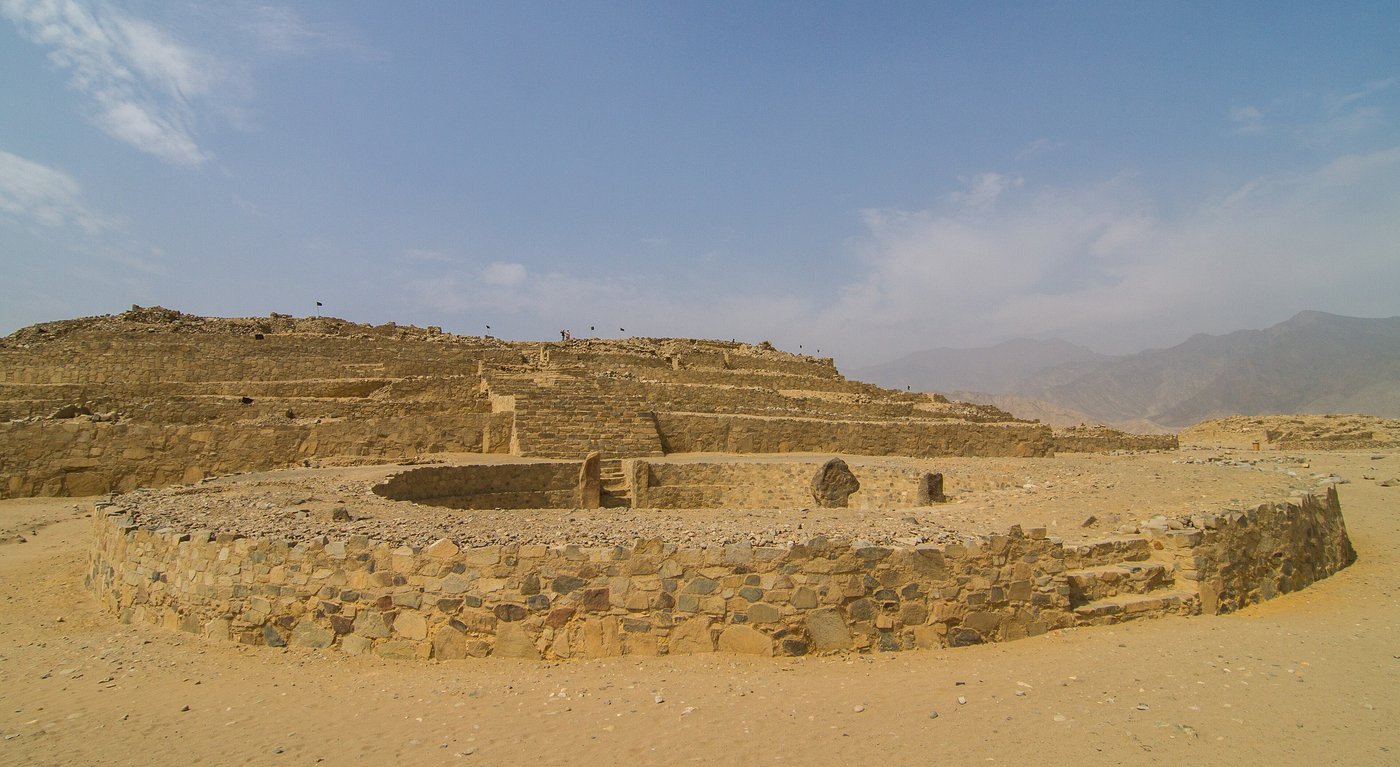
Mayor Pyramid and circular enclosure. Caral, Peru
Mayor Pyramid and circular enclosure. Caral, Peru | Jon Gudorf Photography (CC BY-SA 2.0)
"Here at Caral, in this dry valley far from the sea, we have found a city as old as the pyramids of Egypt — and yet built without weapons of war, without writing, without ceramics, by people whose names we will never know."
— Ruth Shady Solís, Director of the Caral Archaeological Project, announcing radiocarbon dates of 2627 BCE (2001)

Architecture and Urban Design

The 66-hectare site is dominated by a core of six large platform mounds arranged around two sunken circular plazas. The largest, Piramide Mayor, measures 150 by 110 meters at the base and rises 28 meters. Structures were built with stone walls plastered in clay, often painted white or yellow. Residential areas, workshops, and elite compounds surround the monuments. The urban layout shows sophisticated planning and labor coordination, without evidence of a ruling elite's exclusive presence.
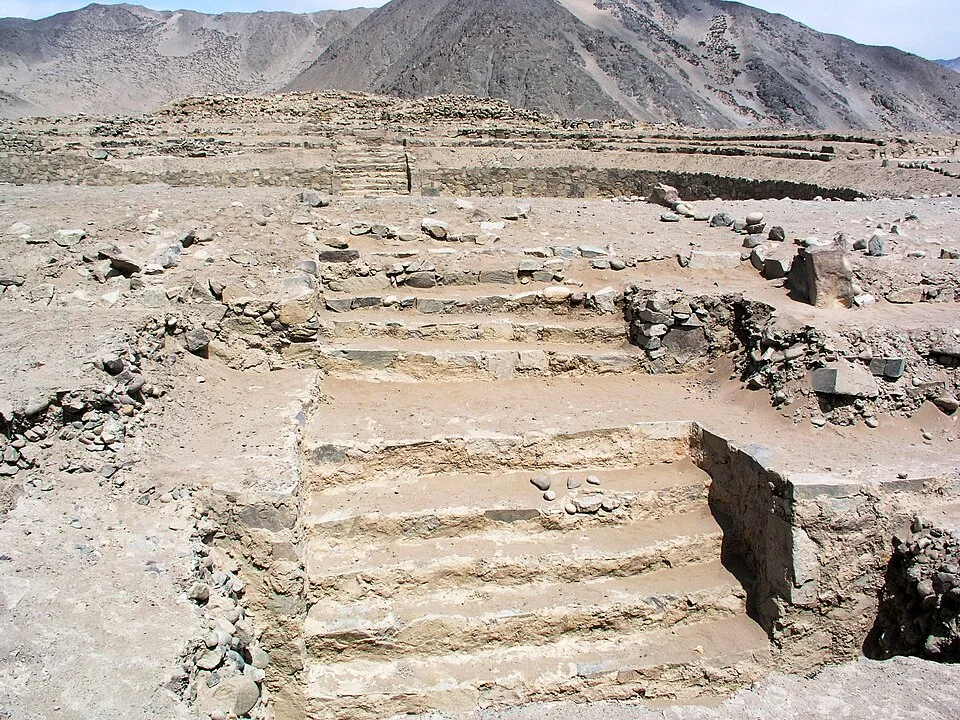
PeruCaral24
PeruCaral24 | Håkan Svensson Xauxa (CC BY 2.5)

Society and Economy

Caral's inhabitants practiced mixed subsistence: they grew squash, beans, and cotton using irrigation from the Supe River, and exploited marine resources through trade with coastal fishing communities. No fortifications, weapons, or skeletal trauma have been found, leading many scholars to infer a peaceful society integrated by ideology and exchange. Artifacts include elaborate textiles, bone flutes, and possible quipu-like objects, suggesting ritual complexity and administrative record-keeping. The absence of pottery is a defining trait of this preceramic civilization, with containers made from gourds, wood, and baskets.

Significance

Caral challenges traditional models of state formation by demonstrating that monumental architecture and complex society can arise without warfare or ceramic technology. As the flagship site of the Norte Chico civilization, it provides key evidence for the autonomous emergence of urbanism in the Andes. Today, Caral is a UNESCO World Heritage Site and a central piece in debates about early political organization and the development of civilization.
重要性

Caral is the oldest known urban center in the Americas, predating the Olmec by over 1,500 years. Its peaceful, monument-building society without pottery challenges theories linking state formation to warfare and technological innovation. As the flagship site of the Norte Chico civilization, it demonstrates independent emergence of complex social organization.

証拠と解釈

確立された事実と議論が続く事柄を区別する。

確立された事実

4
  • Radiocarbon dating of organic materials places the site's occupation between 3000 and 1800 BCE.
  • The site features six monumental platform mounds, sunken circular plazas, and extensive residential zones.
  • No pottery was produced at Caral; the culture is preceramic, relying on gourd, wood, bone, and textiles for containers.
  • Architectural fills lack domestic refuse, indicating planned, corporate construction events.

学術的推論

2
  • The absence of fortifications, weapons, or trauma suggests a peaceful society, possibly maintained through ideology and trade.
  • Cotton and fish remains indicate extensive trade networks with coastal groups, likely for subsistence diversification.

議論のある解釈

2
  • Whether Caral represents a state-level society with centralized authority or a chiefdom relying on ritual integration.
  • The interpretation of quipu-like textile objects as evidence of record-keeping and complex administration.

発見と発掘調査

Ongoing conservation and tourism

指揮 Zona Arqueológica Caral

The site is maintained as a public archaeological park with guided access, continuing research into peripheral zones.

1948

Initial reconnaissance

指揮 Paul Kosok

Paul Kosok identified the site as preceramic and noted its monumental architecture during a survey of the Supe Valley.

1975

Preliminary mapping

指揮 Carlos Williams

Archaeologist Carlos Williams conducted detailed topographic mapping, published in 1980.

1994

Caral-Supe Special Archaeological Project

指揮 Ruth Shady (Proyecto Especial Arqueológico Caral-Supe)

Ruth Shady initiated systematic excavations, focusing on the Piramide Mayor, residential areas, and dating.

2003–2009

Comprehensive research and conservation

指揮 Ruth Shady / Instituto Nacional de Cultura

Expanded excavations, consolidation of structures, and management plan development leading to UNESCO nomination.

コミュニティ写真

あなたの体験を共有する

この遺跡を訪れたことがありますか?写真をアップロードして魅力を共有しましょう。

関連記事

このページの引用方法

Atlas Anatolia. (3000). Caral. Atlas Anatolia. https://atlasanatolia.com/ja/site/caral

コンテンツはCC BY-SA 4.0ライセンスの下で提供されています — 再利用の際は出典表示が必要です。

グラフ

関連する遺跡やストーリーへのつながり。

出典

  • Shady, R. and Leyva, C. (2003), La ciudad sagrada de Caral-Supe: los orígenes de la civilización andina y la formación del Estado prístino en el antiguo Perú — Ruth Shady, Carlos Leyva (2003)
  • Shady, R., Haas, J., Creamer, W. (2001), Dating Caral, a Preceramic Site in the Supe Valley on the Central Coast of Peru. Science 292: 723-726. — Ruth Shady, Jonathan Haas, Winifred Creamer (2001)
  • Haas, J. and Creamer, W. (2006), Crucible of Andean Civilization: The Peruvian Coast from 3000 to 1800 BC. Current Anthropology 47(5): 745-775. — Jonathan Haas, Winifred Creamer (2006)
  • UNESCO World Heritage List: Sacred City of Caral-Supeリンク
  • Moseley, M.E. (2001), The Incas and Their Ancestors: The Archaeology of Peru (Revised Edition) — Michael E. Moseley (2001)

よくある質問

Caralはどこにありますか?

CaralはLima Region, Supe Valley, Peruに位置しています。

Caralの年代はいつ頃ですか?

Caralはおよそ3000 紀元前 – 1800 紀元前のものとされています。

Caralはどの文明に関連していますか?

CaralはCaral-Supe文明に関連しています。

Caralが重要な理由は何ですか?

Caral is the oldest known urban center in the Americas, predating the Olmec by over 1,500 years.

Caralはユネスコ世界遺産ですか?

はい — Caralはユネスコ世界遺産に登録されています。