
コンテンツへスキップ
Atlas Anatolia
ニュースIce Age teeth in Sulawesi push betel-nut use back as far as 25,000 yearsRoman mosaic and Eros head uncovered in the basilica at Pompeiopolis, Kastamonu
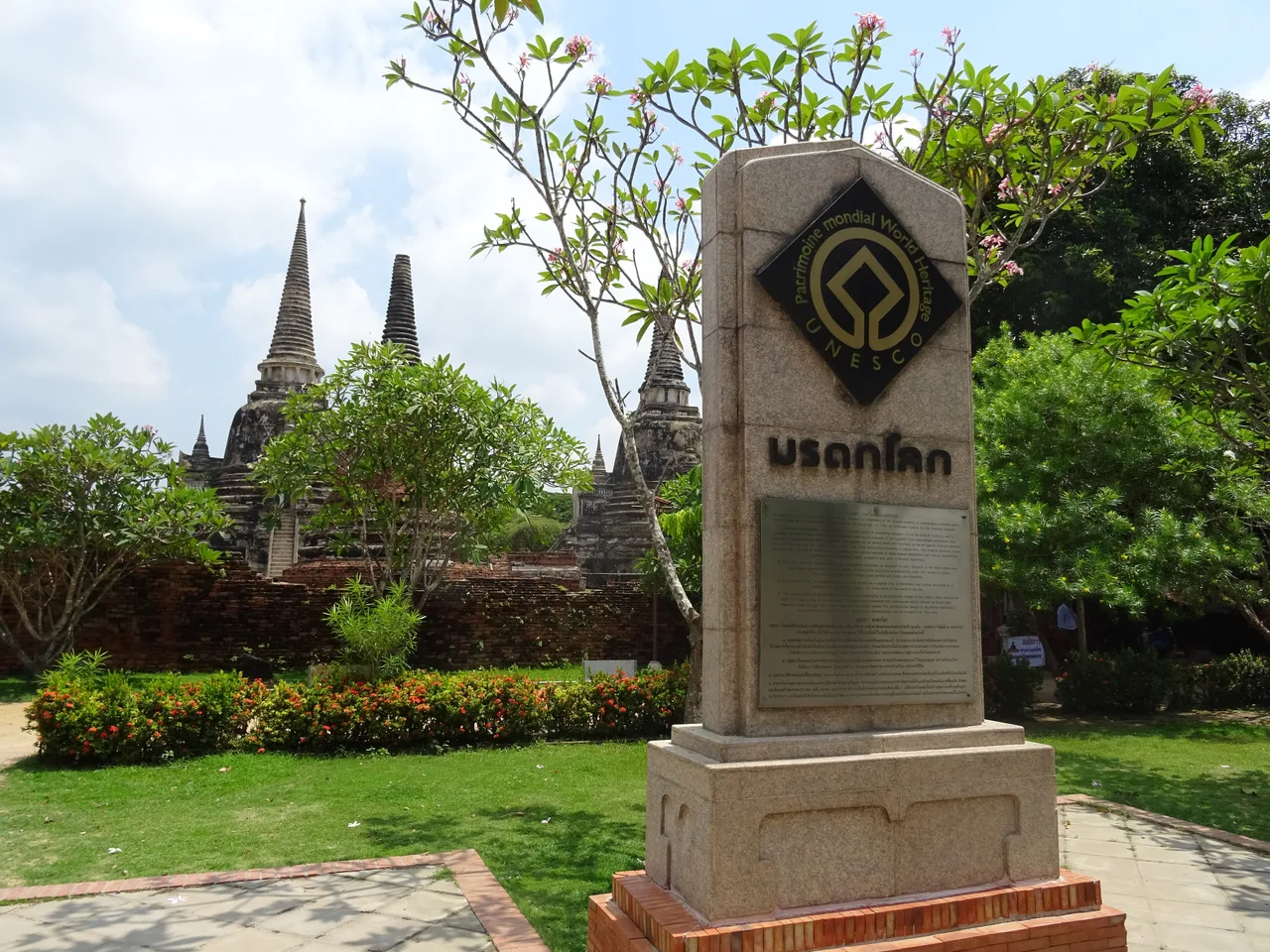
The three great chedis of Wat Phra Si Sanphet at Ayutthaya Historical Park, Thailand

Wikimedia Commons

Country Record

Longest Continuously Occupied Site in Thailand

都市UNESCO注目

Ayutthaya

Seyfi Cem Baskin

พระนครศรีอยุธยา1350 西暦 – 1767 西暦

The glittering former capital of the Kingdom of Ayutthaya — a royal island city that ruled mainland Southeast Asia for over four centuries, traded with Japan, China, Persia, and Europe, and was described by European visitors as one of the greatest cities in the world before Burmese forces razed it in 1767.

31
関心 65

所在地

Thailand

14.35°N · 100.57°E · アジア

Founded

1350 CE by King Ramathibodi I

Destroyed

1767 by Burmese army after 14-month siege

Peak population

Estimated 1 million — among the largest cities in the world

Trade partners

China, Japan, Persia, Portugal, Netherlands, France

Duration

417 years as capital (1350-1767)

UNESCO

World Heritage Site 1991

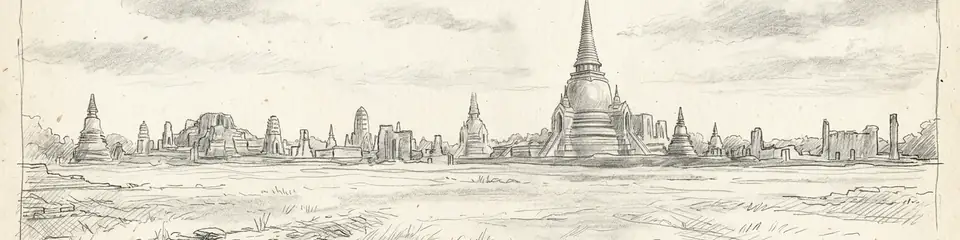
Graphite pencil sketch banner of Ayutthaya

“Ayutthaya was one of the great cosmopolitan cities of the early modern world — a place where Thai, Khmer, Chinese, Japanese, Indian, Persian, Portuguese, Dutch, and French merchants and diplomats lived side by side.”

所在地

概要

Ayutthaya stands on an island formed by the confluence of three rivers in the central plain of modern Thailand. Founded in 1350 by King Ramathibodi I, it became the capital of a powerful Thai kingdom that absorbed the legacy of the Khmer Empire and grew into one of the most prosperous and cosmopolitan cities in Asia. At its peak in the 17th century the city had a population estimated at one million — larger than Paris or London at the time — and hosted trading communities from China, Japan, India, Persia, Portugal, the Netherlands, France, and England.

The city was renowned for its elaborate ceremonial architecture. Hundreds of Buddhist temples (wats) adorned with gilded spires (prangs), white chedis, and vast Buddha images were built across the island. The royal palace at the centre was described by European visitors as a place of extraordinary splendour. Diplomatic missions from Louis XIV of France and other European monarchs were received here in the 17th century, and Ayutthaya's rulers collected Greek and Persian advisors alongside its Asian merchants.

In 1767 a Burmese army under King Hsinbyushin besieged and sacked Ayutthaya after a 14-month siege, looting its gold, melting its Buddha images, and systematically destroying the palace and temples. The capital never recovered and was permanently relocated to Bangkok. The ruins visible today — truncated prangs, decapitated Buddha statues, shattered walls rising from the rice paddies — are among the most evocative archaeological landscapes in Southeast Asia. UNESCO inscribed Ayutthaya Historical Park in 1991.

重要性

Ayutthaya was one of the great cosmopolitan cities of the early modern world — a place where Thai, Khmer, Chinese, Japanese, Indian, Persian, Portuguese, Dutch, and French merchants and diplomats lived side by side. Its nearly four-century history shaped the culture, religion, law, and artistic traditions that define Thailand today. The ruins of Ayutthaya are a direct archaeological record of what was lost in 1767: an entire civilisation's architectural, artistic, and political achievements destroyed in a single siege. The decapitated Buddha statues — taken by looters who melted the gold from the heads — have become one of the iconic images of cultural destruction in Asian history. Studying Ayutthaya means confronting both the heights of Siamese civilisation and the catastrophic fragility of even the most powerful cities.

証拠と解釈

確立された事実と議論が続く事柄を区別する。

確立された事実

3
  • Thai royal chronicles (Phongsawadan) and foreign accounts (Dutch VOC records, French diplomatic dispatches) document Ayutthaya's founding in 1350, its trade network, and its destruction in 1767 in considerable detail.
  • The ruins of over 400 temples and numerous palaces survive across the Ayutthaya island, datable by inscriptions, art-historical analysis, and radiocarbon dating to the 14th-18th centuries.
  • Foreign trading quarters (Japanese, Chinese, Portuguese, Dutch, English) have been confirmed by both documentary evidence and archaeological excavation of trade goods, ceramics, and structural remains.

学術的推論

1
  • The population estimate of one million is based on extrapolation from the area of the city and the density of its documented trading activities; no direct census survives, and modern estimates range from 300,000 to over one million.

コミュニティ写真

あなたの体験を共有する

この遺跡を訪れたことがありますか?写真をアップロードして魅力を共有しましょう。

このページの引用方法

Atlas Anatolia. (1350). Ayutthaya. Atlas Anatolia. https://atlasanatolia.com/ja/site/ayutthaya

コンテンツはCC BY-SA 4.0ライセンスの下で提供されています — 再利用の際は出典表示が必要です。

出典

  • Thailand: A Short History — Wyatt, David K. (2003)
  • A History of Thailand — Baker, Chris & Phongpaichit, Pasuk (2014)

よくある質問

Ayutthayaはどこにありますか?

AyutthayaはThailandに位置しています。

Ayutthayaの年代はいつ頃ですか?

Ayutthayaはおよそ1350 西暦 – 1767 西暦のものとされています。

Ayutthayaはどの文明に関連していますか?

AyutthayaはAyutthaya Kingdom文明に関連しています。

Ayutthayaが重要な理由は何ですか?

Ayutthaya was one of the great cosmopolitan cities of the early modern world — a place where Thai, Khmer, Chinese, Japanese, Indian, Persian, Portuguese, Dutch, and French merchants and diplomats lived side by side.

Ayutthayaはユネスコ世界遺産ですか?

はい — Ayutthayaはユネスコ世界遺産に登録されています。