
Vai al contenuto
Atlas Anatolia
NotizieIce Age teeth in Sulawesi push betel-nut use back as far as 25,000 yearsRoman mosaic and Eros head uncovered in the basilica at Pompeiopolis, Kastamonu
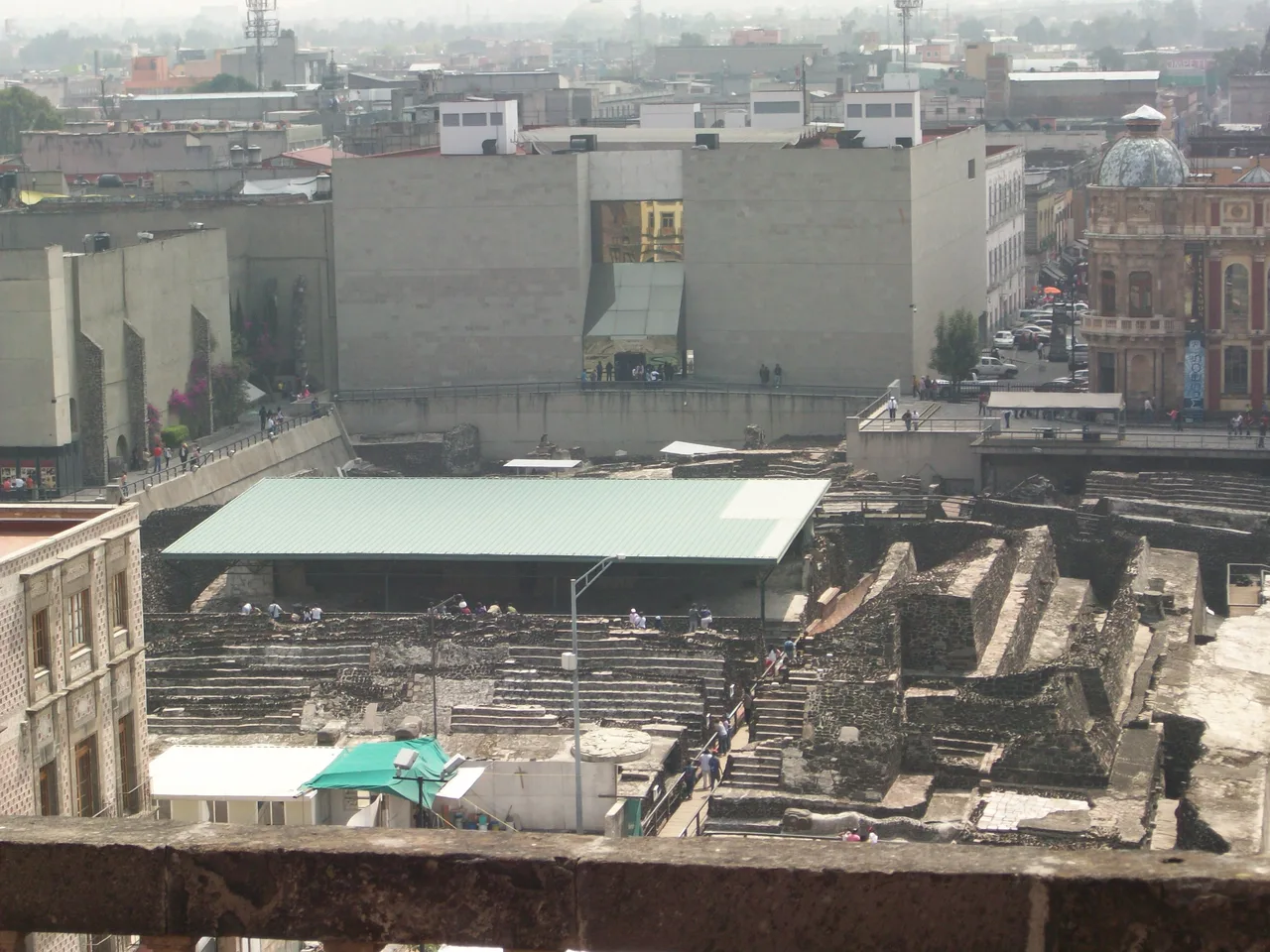
The excavated remains of Templo Mayor in central Mexico City

Wikimedia Commons

Record continentale

Oldest Temple in North America

Tempio

Templo Mayor

Seyfi Cem Baskin

1325 d.C. – 1521 d.C.

The principal temple of the Aztec capital Tenochtitlan, rebuilt seven times and now excavated beneath Mexico City's historic center — its discovery in 1978 transformed understanding of Aztec religious life.

3
Interesse 70

Posizione

Messico

19.44°N · 99.13°W · America del Nord

Construction period

c. 1325–1521 CE (rebuilt 7 times)

Coyolxauhqui Stone discovered

25 February 1978

Offerings found

7,000+ objects in 200 offering caches

Depth below Zócalo

2–3 m

Dedication

Twin shrines: Huitzilopochtli (sun/war) and Tlaloc (rain)

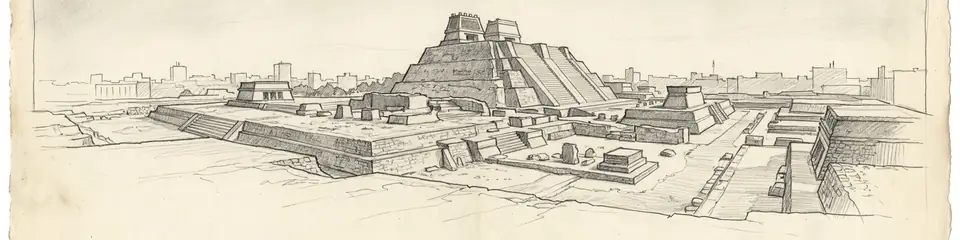
Graphite pencil sketch banner of Templo Mayor

The Coyolxauhqui Stone is one of the most significant archaeological finds of the twentieth century in the Americas: it transformed Templo Mayor from a historical abstraction into an active excavation site in the center of a living city of 9 million.”

Posizione

Panoramica

Templo Mayor (Huey Teocalli, "Great Temple") was the religious and symbolic heart of Tenochtitlan, the Aztec capital founded c. 1325 CE on an island in Lake Texcoco. The city, with a population of 200,000–400,000 at its height in the early sixteenth century, was larger than any contemporary European city. The temple stood at the exact center of the Aztec universe as understood by its builders: oriented precisely to the cardinal directions, its summit level with the horizon when viewed from the lake. The structure was rebuilt at least seven times on top of itself, each new version encasing the previous one — a pattern driven by the Aztec calendrical cycle. Twin staircases rose to twin shrines at the summit: one dedicated to Huitzilopochtli (the sun and war god) and one to Tlaloc (rain and agriculture). The temple was demolished by the Spanish in 1521 and its stones used to build Mexico City's colonial center. Its existence under the Zócalo was suspected but unconfirmed until February 1978, when electrical workers excavating a trench struck the Coyolxauhqui Stone — a 3.25-meter monolithic disc weighing 8.5 tonnes, carved with the dismembered body of the moon goddess. The find triggered a decade of excavations directed by Eduardo Matos Moctezuma, uncovering more than 7,000 offerings deposited in sealed caches.
Perché è importante

The Coyolxauhqui Stone is one of the most significant archaeological finds of the twentieth century in the Americas: it transformed Templo Mayor from a historical abstraction into an active excavation site in the center of a living city of 9 million. The 7,000+ offerings found in the temple's deposits — jaguar skeletons, coral from the Gulf of Mexico, Olmec masks 2,000 years older than the Aztec period, obsidian blades, and copal incense burners — constitute the largest and most varied ritual deposit from pre-Columbian North America. Recent excavations (2021–2023) have uncovered a circular temple directly below the Templo Mayor that may be associated with the mythical island of Aztlan, a find still under analysis. Templo Mayor demonstrates the continuous occupation of the same urban site from the Aztec foundation to the present: the ruins lie 2–3 meters below the Zócalo, the main plaza of modern Mexico City.

Evidenze e interpretazione

Distinguere ciò che è ben consolidato da ciò che rimane dibattuto.

Fatti ben consolidati

3
  • The Coyolxauhqui Stone, found in 1978, weighs 8.5 tonnes and measures 3.25 m in diameter. Iconographic analysis confirms it depicts the dismembered moon goddess Coyolxauhqui at the base of Templo Mayor, consistent with the myth in which Huitzilopochtli kills her.
  • Offering caches have yielded more than 7,000 objects, including Olmec greenstone masks dating to 900–400 BCE — 1,000–1,500 years before the Aztec period — demonstrating deliberate collection of ancient objects as ritual items of prestige.
  • The temple was oriented to true east on its Tlaloc side and slightly off true east on its Huitzilopochtli side, such that the sun rose directly over the stairs of Huitzilopochtli on two equinox-adjacent dates significant to the Aztec ritual calendar.

Foto della comunità

Condividi la tua esperienza

Hai visitato questo sito? Carica le tue foto per aiutare gli altri a scoprirlo.

Storie correlate

Come citare questa pagina

Atlas Anatolia. (1325). Templo Mayor. Atlas Anatolia. https://atlasanatolia.com/it/site/templo-mayor

Contenuto con licenza CC BY-SA 4.0 — è richiesta l'attribuzione in caso di riutilizzo.

Grafico

Collegamenti a siti e storie correlati.

Fonti

  • The Great Temple of the AztecsEduardo Matos Moctezuma (1988)
  • Proyecto Templo Mayor — INAHCollegamento

Domande frequenti

Dove si trova Templo Mayor?

Templo Mayor si trova in Mexico.

A quando risale Templo Mayor?

Templo Mayor risale all'incirca al 1325 d.C. – 1521 d.C..

Quali civiltà sono associate a Templo Mayor?

Templo Mayor è associato alla civiltà Aztec / Mexica.

Perché Templo Mayor è importante?

The Coyolxauhqui Stone is one of the most significant archaeological finds of the twentieth century in the Americas: it transformed Templo Mayor from a historical abstraction into an active excavation site in the center of a living city of 9 million.

Templo Mayor è un sito Patrimonio Mondiale dell'UNESCO?

Templo Mayor non è attualmente iscritto nella lista del Patrimonio Mondiale dell'UNESCO.