Vai al contenuto
Atlas Anatolia
NotizieIce Age teeth in Sulawesi push betel-nut use back as far as 25,000 yearsRoman mosaic and Eros head uncovered in the basilica at Pompeiopolis, Kastamonu
The fifteen moai of Ahu Tongariki at Easter Island (Rapa Nui), Chile

Wikimedia Commons

Record continentale

Most-Visited Ancient Site in Oceania

MonumentoUNESCOIn evidenza

Easter Island

Seyfi Cem Baskin

Rapa Nui900 d.C. – 1722 d.C.

The most remote inhabited island on Earth and the home of the moai — over 900 monumental stone figures, some weighing 80 tonnes, carved and transported by the Rapa Nui people across a tiny Pacific island to stand on ceremonial platforms as the embodied presence of ancestral chiefs.

31
Interesse 88

Posizione

Chile

27.11°S · 109.35°W · Oceania

Moai count

Over 900 carved; ~300 erected on coastal ahu platforms

Largest erected

Paro moai: 10 m tall, ~82 tonnes

Settlement

Polynesian voyagers arriving c. 700-1200 CE — most remote colonisation in history

Quarry

Rano Raraku: 400 unfinished moai still in situ

Distance

3,700 km from nearest continent (Chile)

UNESCO

World Heritage Site 1995

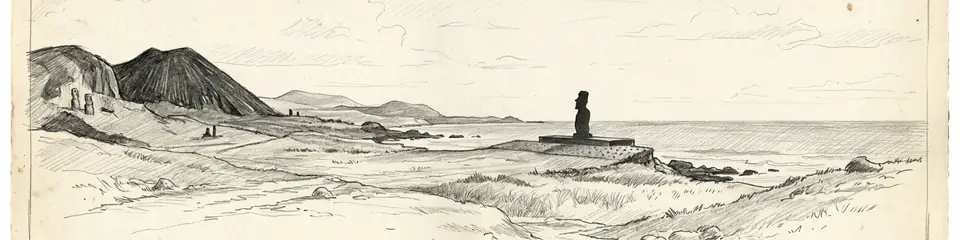
Graphite pencil sketch banner of Easter Island

The moai of Easter Island are among the most recognisable images in human history — colossal stone faces staring out from the world's most isolated island.”

Posizione

Panoramica

Easter Island lies in the southeastern Pacific Ocean, 3,700 kilometres west of Chile and 2,075 kilometres from the nearest inhabited island — Pitcairn. At 163 square kilometres it is one of the most isolated permanently inhabited places on the planet. It was settled by Polynesian voyagers, probably from the Marquesas or Mangareva islands, sometime between 700 and 1200 CE — an extraordinary feat of open-ocean navigation.

The Rapa Nui people who colonised the island developed a unique culture whose most visible expression is the moai: tall, long-faced stone figures averaging 4 metres tall and 12.5 tonnes in weight, carved from the volcanic tuff of Rano Raraku quarry on the eastern side of the island. At least 900 moai were carved; approximately 400 remain unfinished in the quarry, and around 300 were transported to ahu (stone platform altars) around the coast, where they were erected with their backs to the sea, watching over the villages of their clans. The largest erected moai stands 10 metres tall; the largest in the quarry is 21 metres.

"We could not understand how it was possible that people who were destitute of heavy and thick timber, and also of stout cordage, could raise such statues."
— Jacob Roggeveen, journal of the Dutch discovery of Rapa Nui, Easter Day 1722

Transporting the moai — some weighing up to 80 tonnes — from quarry to ahu across the island without metal tools or wheeled vehicles is one of the great engineering mysteries of the ancient world. Modern experiments suggest the statues may have been walked upright, rocking from side to side, with ropes. The moai wore topknots (pukao) of red scoria stone, emphasising their chief-like appearance. All of the standing moai were eventually toppled, probably during inter-clan warfare in the 17th-18th centuries.
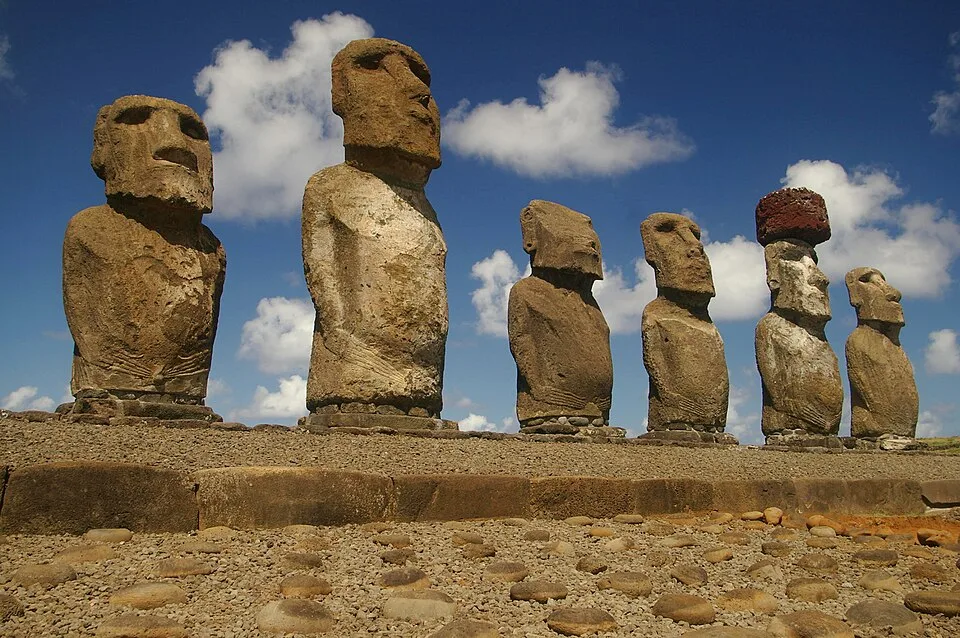
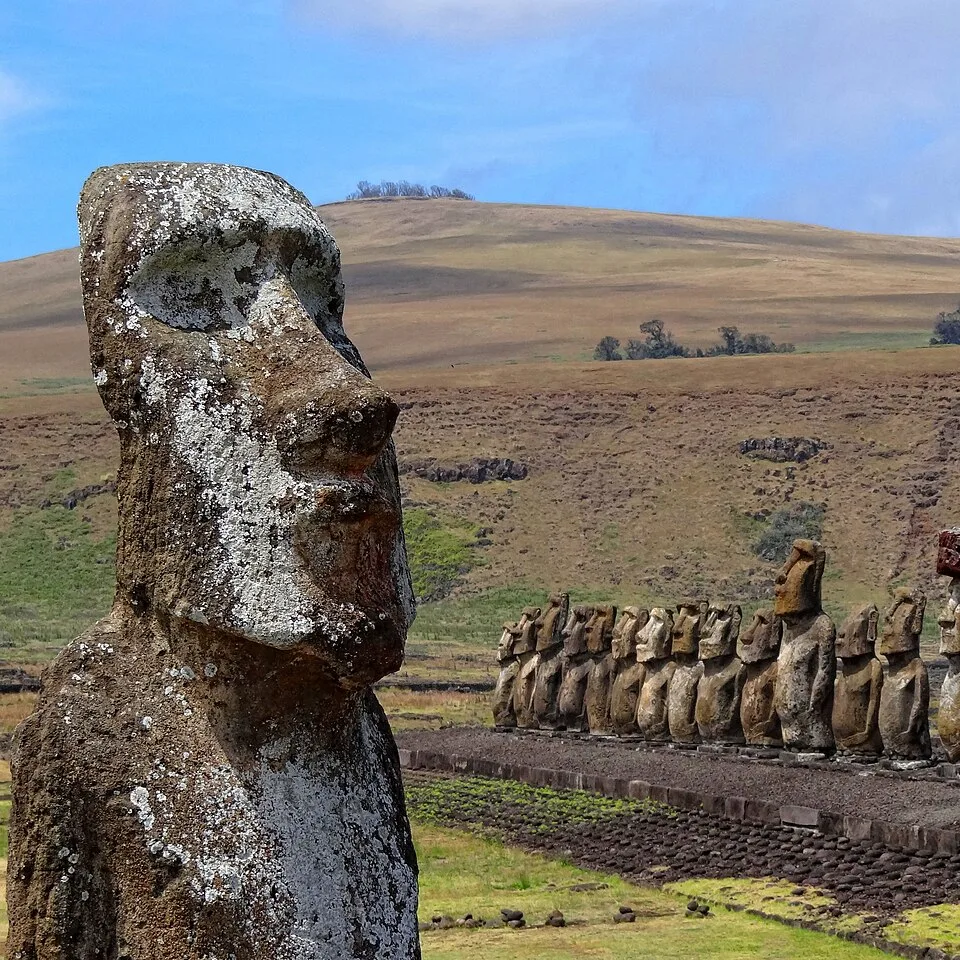
Ahu Tongariki cropped
Ahu Tongariki cropped | Rivi (CC BY-SA 3.0)
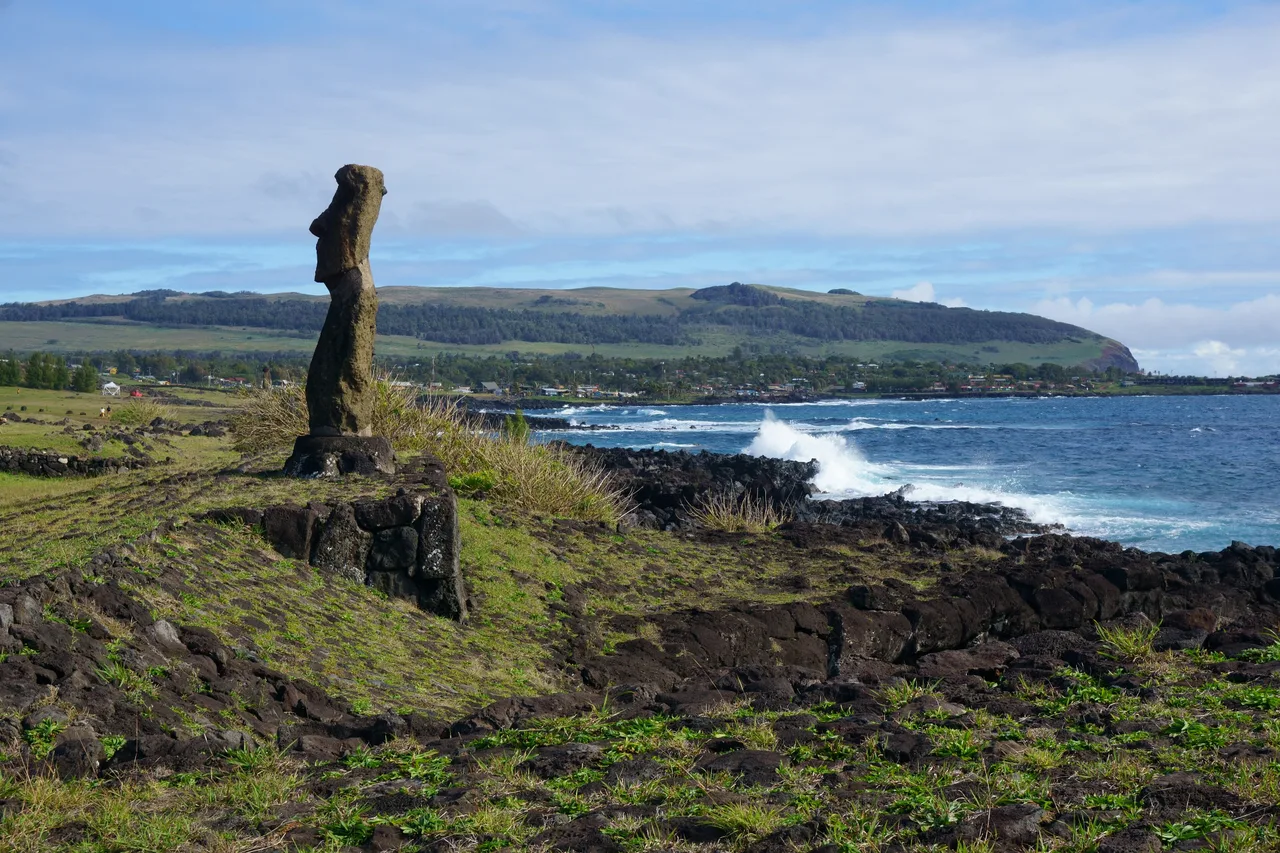
Ahu-Tongariki-and-Traveling-Moai cropped
Ahu-Tongariki-and-Traveling-Moai cropped | Bjørn Christian Tørrissen (CC BY-SA 4.0)
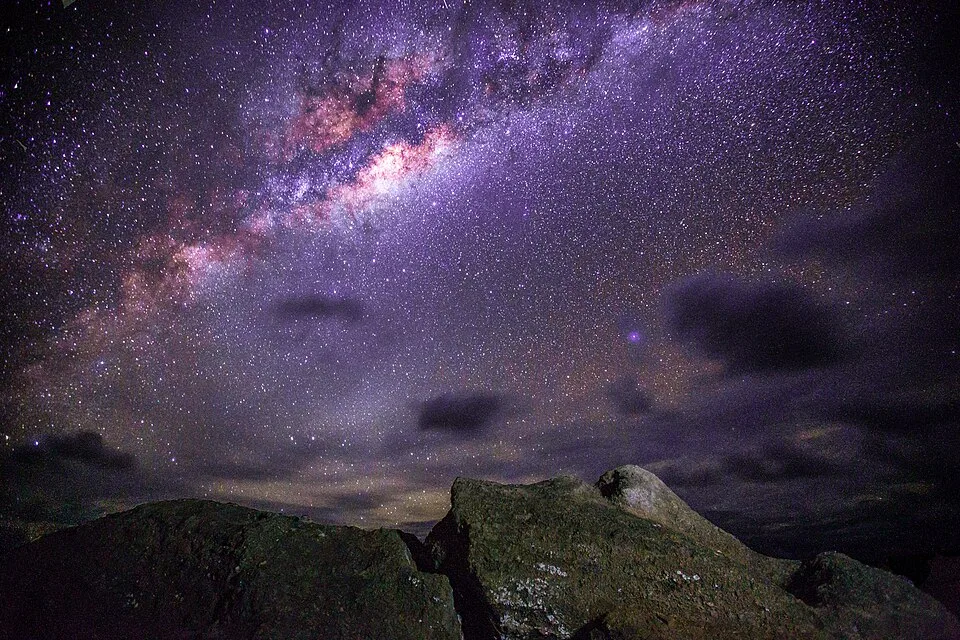
Moai Stargazing at Ahu Tongariki, Easter Island
Moai Stargazing at Ahu Tongariki, Easter Island | Anne Dirkse www.annedirkse.com (CC BY-SA 4.0)

Rapa Nui National Park was inscribed as a UNESCO World Heritage Site in 1995. The island is a territory of Chile.

Perché è importante

The moai of Easter Island are among the most recognisable images in human history — colossal stone faces staring out from the world's most isolated island. They represent the ultimate expression of Polynesian ancestor veneration: the belief that the carved image of a chief continued to exercise mana (spiritual power) over the living, protecting the clan and ensuring fertility and prosperity. Easter Island also became famous as a cautionary tale about ecological collapse: the island was once forested, and the progressive deforestation (probably driven by moai transport, agriculture, and rat predation) left the population unable to build canoes, escape, or sustain themselves. Recent research has complicated this narrative — many islanders survived and population decline was primarily caused by European slave raiding and disease after 1722 — but the story of Rapa Nui remains a powerful meditation on the relationship between human ambition, environmental limits, and civilisational vulnerability.

Evidenze e interpretazione

Distinguere ciò che è ben consolidato da ciò che rimane dibattuto.

Fatti ben consolidati

3
  • Radiocarbon dating of charcoal from cooking and agricultural contexts places the initial Polynesian settlement between c. 700 and 1200 CE; genetic and linguistic evidence confirms origin from Eastern Polynesia.
  • The Rano Raraku quarry preserves approximately 400 unfinished moai in all stages of manufacture, documenting the carving process; the largest unfinished figure is approximately 21 metres long.
  • Palynological analysis of lake sediment cores documents progressive deforestation of the island from roughly 800 CE onward, with near-total loss of the palm forest by 1650 CE; the cause is debated but likely includes combination of rat predation and human clearance.

Deduzioni accademiche

1
  • The precise method of moai transport is unconfirmed; experimental archaeology suggests upright walking with ropes is feasible and matches oral traditions describing the moai as walking to their positions, but no direct evidence of the technique survives.

Foto della comunità

Condividi la tua esperienza

Hai visitato questo sito? Carica le tue foto per aiutare gli altri a scoprirlo.

Come citare questa pagina

Atlas Anatolia. (900). Easter Island. Atlas Anatolia. https://atlasanatolia.com/it/site/easter-island

Contenuto con licenza CC BY-SA 4.0 — è richiesta l'attribuzione in caso di riutilizzo.

Fonti

  • The Statues that Walked: Unraveling the Mystery of Easter IslandHunt, Terry & Lipo, Carl (2011)
  • Easter Island: Archaeology, Ecology and CultureVan Tilburg, Jo Anne (1994)

Domande frequenti

Dove si trova Easter Island?

Easter Island si trova in Chile.

A quando risale Easter Island?

Easter Island risale all'incirca al 900 d.C. – 1722 d.C..

Quali civiltà sono associate a Easter Island?

Easter Island è associato alla civiltà Rapa Nui.

Perché Easter Island è importante?

The moai of Easter Island are among the most recognisable images in human history — colossal stone faces staring out from the world's most isolated island.

Easter Island è un sito Patrimonio Mondiale dell'UNESCO?

Sì — Easter Island è iscritto nella lista del Patrimonio Mondiale dell'UNESCO.