
सामग्री पर जाएँ
Atlas Anatolia
समाचारसुलावेसी में हिमयुगीन दाँतों से सुपारी के उपयोग का प्रमाण 25,000 वर्ष पुरानापोम्पेइओपोलिस, कस्तमोनू के बेसिलिका में रोमन मोज़ेक और इरोस का सिर मिला
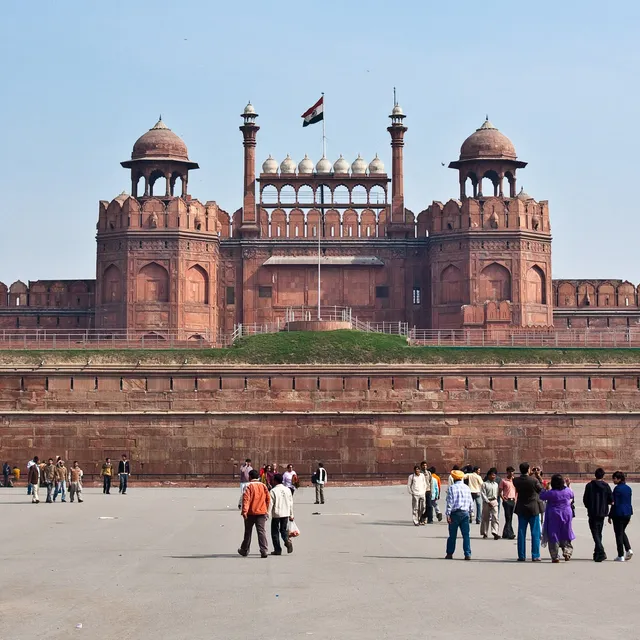
The Lahore Gate of the Red Fort, Delhi

Wikimedia Commons

धरोहरकिला / दुर्गयूनेस्कोविशेष रुप से प्रदर्शित

Red Fort

Seyfi Cem Baskin

लाल किला1639 ईस्वी – 1857 ईस्वी

Shah Jahan's red-sandstone palace-fortress in Delhi — the seat of Mughal power from 1648 until 1857 — whose Lahore Gate, Diwan-i-Am, and Nahr-i-Behisht apartments define the zenith of Mughal court architecture and host India's Independence Day ceremonies each year.

Built

1639–1648 CE for Shah Jahan's new capital Shahjahanabad

Architects

Traditionally Ustad Ahmad and Ustad Hamid

Ceremony

Indian Independence Day address from Lahore Gate since 1947

UNESCO

Red Fort Complex (2007)

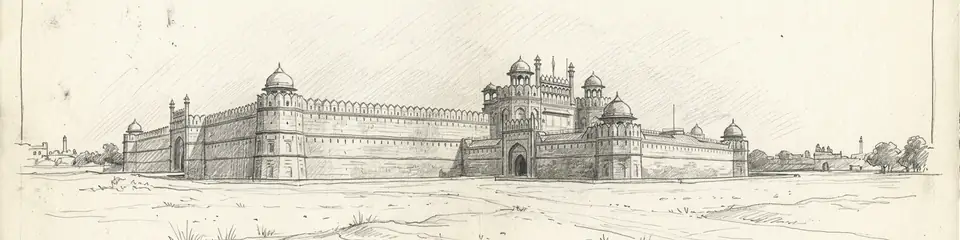
Graphite pencil sketch banner of Red Fort

“The Red Fort is the definitive Mughal imperial residence of the late period and the architectural culmination of Shah Jahan's building programme.”

स्थान

अवलोकन

The Red Fort (Lal Qila) stands on the west bank of the Yamuna in Old Delhi (Shahjahanabad), the walled capital Shah Jahan founded in 1639. Construction of the fort-palace proceeded from about 1639 to 1648 under architects Ustad Ahmad and Ustad Hamid, employing the same red sandstone and white marble vocabulary as Agra. The complex covers roughly 254 acres within 2.5 km of crenellated walls; the Lahore Gate and Delhi Gate pierce the ramparts.

Inside, the Nahr-i-Behisht (Stream of Paradise) canal fed a row of pavilions — Rang Mahal, Mumtaz Mahal, Khas Mahal — linking public audience halls to private imperial quarters. The Diwan-i-Am (Hall of Public Audience) and Diwan-i-Khas (Hall of Private Audience) staged Mughal ceremonial until the empire fragmented. The adjacent Salimgarh Fort (1546) forms the UNESCO-listed Red Fort Complex.

After the Indian Rebellion of 1857 the British occupied and altered the fort; post-1947 it became a national symbol, with the Prime Minister hoisting the flag from the Lahore Gate ramparts on 15 August. Archaeological Survey of India conservation continues on damaged pavilions and gardens.

यह क्यों महत्वपूर्ण है

The Red Fort is the definitive Mughal imperial residence of the late period and the architectural culmination of Shah Jahan's building programme. Its survival as both UNESCO heritage and living national monument makes it one of the most visited historic sites in South Asia.

साक्ष्य और व्याख्या

जो सुस्थापित है और जो विवादास्पद है, उनमें अंतर करना।

सुस्थापित तथ्य

2
  • Mughal textual sources and foundation inscriptions document Shah Jahan's commission and completion dates for the palace-fort.
  • Standing fabric preserves Nahr-i-Behisht canal layout, Diwan-i-Am/Khas plans, and red sandstone–marble craft of the 17th century.

विवादित व्याख्याएँ

1
  • The original appearance of lost silver-ceiling Diwan-i-Khas and stripped gem inlays is reconstructed from descriptions and fragments with varying confidence.

समुदाय तस्वीरें

अपना अनुभव साझा करें

क्या आपने इस स्थल का दौरा किया है? दूसरों को इसे खोजने में मदद करने के लिए अपनी तस्वीरें अपलोड करें।

इस पृष्ठ को कैसे उद्धृत करें

Atlas Anatolia. (1639). Red Fort. Atlas Anatolia. https://atlasanatolia.com/hi/site/red-fort

सामग्री CC BY-SA 4.0 के अंतर्गत लाइसेंस प्राप्त है — पुनः उपयोग करते समय श्रेय देना आवश्यक है।

स्रोत

  • The Complete Taj Mahal and the Riverfront Gardens of Agra — Koch, Ebba (2006)
  • UNESCO — Red Fort Complexलिंक

अक्सर पूछे जाने वाले प्रश्न

Red Fort कहाँ स्थित है?

Red Fort, India में स्थित है।

Red Fort कितना पुराना है?

Red Fort लगभग 1639 ईस्वी – 1857 ईस्वी काल का है।

Red Fort किन सभ्यताओं से जुड़ा है?

Red Fort, Mughal सभ्यता से संबंधित है।

Red Fort क्यों महत्वपूर्ण है?

The Red Fort is the definitive Mughal imperial residence of the late period and the architectural culmination of Shah Jahan's building programme.

क्या Red Fort एक यूनेस्को विश्व धरोहर स्थल है?

हाँ — Red Fort यूनेस्को विश्व धरोहर स्थल के रूप में सूचीबद्ध है।