
सामग्री पर जाएँ
Atlas Anatolia
समाचारसुलावेसी में हिमयुगीन दाँतों से सुपारी के उपयोग का प्रमाण 25,000 वर्ष पुरानापोम्पेइओपोलिस, कस्तमोनू के बेसिलिका में रोमन मोज़ेक और इरोस का सिर मिला
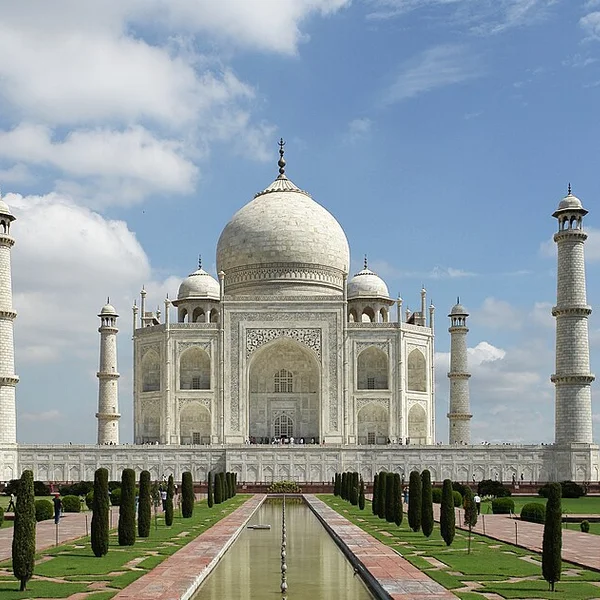
The white marble Taj Mahal mausoleum reflected in its garden pool, Agra

Wikimedia Commons

World Record

Most-Visited Ancient Site in the World

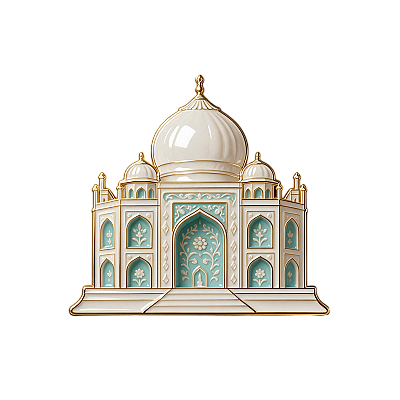
The Ivory Tear — Taj Mahal Collectible Enamel Pin
🔒
धरोहर🎖️The Ivory Tear(Collectible)स्मारकयूनेस्कोविशेष रुप से प्रदर्शित

Taj Mahal

Seyfi Cem Baskin

ताज महल1632 ईस्वी – 1653 ईस्वी

The white-marble mausoleum Shah Jahan built on the Yamuna riverbank at Agra for his wife Mumtaz Mahal — the supreme monument of Mughal architecture and one of the most visited UNESCO World Heritage Sites on Earth, often topping global search interest for ancient and historic landmarks.

Built

c. 1632–1653 CE for Mumtaz Mahal; patron Shah Jahan

Material

White Makrana marble with pietra dura inlay

Garden

Charbagh quadrilateral plan on the Yamuna riverbank

UNESCO

World Heritage Site (1983)

Visitors

Among the most visited monuments in Asia (millions annually)

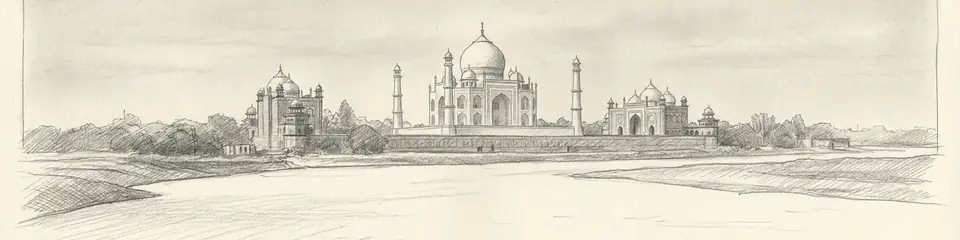
Graphite pencil sketch banner of Taj Mahal

“The Taj Mahal is the defining image of Mughal aesthetic synthesis — Persian garden layout, Indian building traditions, and Timurid vaulting united in a single funerary programme of unmatched refinement.”

स्थान

अवलोकन

The Taj Mahal stands on the right bank of the Yamuna River in Agra, Uttar Pradesh, northern India, in a walled garden complex (charbagh) measuring roughly 300 by 300 metres. The emperor Shah Jahan (r. 1628–1658) commissioned it to entomb his favourite wife, Arjumand Banu Begum, titled Mumtaz Mahal ("Chosen One of the Palace"), who died in childbirth in 1631. Construction began about 1632 and was substantially complete by 1643, though finishing work on the garden, outbuildings, and gateway continued for years; the principal architect is traditionally associated with Ustad Ahmad Lahori, working with a corps of masons, calligraphers, and craftsmen from across the empire and beyond.

The mausoleum rises on a raised marble platform with four minarets at the corners and a bulbous double dome surmounted by a gilded finial. Its walls are faced with white Makrana marble inlaid with semiprecious stones in pietra dura floral and geometric patterns — carnelian, jade, lapis lazuli, turquoise — a technique refined at the Mughal court. The interior houses the cenotaphs of Mumtaz Mahal and Shah Jahan (the actual graves lie in a lower chamber). Flanking the tomb are a red sandstone mosque and an identical jawab (echo building) for symmetry, plus a monumental gateway (darwaza-i rauza) faced with calligraphic Quranic inscriptions that increase in size toward the top, creating an illusion of uniform height.
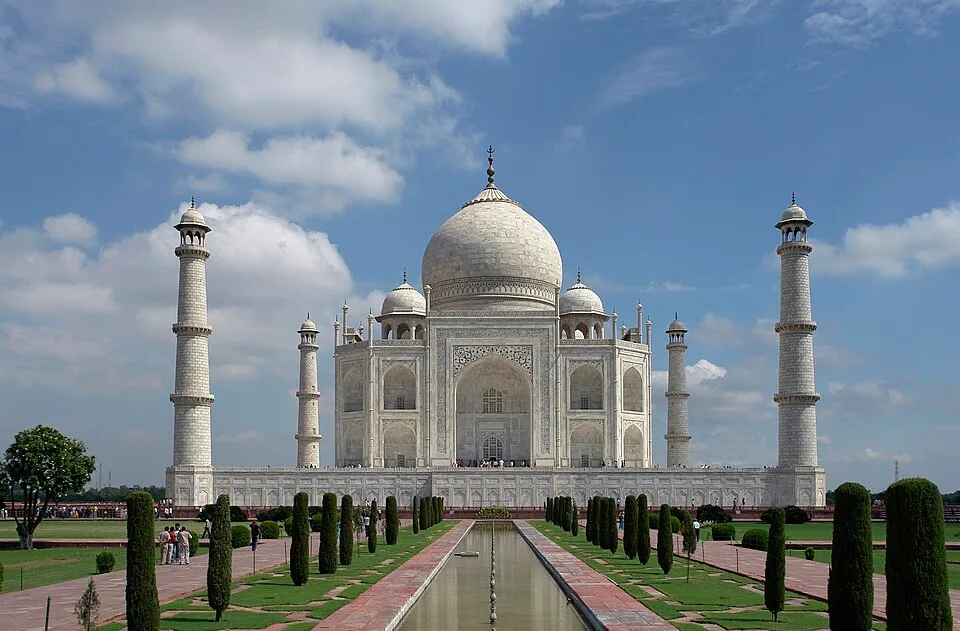
Taj Mahal, Agra, India edit2
Taj Mahal, Agra, India edit2 | Yann; edited by King of Hearts (CC BY-SA 4.0)
"Should guilty seek asylum here, like one pardoned, he becomes free from sin. Should a sinner make his way to this mansion, all his past sins are to be washed away."
— Inscription on the Taj Mahal gateway (darwaza-i rauza), paraphrase of Quranic themes
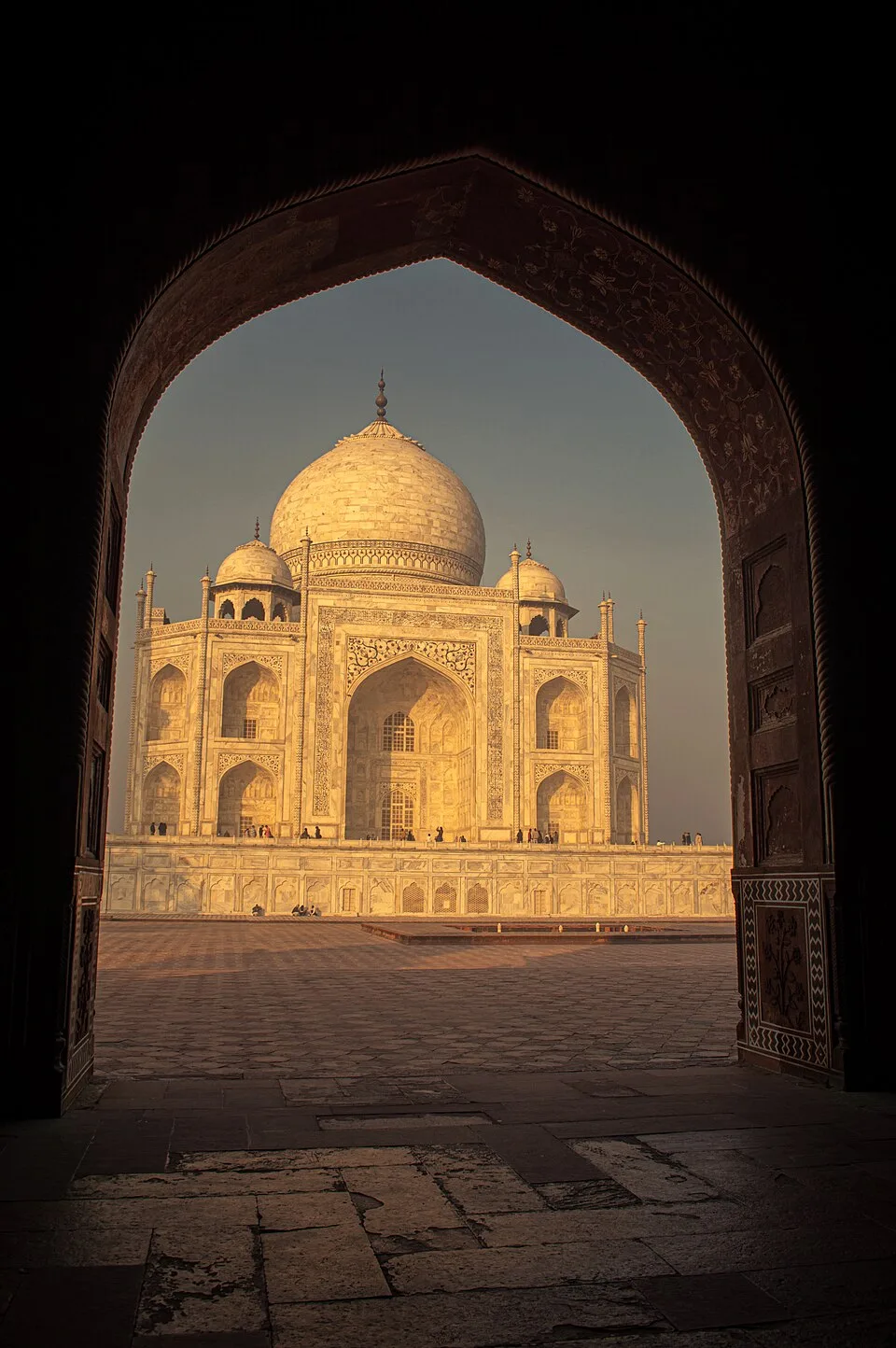
Taj Mahal Agra India 2025 06
Taj Mahal Agra India 2025 06 | Philip Nalangan (CC BY 4.0)
"The building is of rare form, an indescribable perfection — you may speak of a hundred and yet it remains beyond description."
— Jean-Baptiste Tavernier, Travels in India, on the Taj (17th c.)
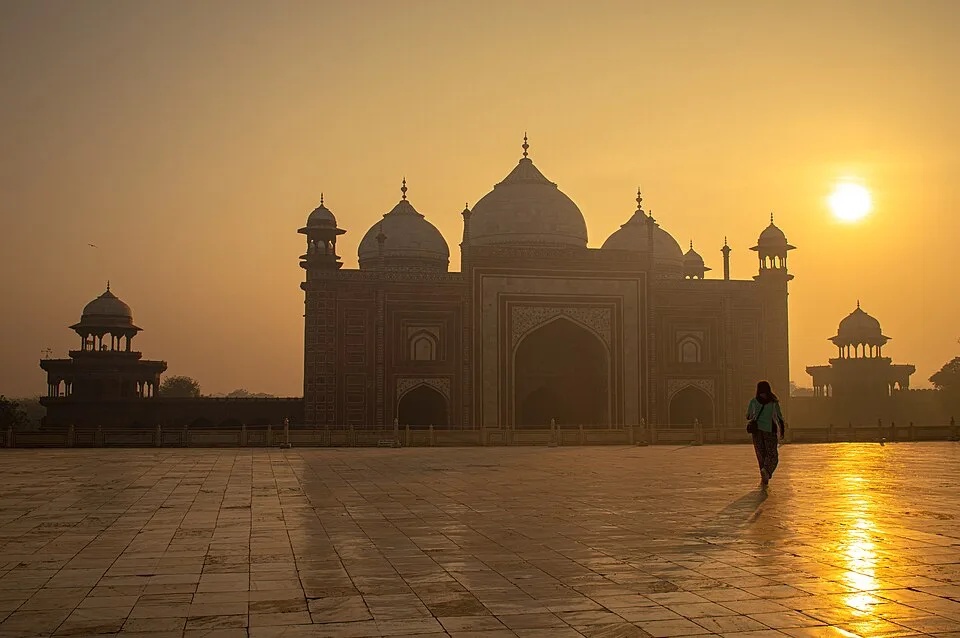
Taj Mahal Agra India 2025 04
Taj Mahal Agra India 2025 04 | Philip Nalangan (CC BY 4.0)

The Taj is the centrepiece of a broader Mughal landscape at Agra that includes the Agra Fort and, downstream, garden tombs along the Yamuna. British colonial administrators and later the Archaeological Survey of India undertook conservation campaigns; air pollution and river management remain ongoing preservation challenges. UNESCO inscribed the Taj Mahal in 1983; it is widely listed among the modern "Seven Wonders" and consistently ranks at or near the top of global online search volume for heritage monuments.
यह क्यों महत्वपूर्ण है

The Taj Mahal is the defining image of Mughal aesthetic synthesis — Persian garden layout, Indian building traditions, and Timurid vaulting united in a single funerary programme of unmatched refinement. Its global fame makes it a bellwether for heritage tourism and conservation science: millions of visitors annually, and decades of debate over pollution, crowding, and river ecology at Agra.

साक्ष्य और व्याख्या

जो सुस्थापित है और जो विवादास्पद है, उनमें अंतर करना।

सुस्थापित तथ्य

2
  • Mughal court chronicles and inscriptions name Mumtaz Mahal and Shah Jahan as the patrons and identify the structure as a royal tomb.
  • Architectural analysis confirms Timurid–Mughal vaulting, charbagh layout, and pietra dura workshops consistent with 17th-century imperial ateliers.

विद्वानों के अनुमान

1
  • Ustad Ahmad Lahori is traditionally credited as lead architect on the basis of later Mughal texts; documentary proof of individual authorship is limited.

विवादित व्याख्याएँ

1
  • Popular claims of a Hindu temple origin or hidden chambers beneath the platform are rejected by mainstream archaeology but persist in fringe literature.

समुदाय तस्वीरें

अपना अनुभव साझा करें

क्या आपने इस स्थल का दौरा किया है? दूसरों को इसे खोजने में मदद करने के लिए अपनी तस्वीरें अपलोड करें।

संबंधित कहानियाँ

इस पृष्ठ को कैसे उद्धृत करें

Atlas Anatolia. (1632). Taj Mahal. Atlas Anatolia. https://atlasanatolia.com/hi/site/taj-mahal

सामग्री CC BY-SA 4.0 के अंतर्गत लाइसेंस प्राप्त है — पुनः उपयोग करते समय श्रेय देना आवश्यक है।

ग्राफ़

संबंधित स्थलों और कहानियों से जुड़ाव।

स्रोत

  • The Complete Taj Mahal and the Riverfront Gardens of Agra — Koch, Ebba (2006)
  • UNESCO — Taj Mahalलिंक

अक्सर पूछे जाने वाले प्रश्न

Taj Mahal कहाँ स्थित है?

Taj Mahal, India में स्थित है।

Taj Mahal कितना पुराना है?

Taj Mahal लगभग 1632 ईस्वी – 1653 ईस्वी काल का है।

Taj Mahal किन सभ्यताओं से जुड़ा है?

Taj Mahal, Mughal सभ्यता से संबंधित है।

Taj Mahal क्यों महत्वपूर्ण है?

The Taj Mahal is the defining image of Mughal aesthetic synthesis — Persian garden layout, Indian building traditions, and Timurid vaulting united in a single funerary programme of unmatched refinement.

क्या Taj Mahal एक यूनेस्को विश्व धरोहर स्थल है?

हाँ — Taj Mahal यूनेस्को विश्व धरोहर स्थल के रूप में सूचीबद्ध है।