
सामग्री पर जाएँ
Atlas Anatolia
समाचारसुलावेसी में हिमयुगीन दाँतों से सुपारी के उपयोग का प्रमाण 25,000 वर्ष पुरानापोम्पेइओपोलिस, कस्तमोनू के बेसिलिका में रोमन मोज़ेक और इरोस का सिर मिला
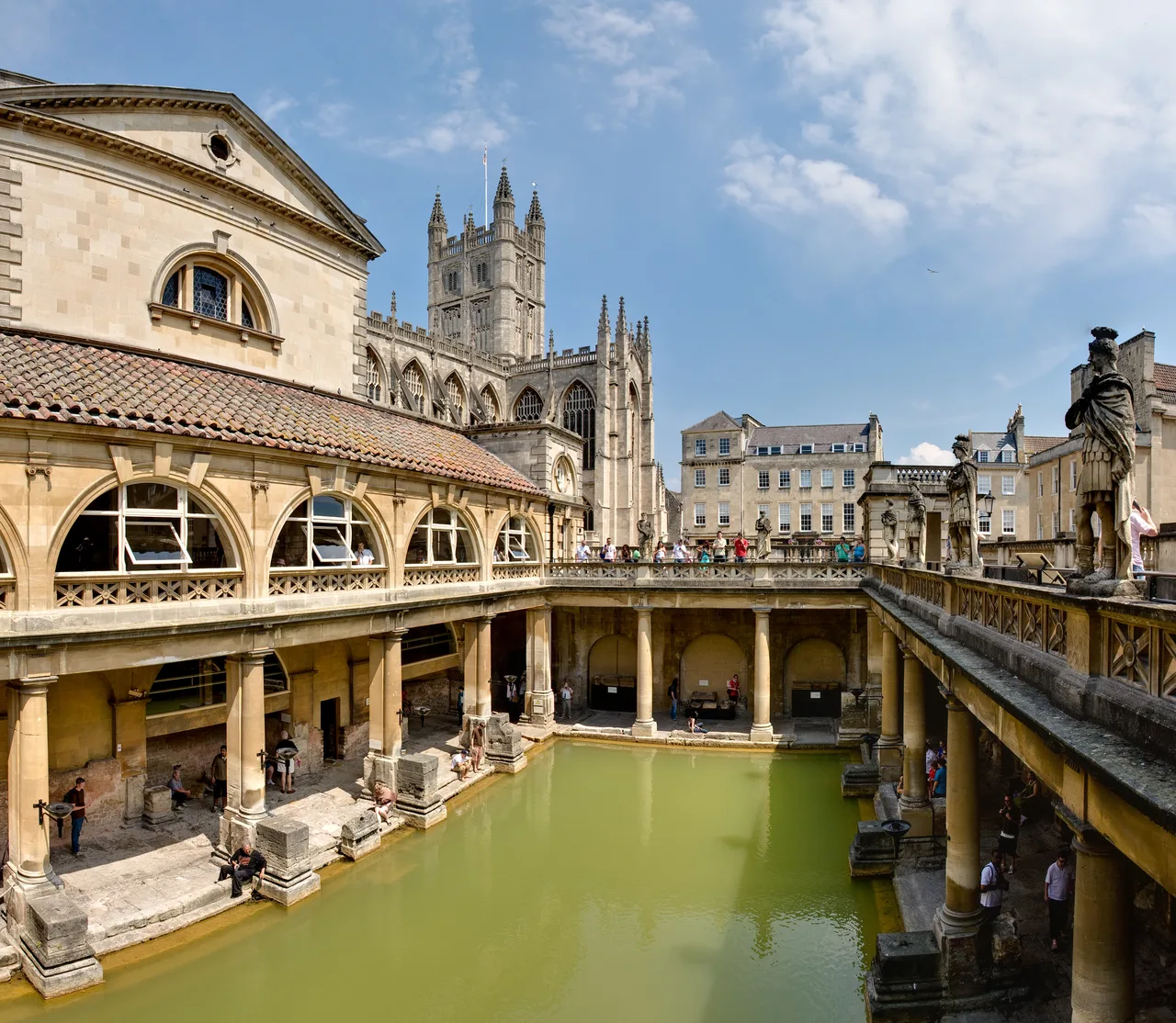
The Great Bath at Aquae Sulis (Bath), its lead lining original Roman work from the 1st century CE

Wikimedia Commons

Country Record

Longest Recorded History in United Kingdom

पवित्र स्थल / अभयारण्ययूनेस्को

Bath (Aquae Sulis)

Seyfi Cem Baskin

Aquae Sulis60 ईस्वी – 410 ईस्वी

A Roman sacred bathing complex built over Britain's only hot spring, dedicated to the goddess Sulis-Minerva and in continuous use for four centuries — its lead-lined Great Bath, gilded bronze head of Minerva, and remarkable cache of cursing tablets preserved intact.

31
रुचि 64

स्थान

यूनाइटेड किंगडम

51.38°N · 2.36°W · यूरोप

Spring temperature

45–46°C — Britain's only geothermal spring

Spring flow rate

~1.3 million litres per day

Curse tablets found

130+ lead defixiones — Britain's largest collection

Great Bath lead lining

Original Roman lead still in place, 1st century CE

UNESCO

World Heritage Site (City of Bath) since 1987

Gilded bronze Minerva head

Found 1727; finest Roman bronze from Britain

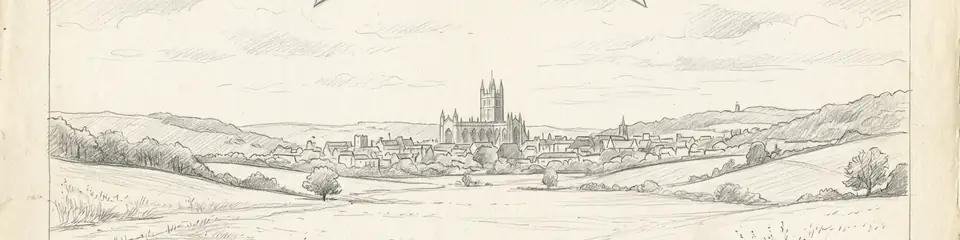
Graphite pencil sketch banner of Bath (Aquae Sulis)

“Aquae Sulis is the best-preserved Roman religious and bathing complex in northern Europe and the most complete example of the interpretatio romana (the Roman practice of identifying native deities with classical gods).”

स्थान

अवलोकन

Bath lies in a curve of the River Avon in Somerset, England, where three natural hot springs emerge at a constant 45°C — the only geothermal springs in Britain. The Romans encountered a Celtic cult already established around the spring, worshipping the local goddess Sulis. They founded the settlement Aquae Sulis ('waters of Sulis') in the 60s CE, identified the local goddess with Minerva, and constructed a monumental bath-and-temple complex that functioned for over four centuries as the most elaborate spa facility in Roman Britain.

The centrepiece was the Sacred Spring: a massive lead-lined reservoir 12 m × 8 m, fed directly by the thermal waters at a rate of approximately 1.3 million litres per day. Around the spring the Romans built a temple precinct with a pediment bearing a carved Gorgon-Medusa face (with male rather than female features — a deliberate hybrid of Sulis and Minerva), a classical temple on a raised podium, and an altar. Adjacent to the precinct was the Great Bath: an open-air lead-lined bathing pool 24 m × 9 m, originally vaulted with a barrel ceiling, where bathers could swim in water heated to approximately 40°C. Additional heated rooms (caldarium, tepidarium, frigidarium) extended the complex, which grew substantially in the 2nd and 3rd centuries.

More than 130 pewter and lead curse tablets (defixiones) have been found in the spring — the largest collection in Britain. Pilgrims and visitors threw them into the spring after inscribing petitions to Sulis-Minerva, mostly requesting punishment of thieves who had stolen personal items. The tablets name individuals by full name, providing extraordinary evidence for the mixed Romano-Celtic population: Gaulish, Latin, and Celtic names appear together. The gilded bronze head of Minerva — found in 1727, before systematic excavation — is the finest piece of Roman bronze surviving from Britain.

यह क्यों महत्वपूर्ण है

Aquae Sulis is the best-preserved Roman religious and bathing complex in northern Europe and the most complete example of the interpretatio romana (the Roman practice of identifying native deities with classical gods). The cursing tablets are among the largest primary archives of ordinary Roman voices in existence: the thieves, stolen cloaks, and anxious petitioners inscribed on lead give names and grievances of people who otherwise left no trace in history. The Great Bath — its Roman fabric intact, with lead lining from the 1st century still in place — gives visitors the most direct physical experience of a Roman bathing complex available anywhere in Britain. Bath also demonstrates the therapeutic and devotional integration that characterized Roman religion: the spring was simultaneously a healing resource, a sacred space, and a social institution.

साक्ष्य और व्याख्या

जो सुस्थापित है और जो विवादास्पद है, उनमें अंतर करना।

सुस्थापित तथ्य

3
  • The lead-sheet lining of the Great Bath dates to the 1st century CE by thermoluminescence and historical context; the lead was mined in the Mendip Hills 30 km away, as confirmed by isotopic analysis matching Mendip ore signatures.
  • More than 130 curse tablets inscribed in Latin (and occasionally Celtic transliterated into Latin letters) have been recovered from the spring; the names on the tablets include Gaulish, Celtic, and Latin personal names, documenting a mixed provincial population.
  • The pediment gorgon head — with male features and a serpent beard — is unique in Roman iconography and is interpreted as a deliberate conflation of the local solar deity Sulis and the classical Gorgon-Medusa, reflecting the theology of Sulis-Minerva.

विद्वानों के अनुमान

1
  • The complex appears to have been remodeled at least three times during the Roman period, with the roof of the Great Bath raised and rebuilt in the 3rd century; the vaulted roof collapsed, probably in the 5th century, filling the bath with rubble.

समुदाय तस्वीरें

अपना अनुभव साझा करें

क्या आपने इस स्थल का दौरा किया है? दूसरों को इसे खोजने में मदद करने के लिए अपनी तस्वीरें अपलोड करें।

इस पृष्ठ को कैसे उद्धृत करें

Atlas Anatolia. (60). Bath (Aquae Sulis). Atlas Anatolia. https://atlasanatolia.com/hi/site/bath-aquae-sulis

सामग्री CC BY-SA 4.0 के अंतर्गत लाइसेंस प्राप्त है — पुनः उपयोग करते समय श्रेय देना आवश्यक है।

स्रोत

  • Roman Baths and Bathing — Fikret Yegül (1992)
  • The Temple of Sulis Minerva at Bath — Barry Cunliffe and Peter Davenport (1985)
  • Roman Baths Museumलिंक

अक्सर पूछे जाने वाले प्रश्न

Bath (Aquae Sulis) कहाँ स्थित है?

Bath (Aquae Sulis), United Kingdom में स्थित है।

Bath (Aquae Sulis) कितना पुराना है?

Bath (Aquae Sulis) लगभग 60 ईस्वी – 410 ईस्वी काल का है।

Bath (Aquae Sulis) किन सभ्यताओं से जुड़ा है?

Bath (Aquae Sulis), Roman, Celtic सभ्यता से संबंधित है।

Bath (Aquae Sulis) क्यों महत्वपूर्ण है?

Aquae Sulis is the best-preserved Roman religious and bathing complex in northern Europe and the most complete example of the interpretatio romana (the Roman practice of identifying native deities with classical gods).

क्या Bath (Aquae Sulis) एक यूनेस्को विश्व धरोहर स्थल है?

हाँ — Bath (Aquae Sulis) यूनेस्को विश्व धरोहर स्थल के रूप में सूचीबद्ध है।