
Aller au contenu
Atlas Anatolia
ActualitésIce Age teeth in Sulawesi push betel-nut use back as far as 25,000 yearsRoman mosaic and Eros head uncovered in the basilica at Pompeiopolis, Kastamonu
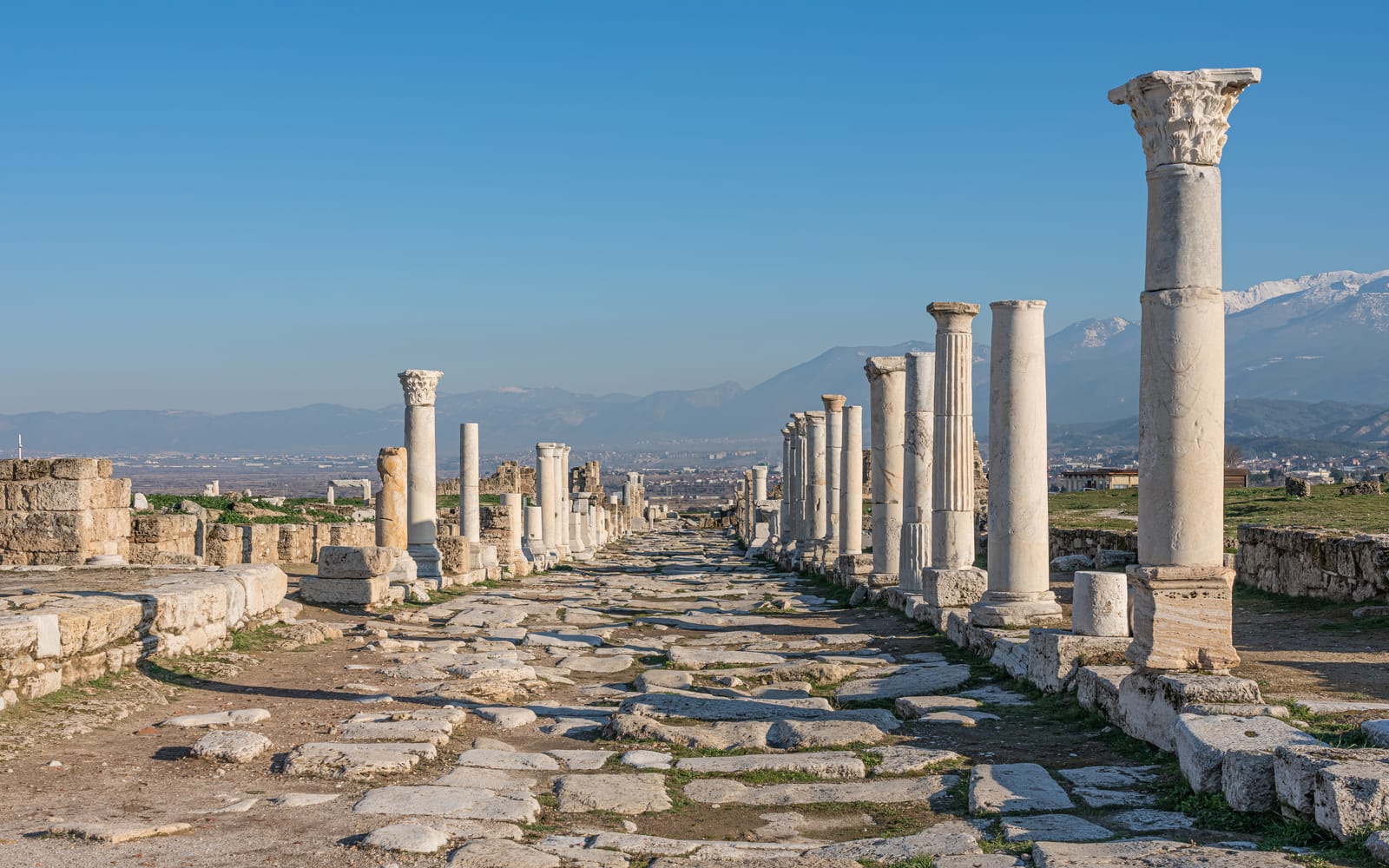
Ancient street and columns at Laodikeia archaeological site

Wikimedia Commons (CC BY-SA)

Cité

Laodikeia

Seyfi Cem Baskin

Laodikya260 av. J.-C. – 1200 apr. J.-C.

One of the Seven Churches of the Book of Revelation, this wealthy Roman trading city in the Lycus Valley rivaled nearby Hierapolis and Colossae. Recent excavations have revealed one of the largest ancient stadiums and a massive sacred agora.

411
Intérêt 58

Localisation

Denizli · Aegean · Turquie

37.84°N · 29.11°E · Asie

Biblical Status

One of Seven Churches of Revelation

Stadium Length

280+ meters

Famous Products

Black wool, eye salve (Phrygian powder)

Wealth

Self-funded earthquake rebuilding (Tacitus)

Sacred Agora Size

Approximately 35,000 square meters, one of the largest in Anatolia, excavated under Prof. Dr. Celal Şimşek.

Major Earthquake

Devastating earthquake in 60 CE, as recorded by Tacitus, after which the city famously refused imperial aid for reconstruction.

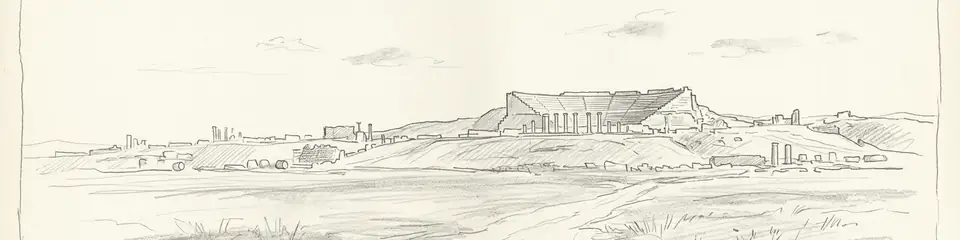
Graphite pencil sketch banner of Laodikeia

“Laodikeia's dual significance lies in its role as a major Roman commercial center and as one of the earliest Christian communities.”

De Wikipédia

Laodicea on the Lycus was a major Hellenistic and Roman city in western Turkey, one of the Seven Churches of the Book of Revelation.

Lire l'article complet sur Wikipédia →

Localisation

Aperçu

Laodikeia on the Lycus was one of the wealthiest cities in Roman Asia Minor, positioned at the strategic junction of major trade routes in the Lycus Valley of western Turkey. Founded in the mid-3rd century BCE by Seleucid king Antiochus II and named for his wife Laodice, the city prospered through banking, textile production (famous for its glossy black wool), and pharmaceutical manufacturing (particularly the "Phrygian powder" eye salve).

The city is one of the Seven Churches addressed in the Book of Revelation (3:14-22), where it is rebuked for being "lukewarm" — neither hot nor cold. This metaphor may reference the city's water supply: piped in from hot springs near Hierapolis and cool springs from Colossae, the water arrived at Laodikeia tepid and mineral-laden.

"I know your works: you are neither cold nor hot. Would that you were cold or hot! So, because you are lukewarm, I will spit you out of my mouth."
— Book of Revelation (c. 95 AD)

Recent Turkish excavations since 2003 have transformed understanding of the site. The stadium, one of the largest in Anatolia at over 280 meters long, has been partially uncovered. A massive sacred agora, two theatres, a nymphaeum, a bouleuterion, and multiple church structures dating to the early Byzantine period have been revealed. The Laodikeia Church, discovered in 2010, contains well-preserved floor mosaics and is among the oldest identified church buildings in western Turkey.

The city was destroyed by earthquakes in the 1st century CE but was so wealthy that it declined Roman financial assistance for rebuilding, funding the reconstruction entirely from its own resources — a fact noted with admiration by Tacitus.
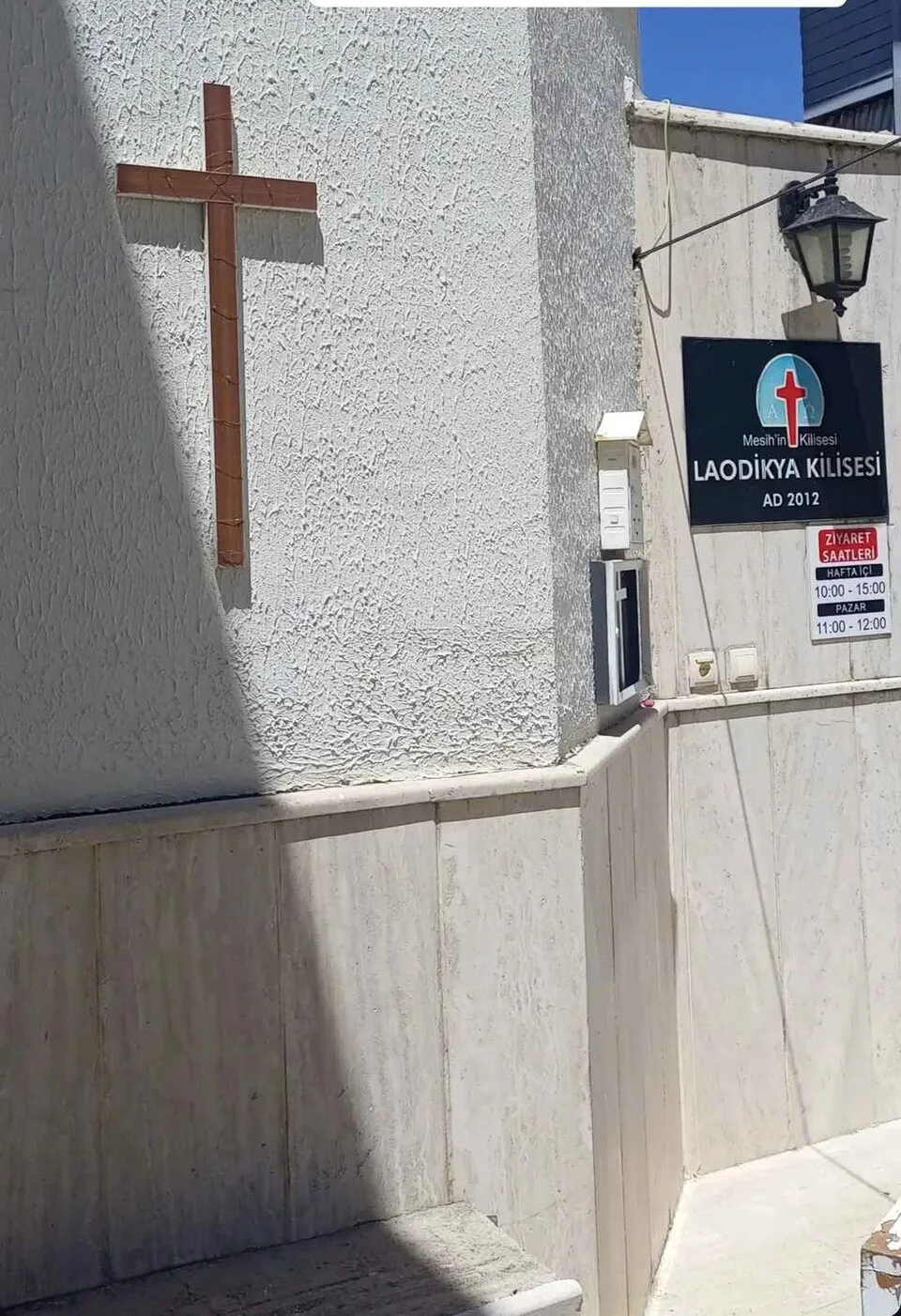
Laodikya Kilisesi Denizli
Laodikya Kilisesi Denizli | Lotus0888 (CC0)

Pourquoi c'est important

Laodikeia's dual significance lies in its role as a major Roman commercial center and as one of the earliest Christian communities. The letter to Laodikeia in Revelation provides a vivid portrait of a prosperous city whose material success the author viewed as spiritually dangerous. The ongoing excavations are among the most productive in Turkey, revealing new structures every season. The site offers a rare opportunity to study a wealthy Roman-Byzantine city where both pagan and Christian phases are preserved, providing evidence for the transformation of Roman civic culture under early Christianity.

Preuves et interprétation

Distinguer ce qui est bien établi de ce qui reste débattu.

Faits bien établis

4
  • Laodikeia is addressed as one of the Seven Churches in the Book of Revelation (3:14-22), where it is criticized for being "lukewarm."
  • Tacitus (Annals XIV.27) records that Laodikeia rebuilt from a devastating earthquake without accepting Roman imperial assistance, funding reconstruction from its own wealth.
  • Archaeological evidence confirms Laodikeia was a major center for textile production, with numerous dyeing and fulling installations discovered on site.
  • Excavations led by Prof. Dr. Celal Şimşek have uncovered a monumental nymphaeum (fountain) and a water distribution tower, confirming the advanced Roman-era pressurized water supply system described in ancient sources.

Inférences savantes

1
  • The "lukewarm" metaphor in Revelation may refer to the city's water supply, which arrived tepid after being piped from distant hot and cold springs.

Interprétations débattues

1
  • Whether the "Laodicean Church" discovered in 2010 is directly connected to the biblical community of Revelation remains a matter of scholarly interpretation.

Découverte et fouilles

1898

First excavations

French archaeologists conducted initial surveys and small-scale excavations.

2003

Major Turkish excavations begin

Dirigé par Celal Simsek

Celal Simsek of Pamukkale University initiated comprehensive excavations that transformed knowledge of the site.

2010

Church discovery

One of the oldest identified church buildings in western Turkey was uncovered, with preserved floor mosaics.

2015–2020

Stadium and agora excavations

Extensive work on the stadium, sacred agora, and water distribution system.

Photos de la communauté

Partagez votre expérience

Avez-vous visité ce site ? Téléchargez vos photos pour aider les autres à le découvrir.

Récits liés

Comment citer cette page

Atlas Anatolia. (260). Laodikeia. Atlas Anatolia. https://atlasanatolia.com/fr/site/laodikeia

Contenu sous licence CC BY-SA 4.0 — attribution requise en cas de réutilisation.

Graphique

Connexions avec des sites et récits associés.

Lire l'article complet sur World History Encyclopedia
World History Encyclopedia · CC BY-NC-SA

Sources

  • Laodikeia on the Lycus: Recent Research and Finds — Celal Simsek (2013)
  • The Seven Churches of Asia — Mark Wilson (2019)
  • Laodikeia Excavations — Pamukkale UniversityLien

Questions fréquentes

Où se trouve Laodikeia ?

Laodikeia est situé à/en Denizli, Aegean, Türkiye.

De quand date Laodikeia ?

Laodikeia remonte approximativement à 260 av. J.-C. – 1200 apr. J.-C..

Quelles civilisations sont associées à Laodikeia ?

Laodikeia est associé à la civilisation Greek, Roman, Byzantine, Early Christian.

Pourquoi Laodikeia est-il important ?

Laodikeia's dual significance lies in its role as a major Roman commercial center and as one of the earliest Christian communities.

Laodikeia est-il inscrit au patrimoine mondial de l'UNESCO ?

Laodikeia n'est pas actuellement inscrit sur la liste du patrimoine mondial de l'UNESCO.