
Saltar al contenido
Atlas Anatolia
NoticiasIce Age teeth in Sulawesi push betel-nut use back as far as 25,000 yearsRoman mosaic and Eros head uncovered in the basilica at Pompeiopolis, Kastamonu
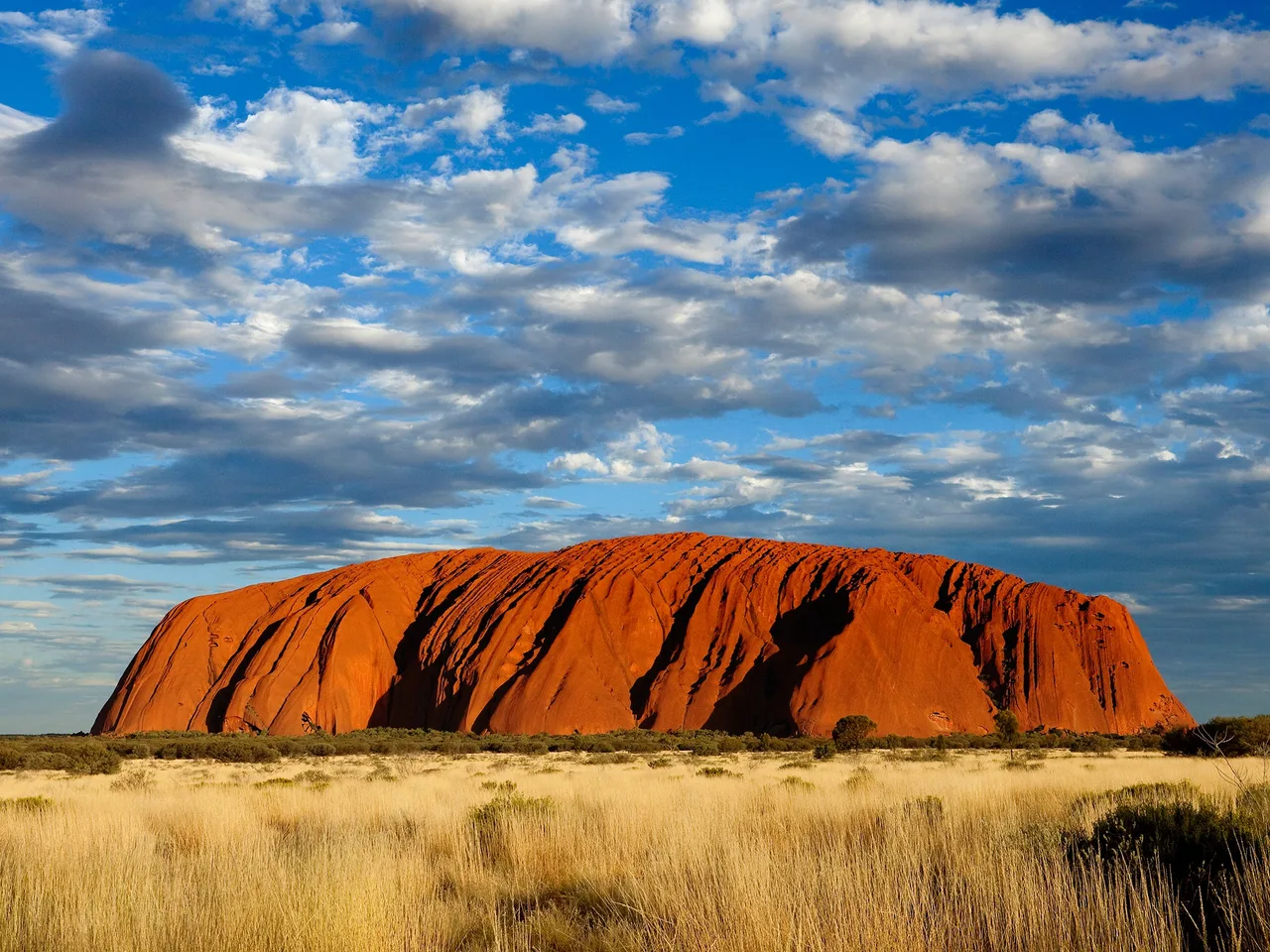
Uluru at sunset, the sacred sandstone monolith of the Aṉangu people, Northern Territory, Australia

Wikimedia Commons

Récord continental

Longest Recorded History in Oceania

SantuarioUNESCO

Uluru

Seyfi Cem Baskin

30000 a. C. – 2019 d. C.

A vast sandstone monolith rising 348 metres from the central Australian desert — sacred to the Aṉangu people as a living embodiment of their Tjukurpa (creation-time) law, and the site of rock art and ceremonial evidence spanning tens of thousands of years of continuous Aboriginal cultural practice. Handed back to Aṉangu traditional ownership in 1985, Uluru's summit was permanently closed to climbers in 2019 in recognition of its unbroken sacred status.

31
Interés 85

Ubicación

Northern Territory · Australia

25.34°S · 131.04°E · Oceanía

Height

348 m above the surrounding plain

Tjukurpa

Ancestral creation-time law encoded in the rock's features, still practised today

Handback

1985 — freehold title returned to Aṉangu traditional owners

Climbing ban

Permanently closed 26 October 2019, the 34th Handback anniversary

UNESCO

World Heritage Site 1987; cultural listing extended 1994

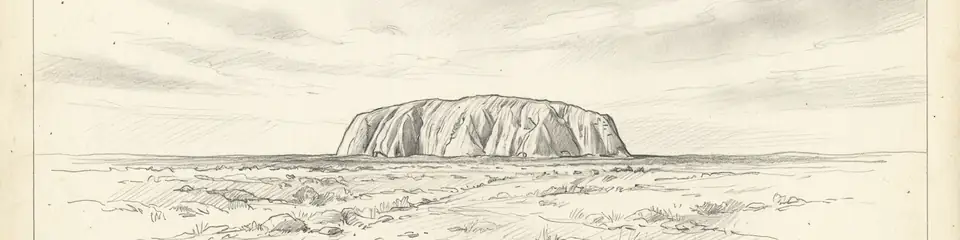
Graphite pencil sketch banner of Uluru

Uluru is one of the clearest living demonstrations that Aboriginal Australian culture is not a relic of the past but a continuous, functioning legal and cosmological system still actively practised today.”

Ubicación

Resumen

Uluru stands in the heart of the Northern Territory, within Uluru-Kata Tjuta National Park, roughly 335 kilometres southwest of Alice Springs. Geologically, it is an inselberg of arkose sandstone, its visible dome rising 348 metres above the surrounding plain while extending several kilometres further underground — but its significance to the Aṉangu, the Pitjantjatjara and Yankunytjatjara traditional owners of the land, is measured not in geological terms but in Tjukurpa: the ancestral law, cosmology, and moral order established during the creation era and encoded in the landscape itself.

Every crevice, cave, and waterhole around Uluru's base corresponds to a specific Tjukurpa narrative involving ancestral beings — including the Mala (hare-wallaby people), the Kuniya (woma python), and the Liru (venomous snake) — whose actions during the creation period shaped the rock's physical features and established the social and ceremonial law the Aṉangu continue to follow. Rock art at numerous sites around the base, some caves restricted to initiated members of specific ceremonial groups, provides physical, dateable evidence of this cultural tradition, while surrounding archaeological sites in the wider region document human presence in central Australia extending back tens of thousands of years.

European surveyor William Gosse became the first non-Aboriginal person to record the site in 1873, naming it Ayers Rock after the South Australian Chief Secretary Henry Ayers — a name that remained in official and popular use for over a century despite the site's much older Aṉangu name and history. Tourism developed steadily through the 20th century, and by the 1950s–70s climbing the rock had become a popular, heavily promoted activity, conducted without regard for its status as a men's sacred ceremonial site in Aṉangu law, where climbing was traditionally reserved for specific ritual purposes.

A sustained Aṉangu land rights campaign culminated in the Handback of 1985, when the Australian government formally returned freehold title to the Aṉangu traditional owners, who then leased the land back to the federal government for joint management as a national park — a landmark moment in Australian Indigenous land rights. Climbing the rock, though legally permitted for decades after Handback despite consistent Aṉangu requests that visitors not do so, was formally and permanently prohibited from 26 October 2019, the 34th anniversary of Handback, following years of advocacy and a unanimous decision by the park's joint management board. Uluru-Kata Tjuta National Park was inscribed as a UNESCO World Heritage Site in 1987 for its natural values, with the listing extended in 1994 to recognise its outstanding living Aboriginal cultural landscape.
Por qué es importante

Uluru is one of the clearest living demonstrations that Aboriginal Australian culture is not a relic of the past but a continuous, functioning legal and cosmological system still actively practised today. The Tjukurpa encoded in its rock faces is not folklore recorded after the fact — it is the operative law by which the Aṉangu continue to govern land use, ceremony, and social relationships, making Uluru a rare case where "archaeological evidence" and "living legal system" are the same body of knowledge. The 1985 Handback and the 2019 climbing closure together mark one of the most significant, sustained, and ultimately successful Indigenous land rights campaigns in the world — a multi-decade process that reshaped how Australia legally and culturally engages with Aboriginal sacred sites, and a model frequently referenced in Indigenous rights movements internationally. As a site whose surface features are directly, specifically explained by an intact oral tradition tens of thousands of years old, Uluru offers researchers a working example of how landscape, memory, and law can be encoded and transmitted across a timescale that dwarfs the written history of most other cultures on Earth.

Evidencia e interpretación

Distinguir lo bien establecido de lo que sigue en debate.

Hechos bien establecidos

3
  • Archaeological survey of the wider central Australian region has documented human occupation extending back tens of thousands of years, consistent with the antiquity of Aṉangu oral tradition.
  • Rock art at numerous sites around Uluru's base has been documented and dated using stylistic and superimposition analysis, confirming long-term, continuous use of the site for ceremonial purposes.
  • Government and Aṉangu Central Land Council records document the 1985 Handback and the 2019 permanent climbing closure as formal legal and administrative acts.

Inferencias académicas

1
  • The correspondence between specific Tjukurpa narratives and specific physical features of the rock is understood through ethnographic documentation and Aṉangu testimony rather than independent physical dating of each individual narrative.

Descubrimiento y excavación

1873

William Gosse survey

First recorded European survey of the site, naming it Ayers Rock.

1979–1985

Handback negotiations and land rights campaign

Sustained Aṉangu-led campaign culminating in the formal return of freehold title to traditional owners.

2010–2019

Climbing closure campaign

Renewed advocacy leading to the unanimous park board decision to permanently close the summit to climbers.

Fotos de la comunidad

Comparte tu experiencia

¿Has visitado este sitio? Sube tus fotos para ayudar a otros a descubrirlo.

Historias relacionadas

Cómo citar esta página

Atlas Anatolia. (30000). Uluru. Atlas Anatolia. https://atlasanatolia.com/es/site/uluru

Contenido bajo licencia CC BY-SA 4.0 — se requiere atribución al reutilizar.

Gráfico

Conexiones con sitios e historias relacionados.

Fuentes

  • Uluru: An Aboriginal History of Ayers RockLayton, Robert (1986)
  • Growing Up the Country: The Pitjantjatjara Struggle for Their LandToyne, Phillip and Vachon, Daniel (1984)
  • UNESCO — Uluru-Kata Tjuta National ParkEnlace

Preguntas frecuentes

¿Dónde se encuentra Uluru?

Uluru se encuentra en Northern Territory, Australia.

¿Qué antigüedad tiene Uluru?

Uluru se fecha aproximadamente en 30000 a. C. – 2019 d. C..

¿Qué civilizaciones se relacionan con Uluru?

Uluru se relaciona con Aboriginal Australian.

¿Por qué es importante Uluru?

Uluru is one of the clearest living demonstrations that Aboriginal Australian culture is not a relic of the past but a continuous, functioning legal and cosmological system still actively practised today.

¿Uluru es Patrimonio Mundial de la UNESCO?

Sí. Uluru está inscrito en la Lista del Patrimonio Mundial de la UNESCO.