
Saltar al contenido
Atlas Anatolia
NoticiasIce Age teeth in Sulawesi push betel-nut use back as far as 25,000 yearsRoman mosaic and Eros head uncovered in the basilica at Pompeiopolis, Kastamonu
Prague Castle and Charles Bridge above the Vltava River

Wikimedia Commons (CC BY-SA 4.0)

PatrimonioComplejoUNESCODestacado

Prague Castle

Seyfi Cem Baskin

Pražský hrad870 d. C. – 2024 d. C.

The hilltop fortress and palace complex dominating Prague — St Vitus Cathedral, Golden Lane, and a millennium of Bohemian and Habsburg rule — ranks first among missing monuments in our EN/DE/TR/ZH Wikipedia pageview audit and anchors the Czech capital's UNESCO skyline.

21
Interés 77

Ubicación

Czechia

50.09°N · 14.40°E · Europa

Area

~70 ha — among the largest ancient castles in the world

St Vitus Cathedral

Gothic core 14th c.; neo-Gothic west front 19th c.

Habsburg seat

Bohemian capital residence from 1526

UNESCO

Historic Centre of Prague (1992)

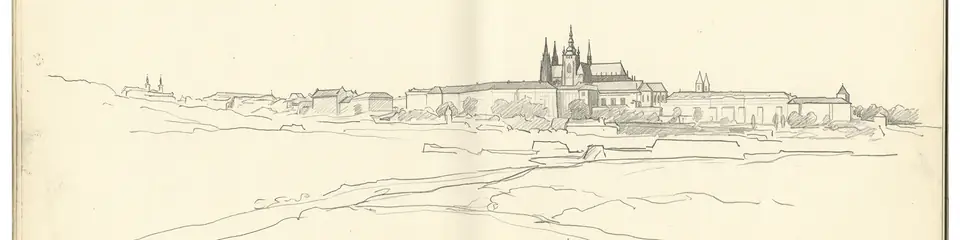
Graphite pencil sketch banner of Prague Castle

Prague Castle compresses Central European state formation — from early medieval Bohemian dukes through Holy Roman coronations to Habsburg absolutism — in one continuously occupied citadel.”

Ubicación

Resumen

Prague Castle crowns Hradčany hill above the Vltava River in Prague, Czechia. Chronicle tradition dates a fortification to the 9th century; the Romanesque Basilica of St George and the Gothic St Vitus Cathedral grew under the Přemyslid and Luxembourg dynasties. Charles IV made the castle the seat of the Holy Roman Empire in the 14th century, commissioning the cathedral nave and the royal palace halls that still frame the third courtyard.

After the Hussite wars and Jagiellon interlude, the Habsburgs from 1526 reshaped the complex into a Renaissance and Baroque palace — the Spanish Hall, Matthias Gate, and Teresa of Savoy's chapel layers document court life from Rudolf II's alchemists to the Defenestrations of Prague. The cathedral received its neo-Gothic west front in the 19th century; St Wenceslas Chapel preserves medieval Bohemian coronation regalia.

The castle remains the official residence of the Czech president. UNESCO inscribed "Historic Centre of Prague" in 1992, with the castle ensemble as its dominant landmark. Pair with Himeji Castle for contrasting European and East Asian fortress-palace traditions.

Por qué es importante

Prague Castle compresses Central European state formation — from early medieval Bohemian dukes through Holy Roman coronations to Habsburg absolutism — in one continuously occupied citadel. Its St Vitus Cathedral and palace courts are the reference for how Gothic sacred architecture and royal residence fused on a single defensive hill.

Evidencia e interpretación

Distinguir lo bien establecido de lo que sigue en debate.

Hechos bien establecidos

2
  • Archaeological layers under the courtyard document 9th–10th century Premyslid fortifications and church foundations.
  • Royal and cathedral building accounts, tombs of Charles IV and St Wenceslas, date major Gothic phases.

Inferencias académicas

1
  • Continuous Habsburg renovation aimed to rival Vienna while preserving Bohemian coronation symbolism.

Fotos de la comunidad

Comparte tu experiencia

¿Has visitado este sitio? Sube tus fotos para ayudar a otros a descubrirlo.

Cómo citar esta página

Atlas Anatolia. (870). Prague Castle. Atlas Anatolia. https://atlasanatolia.com/es/site/prague-castle

Contenido bajo licencia CC BY-SA 4.0 — se requiere atribución al reutilizar.

Fuentes

  • Prague Castle in PhotographsFucíková, Eliška (2005)
  • UNESCO — Historic Centre of PragueEnlace

Preguntas frecuentes

¿Dónde se encuentra Prague Castle?

Prague Castle se encuentra en Czechia.

¿Qué antigüedad tiene Prague Castle?

Prague Castle se fecha aproximadamente en 870 d. C. – 2024 d. C..

¿Qué civilizaciones se relacionan con Prague Castle?

Prague Castle se relaciona con Habsburg, Bohemian.

¿Por qué es importante Prague Castle?

Prague Castle compresses Central European state formation — from early medieval Bohemian dukes through Holy Roman coronations to Habsburg absolutism — in one continuously occupied citadel.

¿Prague Castle es Patrimonio Mundial de la UNESCO?

Sí. Prague Castle está inscrito en la Lista del Patrimonio Mundial de la UNESCO.