
Saltar al contenido
Atlas Anatolia
NoticiasIce Age teeth in Sulawesi push betel-nut use back as far as 25,000 yearsRoman mosaic and Eros head uncovered in the basilica at Pompeiopolis, Kastamonu
The yellow façade and gardens of Schönbrunn Palace, Vienna

Wikimedia Commons (CC BY-SA 4.0)

PatrimonioComplejoUNESCO

Schönbrunn Palace

Seyfi Cem Baskin

Schloss Schönbrunn1696 d. C. – 1918 d. C.

The Habsburg summer palace in Vienna — 1,441 rooms, formal gardens, and the Gloriette viewpoint — ranks among the most searched palaces in German and Chinese Wikipedia and rivals Versailles for Baroque court spectacle.

21
Interés 78

Ubicación

Austria

48.18°N · 16.31°E · Europa

Rooms

1,441; state rooms open to visitors

Maria Theresa

Major Baroque remodelling 1740s–50s

Gloriette

Colonnade viewpoint above formal gardens

UNESCO

Palace and Gardens of Schönbrunn (1996)

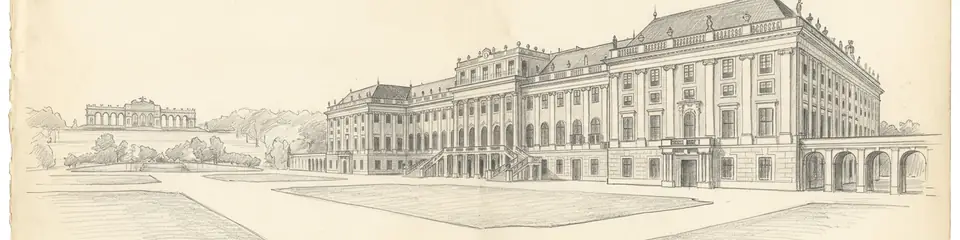
Graphite pencil sketch banner of Schönbrunn Palace

Schönbrunn condenses Habsburg imperial history — Maria Theresa, Mozart, Franz Joseph, and the end of empire — into one Baroque ensemble.”

Ubicación

Resumen

Schönbrunn Palace stands in Hietzing, Vienna, Austria, on the site of a hunting lodge the Habsburgs expanded after the failed 1683 Ottoman siege. Empress Maria Theresa remodelled the palace in the 1740s–50s into the chief summer residence of the Austrian monarchy. Johann Bernhard Fischer von Erlach and Nicolaus Pacassi shaped the yellow façade stretching 180 metres.

State rooms include the Great Gallery where Mozart performed as a child and where metternich-era diplomacy unfolded. The gardens feature the Neptune Fountain, Roman Ruin folly, maze, and the Gloriette colonnade on the hill. Franz Joseph was born and died here; the last Habsburg emperor Karl I signed his abdication in 1918.

UNESCO inscribed the Palace and Gardens of Schönbrunn in 1996. Visitor numbers rank among Europe's highest for historic houses. The zoo (Tiergarten) on the grounds is the world's oldest continuously operating menagerie.

Por qué es importante

Schönbrunn condenses Habsburg imperial history — Maria Theresa, Mozart, Franz Joseph, and the end of empire — into one Baroque ensemble. Its German-language search dominance makes it essential for a multilingual atlas serving DE audiences.

Evidencia e interpretación

Distinguir lo bien establecido de lo que sigue en debate.

Hechos bien establecidos

2
  • Habsburg court records and Fischer von Erlach plans document 18th-century rebuilding campaigns.
  • Franz Joseph's birth (1830) and death (1916) at Schönbrunn recorded in imperial chronicles.

Inferencias académicas

1
  • Garden axes align with Baroque triumphal symbolism — Gloriette frames palace as hilltop exedra.

Fotos de la comunidad

Comparte tu experiencia

¿Has visitado este sitio? Sube tus fotos para ayudar a otros a descubrirlo.

Cómo citar esta página

Atlas Anatolia. (1696). Schönbrunn Palace. Atlas Anatolia. https://atlasanatolia.com/es/site/schonbrunn-palace

Contenido bajo licencia CC BY-SA 4.0 — se requiere atribución al reutilizar.

Fuentes

  • Music and Spectacle in Baroque RomeHammond, Frederick (1994)
  • UNESCO — Palace and Gardens of SchönbrunnEnlace

Preguntas frecuentes

¿Dónde se encuentra Schönbrunn Palace?

Schönbrunn Palace se encuentra en Austria.

¿Qué antigüedad tiene Schönbrunn Palace?

Schönbrunn Palace se fecha aproximadamente en 1696 d. C. – 1918 d. C..

¿Qué civilizaciones se relacionan con Schönbrunn Palace?

Schönbrunn Palace se relaciona con Habsburg.

¿Por qué es importante Schönbrunn Palace?

Schönbrunn condenses Habsburg imperial history — Maria Theresa, Mozart, Franz Joseph, and the end of empire — into one Baroque ensemble.

¿Schönbrunn Palace es Patrimonio Mundial de la UNESCO?

Sí. Schönbrunn Palace está inscrito en la Lista del Patrimonio Mundial de la UNESCO.