
Saltar al contenido
Atlas Anatolia
NoticiasIce Age teeth in Sulawesi push betel-nut use back as far as 25,000 yearsRoman mosaic and Eros head uncovered in the basilica at Pompeiopolis, Kastamonu
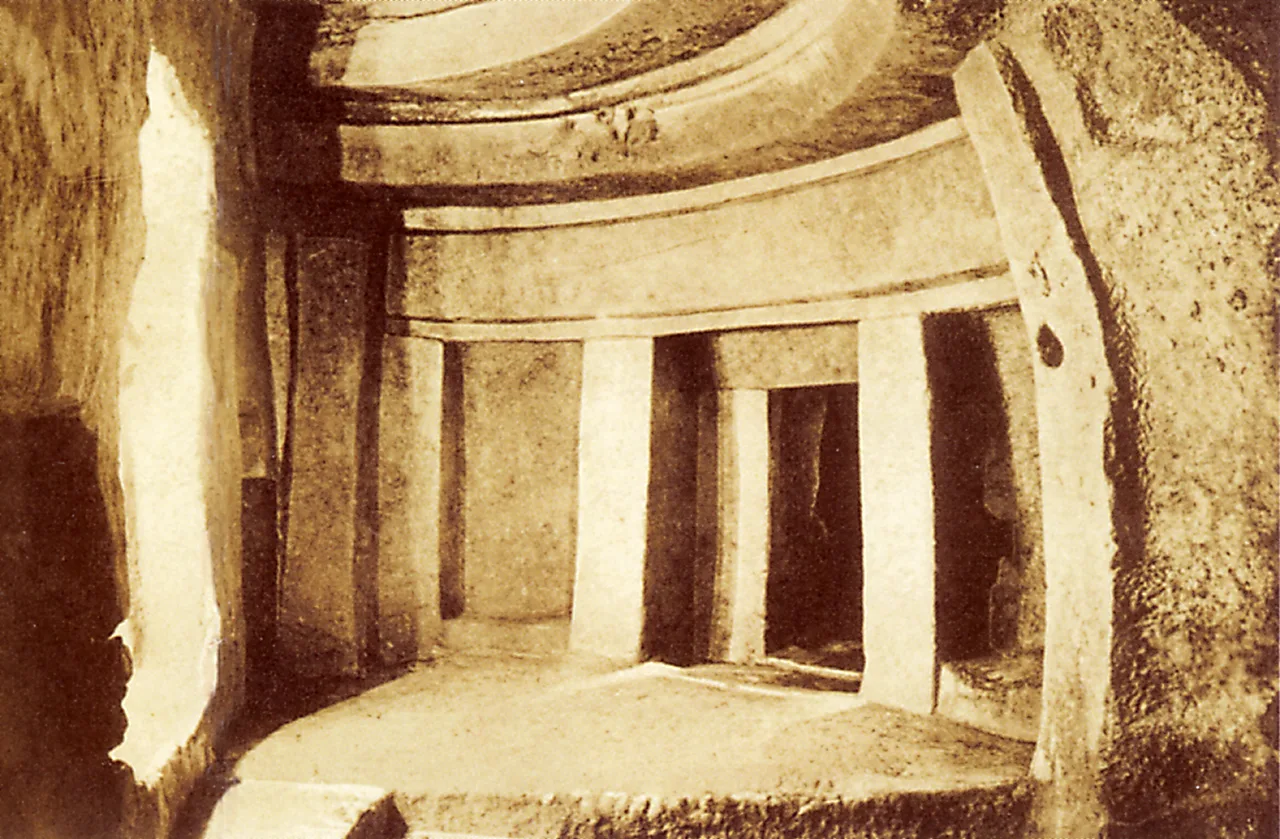
The carved limestone chambers of the Hal Saflieni Hypogeum, Malta

Wikimedia Commons

Récord nacional

Longest Recorded History in Malta

SantuarioUNESCO

Hal Saflieni Hypogeum

Seyfi Cem Baskin

Il-Hipogjew ta' Hal Saflieni3300 a. C. – 2500 a. C.

The only known prehistoric underground temple in the world — a three-storey rock-cut sanctuary on Malta dating to 3300-2500 BCE whose chambers, carved entirely by hand from the living limestone, held the remains of more than 7,000 people and contain the oldest acoustically designed space ever discovered.

31
Interés 62

Ubicación

Malta

35.87°N · 14.51°E · Europa

Period

c. 3300-2500 BCE (Maltese Temple Period)

Structure

3-level underground complex, 480 m2, 11 m deep — carved by hand

Burials

Remains of over 7,000 individuals — largest prehistoric ossuary in the Mediterranean

Acoustics

Oracle Chamber tuned to 110 Hz resonance — oldest known acoustically designed space

Famous find

"Sleeping Lady" terracotta figurine, National Museum of Archaeology, Valletta

UNESCO

World Heritage Site 1980

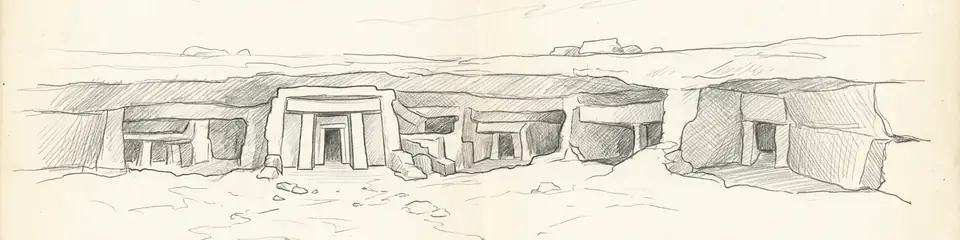
Graphite pencil sketch banner of Hal Saflieni Hypogeum

The Hal Saflieni Hypogeum is the single most extraordinary prehistoric monument in the Mediterranean.”

Ubicación

Resumen

The Hal Saflieni Hypogeum lies beneath the modern town of Paola in Malta, discovered accidentally by workers cutting cisterns in 1902. It is a unique monument: a three-level underground complex cut entirely by hand from the soft globigerina limestone, covering approximately 480 square metres and extending to a depth of about 11 metres below the present street level.

The complex was constructed and used from approximately 3300 to 2500 BCE by the people of the Maltese Temple Period, the same culture that built the above-ground megalithic temples of Mnajdra, Hagar Qim, and Ggantija. The upper level preserves the earliest chambers, while the middle and lower levels contain the most elaborate spaces. Among these is the Oracle Chamber, a small room whose curved ceiling creates an extraordinary acoustic phenomenon: a male voice speaking in the lower registers produces a reverberant bass resonance that fills the entire hypogeum. This effect appears to be deliberate — modern acoustic analysis suggests the builders tuned the chamber to a resonant frequency of 110 Hz, matching the frequency associated with altered states of consciousness in modern neurological research.

The remains of more than 7,000 individuals were found within the complex when it was excavated, making it both a sanctuary and an ossuary of enormous scale. Among the finds was the remarkable "Sleeping Lady" figurine, a small terracotta figure of a reclining woman of ample proportions, now displayed in the National Museum of Archaeology in Valletta. The site was inscribed as a UNESCO World Heritage Site in 1980, and visitor numbers are strictly limited to protect the delicate environment.

Por qué es importante

The Hal Saflieni Hypogeum is the single most extraordinary prehistoric monument in the Mediterranean. It represents a level of planning, technical skill, and conceptual ambition — cutting multiple storeys from living rock without metal tools — that challenges everything we think we know about Neolithic society. Its acoustic properties raise profound questions about the ritual life of prehistoric Malta: was sound — particularly resonant, altered states of consciousness-inducing sound — a central feature of the ceremonies performed here? The combination of the largest prehistoric ossuary in the Mediterranean with an architecturally sophisticated underground space suggests a religion of the dead of great complexity. The Hypogeum and the Sleeping Lady figurine also contribute to ongoing debates about the nature of the gender and fertility cult visible throughout the Maltese temples.

Evidencia e interpretación

Distinguir lo bien establecido de lo que sigue en debate.

Hechos bien establecidos

3
  • The complex is carved entirely from globigerina limestone using stone, bone, and antler tools (no metal); tool marks and unfinished chambers preserve the construction process in detail.
  • Skeletal remains of over 7,000 individuals have been identified, many showing signs of intentional deposition in groups and with grave goods including pottery, amulets, and figurines.
  • Acoustic measurements have confirmed a resonant frequency of approximately 110 Hz in the Oracle Chamber; the curvature of the ceiling is consistent with deliberate acoustic design.

Inferencias académicas

1
  • The ritual function of the complex — whether primarily an ossuary, a sanctuary for oracular consultation, a place of incubation ritual, or some combination — remains debated; no written or pictorial evidence describes the practices performed here.

Fotos de la comunidad

Comparte tu experiencia

¿Has visitado este sitio? Sube tus fotos para ayudar a otros a descubrirlo.

Cómo citar esta página

Atlas Anatolia. (3300). Hal Saflieni Hypogeum. Atlas Anatolia. https://atlasanatolia.com/es/site/hal-saflieni-hypogeum

Contenido bajo licencia CC BY-SA 4.0 — se requiere atribución al reutilizar.

Fuentes

  • The Hal Saflieni Hypogeum, PaolaPace, Anthony (2000)
  • Prehistoric Malta: The Tarxien PeriodStoddart, Simon (ed.) (2009)

Preguntas frecuentes

¿Dónde se encuentra Hal Saflieni Hypogeum?

Hal Saflieni Hypogeum se encuentra en Malta.

¿Qué antigüedad tiene Hal Saflieni Hypogeum?

Hal Saflieni Hypogeum se fecha aproximadamente en 3300 a. C. – 2500 a. C..

¿Qué civilizaciones se relacionan con Hal Saflieni Hypogeum?

Hal Saflieni Hypogeum se relaciona con Megalithic European.

¿Por qué es importante Hal Saflieni Hypogeum?

The Hal Saflieni Hypogeum is the single most extraordinary prehistoric monument in the Mediterranean.

¿Hal Saflieni Hypogeum es Patrimonio Mundial de la UNESCO?

Sí. Hal Saflieni Hypogeum está inscrito en la Lista del Patrimonio Mundial de la UNESCO.