
Saltar al contenido
Atlas Anatolia
NoticiasIce Age teeth in Sulawesi push betel-nut use back as far as 25,000 yearsRoman mosaic and Eros head uncovered in the basilica at Pompeiopolis, Kastamonu
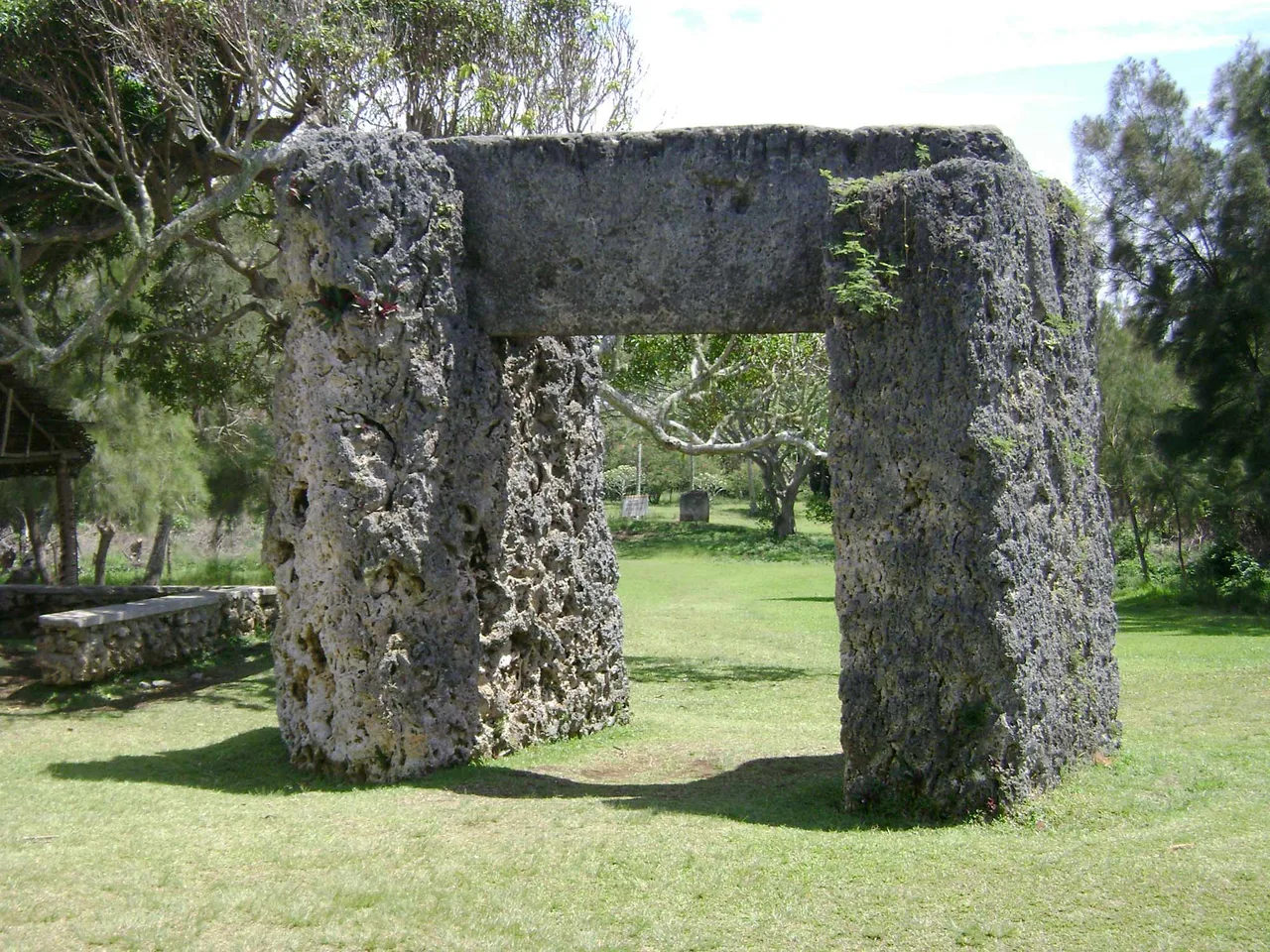
The coral limestone trilithon of Ha'amonga a Maui, Tongatapu, Tonga

Wikimedia Commons

Récord mundial

Westernmost Known Site in the World

Monumento

Ha'amonga 'a Maui

Seyfi Cem Baskin

1200 d. C. – 1250 d. C.

A massive coral limestone trilithon on the Tongan island of Tongatapu — three enormous stones forming a gateway arch built around 1200 CE by the Tu'i Tonga king Taufa'ahau, considered the most enigmatic and impressive megalithic monument in the Pacific and known as the Stonehenge of the Pacific.

22
Interés 42

Ubicación

Tonga

21.15°S · 175.07°W · Oceanía

Built

c. 1200 CE by the 11th Tu'i Tonga, Taufa'ahau

Structure

Coral limestone trilithon: two uprights (4.9 m, 40 tonnes each) + lintel (5.8 m)

Function

Gateway to royal compound at Heketa; possibly a solar calendar

Name

"Burden of Maui" — Polynesian demigod said to have carried the stones from Fiji

Nickname

"Stonehenge of the Pacific"

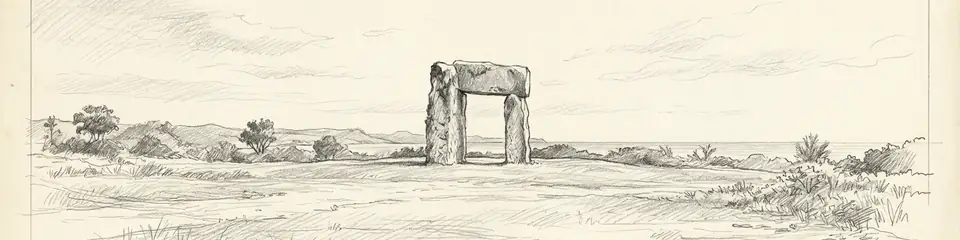
Graphite pencil sketch banner of Ha'amonga 'a Maui

Ha'amonga 'a Maui is the most architecturally ambitious megalithic monument in the Pacific and a key piece of evidence for the organisational capacity of Polynesian chiefdoms.”

Ubicación

Resumen

Ha'amonga 'a Maui (Tongan: "Burden of Maui") stands on the northeastern coast of Tongatapu, the main island of the Kingdom of Tonga, near the small town of Niutoua. The monument consists of three massive slabs of coral limestone: two upright posts approximately 4.9 metres tall and weighing around 40 tonnes each, supporting a horizontal lintel stone 5.8 metres long. Together they form a trilithon — a gateway — whose design is remarkably similar to the trilithons of Stonehenge in England, though the two monuments are separated by thousands of years and thousands of miles.

The monument was constructed around 1200 CE, according to Tongan oral tradition, by the 11th Tu'i Tonga (paramount king) Taufa'ahau. It was built as a gateway to the royal royal compound at Heketa, and the lintel bears a groove carved along its top surface that was interpreted in the 1960s by King Taufa'ahau Tupou IV (a Tu'i Tonga descendant) as a solar calendar marker: he proposed that the groove aligns with the rising sun at the summer and winter solstices, allowing the king to determine the agricultural calendar. This interpretation has been widely discussed, though astronomical confirmation is debated.

The name "Burden of Maui" refers to the Polynesian demigod Maui, and tradition holds that he brought the stones from Fiji on a yoke across his shoulders. More prosaically, the coral limestone was quarried nearby, but moving and erecting 40-tonne slabs without metal tools or wheeled vehicles was an extraordinary engineering achievement. Two smaller stone structures near the site — the Langi Heketa royal tombs — suggest the area was a major royal and sacred precinct for the Tu'i Tonga dynasty.

Por qué es importante

Ha'amonga 'a Maui is the most architecturally ambitious megalithic monument in the Pacific and a key piece of evidence for the organisational capacity of Polynesian chiefdoms. The ability to quarry, transport, and erect coral slabs weighing 40 tonnes demonstrates that the Tu'i Tonga dynasty commanded substantial human labour — fitting for the Tu'i Tonga empire, which at its peak exerted influence over much of western Polynesia and Melanesia. The monument also raises fascinating questions about the independent emergence of similar megalithic ideas in widely separated cultures. The trilithon form appears in prehistoric Europe, Tonga, and elsewhere — is this convergent invention, diffusion, or coincidence? Ha'amonga 'a Maui, with its possible solar alignment and royal gateway function, sits at the intersection of engineering, astronomy, and political theatre in a way that speaks to universal human concerns about power, cosmos, and the built environment.

Evidencia e interpretación

Distinguir lo bien establecido de lo que sigue en debate.

Hechos bien establecidos

2
  • Tongan royal oral traditions and genealogical records consistently attribute the monument to the 11th Tu'i Tonga around 1200 CE; the coral limestone has been confirmed as quarried from the local Tongatapu reef geology.
  • The trilithon form — two upright posts supporting a horizontal lintel — is confirmed by direct measurement; the lintel bears a carved groove along its top surface visible in photogrammetric documentation.

Inferencias académicas

2
  • The solar-calendar function proposed by King Taufa'ahau Tupou IV in the 1960s — that the groove marks solstice sunrise directions — has been tested by astronomers with mixed results; alignment with the summer solstice is plausible but not precisely confirmed.
  • The monument's role as a gateway to a royal compound is inferred from its association with the Langi Heketa royal tombs nearby and the Tongan oral tradition of its function; no pre-European written record of the precinct survives.

Fotos de la comunidad

Comparte tu experiencia

¿Has visitado este sitio? Sube tus fotos para ayudar a otros a descubrirlo.

Cómo citar esta página

Atlas Anatolia. (1200). Ha'amonga 'a Maui. Atlas Anatolia. https://atlasanatolia.com/es/site/haamonga-a-maui

Contenido bajo licencia CC BY-SA 4.0 — se requiere atribución al reutilizar.

Fuentes

  • Ha'amonga 'a Maui: An Archaeological SurveySpennemann, Dirk (1990)
  • The Evolution of the Polynesian ChiefdomsKirch, Patrick V. (1984)

Preguntas frecuentes

¿Dónde se encuentra Ha'amonga 'a Maui?

Ha'amonga 'a Maui se encuentra en Tonga.

¿Qué antigüedad tiene Ha'amonga 'a Maui?

Ha'amonga 'a Maui se fecha aproximadamente en 1200 d. C. – 1250 d. C..

¿Qué civilizaciones se relacionan con Ha'amonga 'a Maui?

Ha'amonga 'a Maui se relaciona con Tu'i Tonga.

¿Por qué es importante Ha'amonga 'a Maui?

Ha'amonga 'a Maui is the most architecturally ambitious megalithic monument in the Pacific and a key piece of evidence for the organisational capacity of Polynesian chiefdoms.

¿Ha'amonga 'a Maui es Patrimonio Mundial de la UNESCO?

Ha'amonga 'a Maui no está inscrito actualmente en la Lista del Patrimonio Mundial de la UNESCO.