
تخط إلى المحتوى
Atlas Anatolia
أخبارأسنان من العصر الجليدي في سولاويزي تدفع استخدام التنبول إلى ما يصل إلى 25,000 عاماكتشاف فسيفساء رومانية ورأس إيروس في بازيليكا بومبيوبوليس، كاستامونو
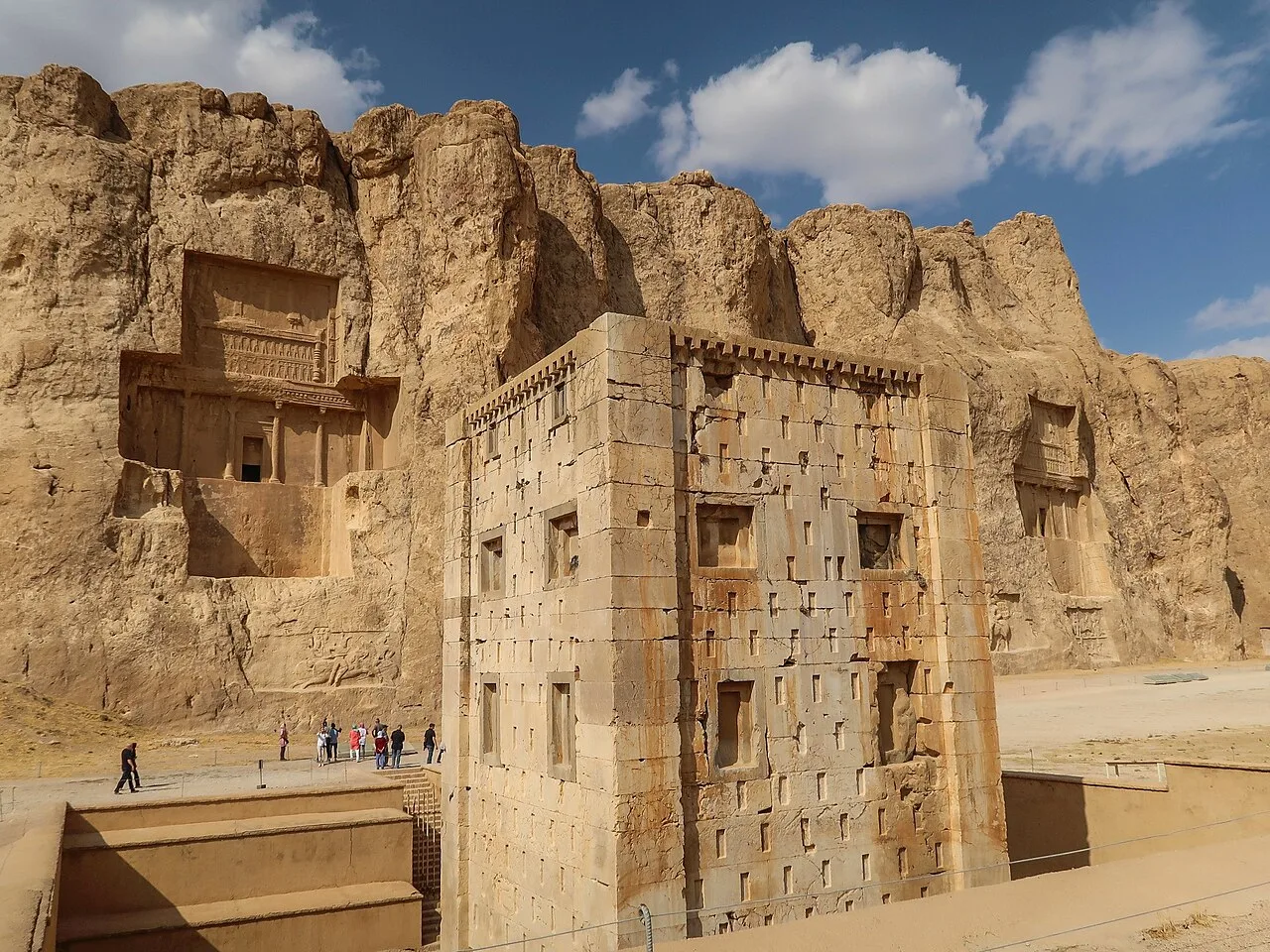
The Achaemenid rock-cut tombs and Sasanian reliefs at Naqsh-e Rostam, Iran

Wikimedia Commons

Continent Record

Oldest Necropolis in Asia

مقبرة قديمةمميز

Naqsh-e Rostam

Seyfi Cem Baskin

نقش رستم520 ق.م – 300 م

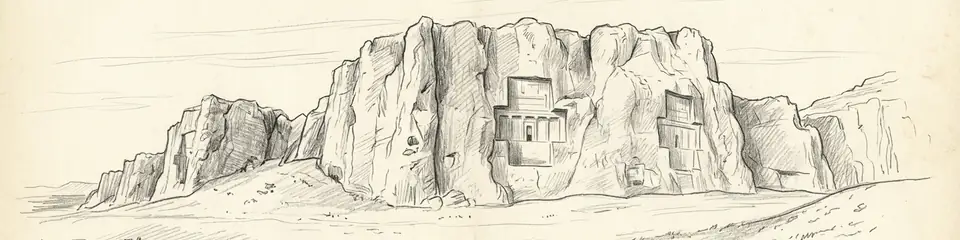
A towering cliff near Persepolis in Iran carved with the rock-cut tombs of four Achaemenid "Great Kings," including Darius the Great, set above a series of monumental reliefs added centuries later by the Sasanian dynasty. Together they compress over a thousand years of Persian imperial art into a single rock face.

311
اهتمام 67

Achaemenid tombs

Four cross-shaped rock tombs, incl. Darius the Great

Darius I inscription

Trilingual (Old Persian, Elamite, Babylonian)

Sasanian reliefs

Carved 3rd c. CE; triumph of Shapur I over Roman emperors

Ka'ba-ye Zartosht

Square Achaemenid stone tower of disputed function

Span

Elamite, Achaemenid, and Sasanian works on one cliff

Near

~12 km from Persepolis

Graphite pencil sketch banner of Naqsh-e Rostam

“Naqsh-e Rostam is one of the most important monuments of ancient Iran, uniquely juxtaposing the funerary art of the Achaemenid "King of Kings" with the triumphal reliefs of the later Sasanian empire on a single cliff.”

الموقع

نظرة عامة

Naqsh-e Rostam ("the picture of Rostam," a name from later Persian legend) is a sheer cliff face about 12 kilometres northwest of Persepolis in the Fars region of southern Iran, the heartland of the ancient Persian empires. It is one of the most important monuments of pre-Islamic Iran, bringing together works from the Elamite, Achaemenid, and Sasanian periods in a single dramatic setting.

High on the cliff are cut four monumental rock tombs, each carved in the shape of a cross, that belonged to kings of the Achaemenid dynasty (c. 550–330 BCE). The tombs are identified, with varying certainty, as those of Darius I (the Great), Xerxes I, Artaxerxes I, and Darius II. Only the tomb of Darius the Great is securely identified, because it carries long trilingual inscriptions — in Old Persian, Elamite, and Babylonian — in which the king proclaims his rule, his god Ahura Mazda, and his ideals of justice; these are among the most important texts of the Achaemenid empire. The tomb façades depict the king standing on a platform borne by the peoples of his empire, worshipping before a fire altar beneath the winged symbol associated with Ahura Mazda. In front of the cliff stands a puzzling square stone tower, the Ka'ba-ye Zartosht ("Cube of Zoroaster"), whose original function — fire temple, tomb, or repository for sacred objects — is still debated.

More than five centuries after the fall of the Achaemenids, the kings of the Sasanian dynasty (224–651 CE) chose the same sacred cliff to carve large reliefs proclaiming their own power, deliberately associating themselves with the glory of their Persian predecessors. The most famous of these shows the triumph of Shapur I over two Roman emperors: the kneeling, captured Valerian and the submissive Philip the Arab — a vivid monument to one of the greatest humiliations Rome suffered in the East. Other reliefs depict royal investitures, in which a king receives the ring of sovereignty from a god, and equestrian combats.

لماذا يهم

Naqsh-e Rostam is one of the most important monuments of ancient Iran, uniquely juxtaposing the funerary art of the Achaemenid "King of Kings" with the triumphal reliefs of the later Sasanian empire on a single cliff. The tomb of Darius the Great, with its great trilingual inscriptions, is a primary source for Achaemenid kingship, religion, and imperial ideology. The Sasanian reliefs — above all the image of the emperor Valerian captured by Shapur I — are key documents of the long rivalry between Persia and Rome and of Sasanian royal propaganda. As a single site spanning more than a millennium of Persian imperial expression, it is essential to understanding the visual culture of the ancient Iranian world. It lies near the UNESCO World Heritage Site of Persepolis.

الأدلة والتفسير

التمييز بين ما هو راسخ وما لا يزال موضع نقاش.

حقائق راسخة

3
  • The tomb of Darius the Great is securely identified by its trilingual inscriptions (Old Persian, Elamite, Babylonian) naming the king — the only one of the four tombs with such direct identification.
  • The relief of Shapur I depicts the Roman emperor Valerian as a captive and Philip the Arab in submission, corroborating Sasanian and Roman accounts of Valerian's capture in 260 CE.
  • The Ka'ba-ye Zartosht carries a later trilingual Sasanian inscription (the deeds of Shapur I), an important historical text, even though the tower itself is Achaemenid.

استنتاجات علمية

1
  • The three tombs without inscriptions are attributed to Xerxes I, Artaxerxes I, and Darius II on the basis of style, sequence, and proximity to the securely identified tomb of Darius I.

تفسيرات متنازع عليها

1
  • The original function of the Ka'ba-ye Zartosht is debated — proposals include a fire temple, a royal tomb, or a repository for sacred objects or regalia; no consensus exists.

صور المجتمع

شارك تجربتك

هل قمت بزيارة هذا الموقع؟ ارفع صورك لمساعدة الآخرين في اكتشافه.

كيفية الاستشهاد بهذه الصفحة

Atlas Anatolia. (520). Naqsh-e Rostam. Atlas Anatolia. https://atlasanatolia.com/ar/site/naqsh-e-rostam

المحتوى مرخّص بموجب CC BY-SA 4.0 — يجب ذكر المصدر عند إعادة الاستخدام.

المصادر

  • Persepolis III: The Royal Tombs and Other Monuments — Schmidt, Erich F. (1970)
  • The Two Eyes of the Earth: Art and Ritual of Kingship between Rome and Sasanian Iran — Canepa, Matthew P. (2009)

الأسئلة الشائعة

أين يقع Naqsh-e Rostam؟

يقع Naqsh-e Rostam في Iran.

كم يبلغ عمر Naqsh-e Rostam؟

يعود تاريخ Naqsh-e Rostam إلى حوالي 520 ق.م – 300 م.

ما هي الحضارات المرتبطة بـ Naqsh-e Rostam؟

يرتبط Naqsh-e Rostam بحضارة Achaemenid Persian, Sasanian.

لماذا يعتبر Naqsh-e Rostam مهماً؟

Naqsh-e Rostam is one of the most important monuments of ancient Iran, uniquely juxtaposing the funerary art of the Achaemenid "King of Kings" with the triumphal reliefs of the later Sasanian empire on a single cliff.

هل Naqsh-e Rostam موقع تراث عالمي لليونسكو؟

Naqsh-e Rostam غير مدرج حالياً في قائمة التراث العالمي لليونسكو.