
تخط إلى المحتوى
Atlas Anatolia
أخبارأسنان من العصر الجليدي في سولاويزي تدفع استخدام التنبول إلى ما يصل إلى 25,000 عاماكتشاف فسيفساء رومانية ورأس إيروس في بازيليكا بومبيوبوليس، كاستامونو
The Canopus canal and colonnade at Hadrian’s Villa, Tivoli

Wikimedia Commons (CC BY-SA 4.0)

مجمع معمارياليونسكومميز

Hadrian's Villa

Seyfi Cem Baskin

Villa Adriana118 م – 138 م

Emperor Hadrian’s sprawling second-century retreat at Tivoli — Canopus canal, Maritime Theatre, baths, and colonnades quoting Greece and Egypt — is a UNESCO World Heritage site and among the highest pageview Roman archaeological complexes still missing from the atlas.

21
اهتمام 74

الموقع

إيطاليا

41.94°N · 12.80°E · أوروبا

Builder

Emperor Hadrian, mainly 118–138 CE

Area

>120 ha of pavilions and gardens

Landmarks

Canopus, Maritime Theatre, baths, Piazza d’Oro

UNESCO

Inscribed 1999

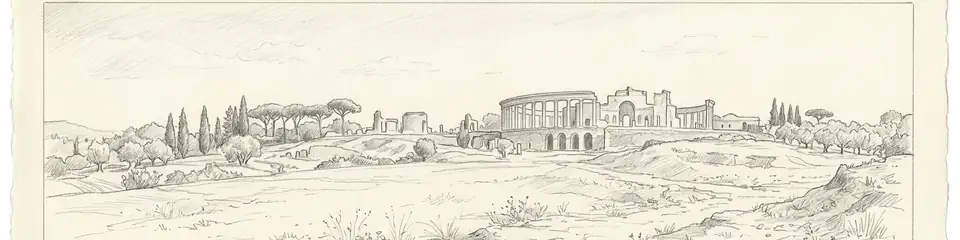
Graphite pencil sketch banner of Hadrian's Villa

“Hadrian’s Villa is the fullest surviving expression of a Roman emperor’s personal landscape architecture — a catalogue of imperial taste after conquest.”

الموقع

نظرة عامة

Hadrian’s Villa occupies the plain below the Tiburtine Hills east of Rome. Built largely between 118 and 138 CE for the emperor who spent much of his reign travelling the provinces, the estate covers over 120 hectares of residential pavilions, gardens, libraries, baths, and service quarters. Designed as a landscape of memories, its named spaces evoke Athens (Poikile), Egypt (Canopus/Serapeum), and Greece (Prytaneum, Stoa Poikile).

Key monuments include the circular Maritime Theatre — a “island villa” within a moat — the long reflecting canal of the Canopus lined with caryatids and statues, the Large and Small Baths, the Piazza d’Oro complex, and imperial apartments. Excavations since the Renaissance (and systematic digs from the 19th century onward) recovered sculpture now dispersed in museums; modern conservation grapples with tourism and seismic risk.

The villa models how imperial identity was staged through architecture after the High Empire’s territorial apex. Pair with the Colosseum, Pantheon, and Roman Forum for metropolitan counterparts, and with Pompeii for Campanian domestic life outside the court.

لماذا يهم

Hadrian’s Villa is the fullest surviving expression of a Roman emperor’s personal landscape architecture — a catalogue of imperial taste after conquest. Its Canopus and Maritime Theatre are foundational for studying how Rome appropriated eastern and Greek forms into private palatial space.

الأدلة والتفسير

التمييز بين ما هو راسخ وما لا يزال موضع نقاش.

حقائق راسخة

2
  • Brick stamps, literary references (Historia Augusta), and stratified finds date major construction to Hadrian’s reign.
  • Named spaces in Renaissance and modern plans match Egyptian and Greek architectural quotes in sculpture and layout.

استنتاجات علمية

1
  • Some pavilions may have functioned as temporary diplomatic stages for provincial elites visiting Italy.

صور المجتمع

شارك تجربتك

هل قمت بزيارة هذا الموقع؟ ارفع صورك لمساعدة الآخرين في اكتشافه.

كيفية الاستشهاد بهذه الصفحة

Atlas Anatolia. (118). Hadrian's Villa. Atlas Anatolia. https://atlasanatolia.com/ar/site/hadrians-villa

المحتوى مرخّص بموجب CC BY-SA 4.0 — يجب ذكر المصدر عند إعادة الاستخدام.

المصادر

  • Hadrian's Villa and Its Legacy — MacDonald, William L.; Pinto, John A. (1995)
  • UNESCO — Villa Adriana (Tivoli)رابط

الأسئلة الشائعة

أين يقع Hadrian's Villa؟

يقع Hadrian's Villa في Italy.

كم يبلغ عمر Hadrian's Villa؟

يعود تاريخ Hadrian's Villa إلى حوالي 118 م – 138 م.

ما هي الحضارات المرتبطة بـ Hadrian's Villa؟

يرتبط Hadrian's Villa بحضارة Roman.

لماذا يعتبر Hadrian's Villa مهماً؟

Hadrian’s Villa is the fullest surviving expression of a Roman emperor’s personal landscape architecture — a catalogue of imperial taste after conquest.

هل Hadrian's Villa موقع تراث عالمي لليونسكو؟

نعم — Hadrian's Villa مدرج في قائمة التراث العالمي لليونسكو.