
تخط إلى المحتوى
Atlas Anatolia
أخبارأسنان من العصر الجليدي في سولاويزي تدفع استخدام التنبول إلى ما يصل إلى 25,000 عاماكتشاف فسيفساء رومانية ورأس إيروس في بازيليكا بومبيوبوليس، كاستامونو
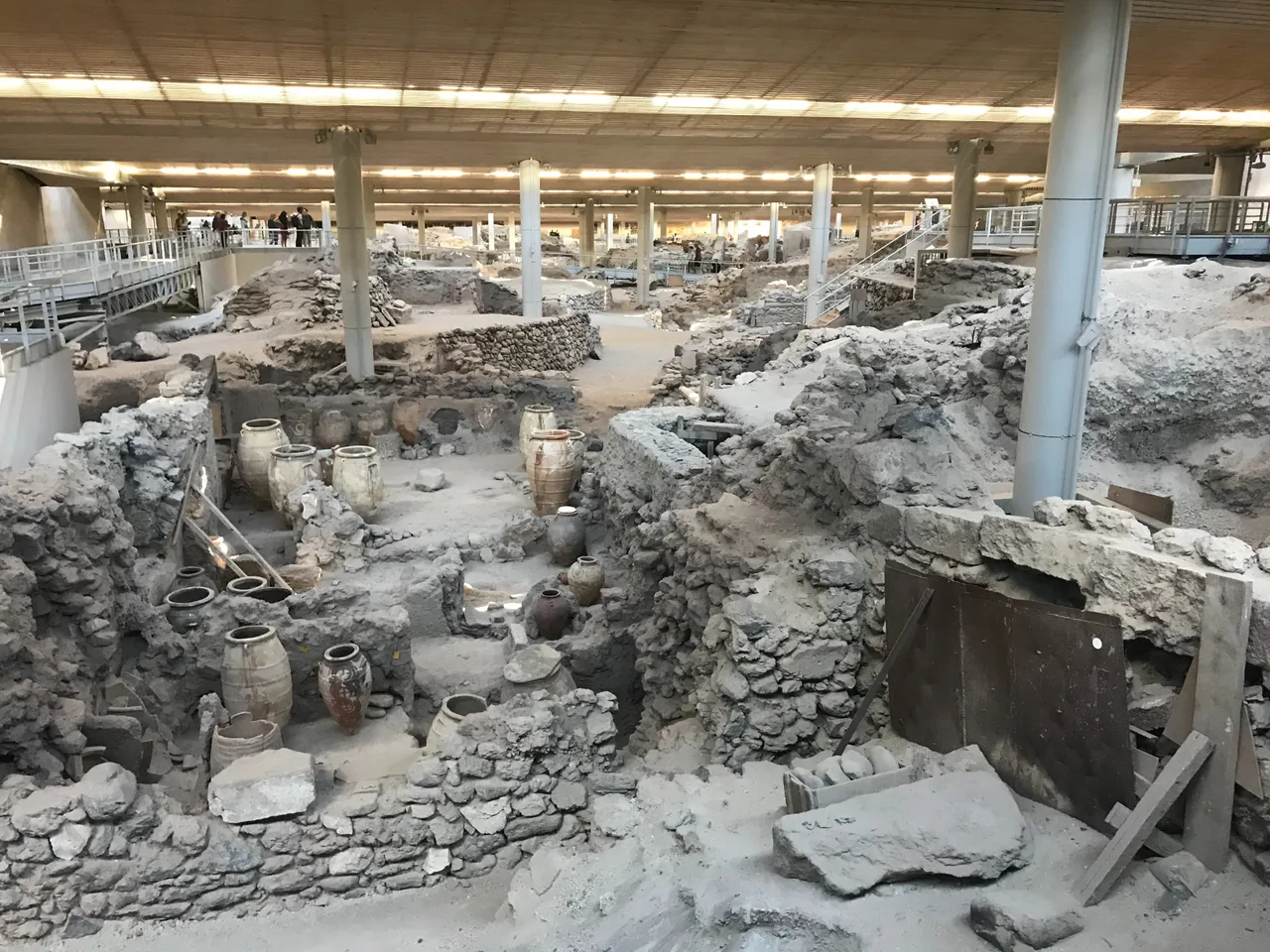
Excavated multi-storey buildings at Akrotiri under the protective roof

Wikimedia Commons

Country Record

Oldest Settlement in Greece

مستوطنةمميز

Akrotiri

Seyfi Cem Baskin

Ακρωτήρι3000 ق.م – 1620 ق.م

A Bronze Age Aegean city on Santorini buried by one of the largest volcanic eruptions in human history c. 1600 BCE, preserving multi-storey buildings, vivid frescoes, and stone-paved streets in near-intact condition.

32
اهتمام 63

الموقع

اليونان

36.35°N · 25.40°E · أوروبا

Eruption date (estimated)

c. 1627–1600 BCE (disputed)

VEI (eruption magnitude)

7 — one of the largest Holocene eruptions

Human remains found

None — population evidently evacuated

Building heights

Up to 3 storeys surviving

Frescoes

Extensive polychrome fresco cycles, now in Athens National Museum

Excavation began

1967, by Spyridon Marinatos

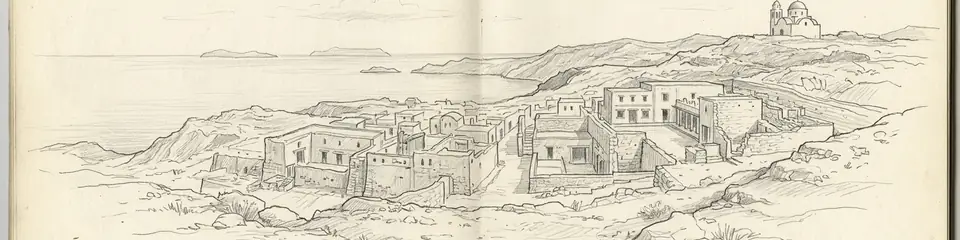
Graphite pencil sketch banner of Akrotiri

“Akrotiri reframes what the Bronze Age Aegean looked like.”

الموقع

نظرة عامة

Akrotiri lies at the southern end of Santorini (ancient Thera), the crescent-shaped caldera island in the southern Aegean. Around 1600–1627 BCE (the exact date is disputed between radiocarbon and ice-core evidence), the island's volcanic system erupted catastrophically — an event with a Volcanic Explosivity Index of 7, comparable to Tambora (1815) and roughly five times the energy of Krakatau (1883). The tephra fallout can be traced across the eastern Mediterranean, Egypt, and the Greenland ice cores. The eruption destroyed Minoan settlements across Thera and, some argue, contributed to the collapse of the Minoan civilization on Crete. Akrotiri itself, excavated by Spyridon Marinatos from 1967, is the best-preserved Bronze Age settlement in the Aegean. The volcanic pumice blanket sealed buildings intact: multi-storey structures survive to their original height, with stone staircases, clay pipes (running water), beds of carbonized grain, pottery in situ on shelves, and most remarkably, fresco cycles of extraordinary quality. The frescoes — depicting fishermen, boxers, antelopes, swallows, a blue flotilla fleet, and detailed landscape paintings — are the most extensive figurative paintings surviving from the Bronze Age world. Crucially, no human remains have been found at Akrotiri, suggesting the population evacuated before the eruption.
لماذا يهم

Akrotiri reframes what the Bronze Age Aegean looked like. The frescoes — particularly the Flotilla Fresco, a continuous panoramic painting of a sea voyage between two towns — show a sophisticated urban maritime civilization with detailed knowledge of ships, landscape, and costume. The running water system, piped through clay tubes under pressure, demonstrates a level of hydraulic engineering not seen again in Europe until Roman times. The question of whether Akrotiri's destruction inspired the Atlantis legend — as Plato's Timaeus and Critias describe an island civilization swallowed by the sea — is one of the most persistent debates in popular archaeology, though mainstream scholarship remains skeptical.

الأدلة والتفسير

التمييز بين ما هو راسخ وما لا يزال موضع نقاش.

حقائق راسخة

3
  • The eruption date is constrained by the Greenland GISP2 ice core, which records a major volcanic layer around 1645–1628 BCE, and by radiocarbon dating of olive branches buried by the tephra, which gives 1627–1600 BCE at 95% confidence.
  • Multi-storey buildings at Akrotiri survive intact under the pumice, including a water supply system consisting of clay pipes with socketed joints running under building floors and streets — the earliest known urban pressurized water system in the Aegean.
  • The complete absence of human skeletal remains and of valuables such as metal objects or jewelry indicates the population evacuated in an orderly manner before the main eruption phase, probably following precursor earthquakes.

تفسيرات متنازع عليها

2
  • The eruption's role in causing the collapse of Minoan civilization on Crete is actively debated. Minoan Crete continued for at least one to two centuries after the eruption, and the collapse is now attributed to a combination of factors including drought, internal conflict, and Mycenaean encroachment.
  • The identification of Akrotiri's eruption as the inspiration for Plato's Atlantis story (Timaeus, c. 360 BCE) is widely discussed in popular literature but not accepted by most classicists, who view Atlantis as a philosophical device invented by Plato.

صور المجتمع

شارك تجربتك

هل قمت بزيارة هذا الموقع؟ ارفع صورك لمساعدة الآخرين في اكتشافه.

قصص ذات صلة

كيفية الاستشهاد بهذه الصفحة

Atlas Anatolia. (3000). Akrotiri. Atlas Anatolia. https://atlasanatolia.com/ar/site/akrotiri

المحتوى مرخّص بموجب CC BY-SA 4.0 — يجب ذكر المصدر عند إعادة الاستخدام.

رسم بياني

روابط بالمواقع والقصص ذات الصلة.

المصادر

  • Excavations at Thera I–VII — Spyridon Marinatos (1968)
  • The Date of the Minoan Eruption of Santorini — Friedrich et al. (2006)رابط

الأسئلة الشائعة

أين يقع Akrotiri؟

يقع Akrotiri في Greece.

كم يبلغ عمر Akrotiri؟

يعود تاريخ Akrotiri إلى حوالي 3000 ق.م – 1620 ق.م.

ما هي الحضارات المرتبطة بـ Akrotiri؟

يرتبط Akrotiri بحضارة Minoan.

لماذا يعتبر Akrotiri مهماً؟

Akrotiri reframes what the Bronze Age Aegean looked like.

هل Akrotiri موقع تراث عالمي لليونسكو؟

Akrotiri غير مدرج حالياً في قائمة التراث العالمي لليونسكو.