
تخط إلى المحتوى
Atlas Anatolia
أخبارأسنان من العصر الجليدي في سولاويزي تدفع استخدام التنبول إلى ما يصل إلى 25,000 عاماكتشاف فسيفساء رومانية ورأس إيروس في بازيليكا بومبيوبوليس، كاستامونو
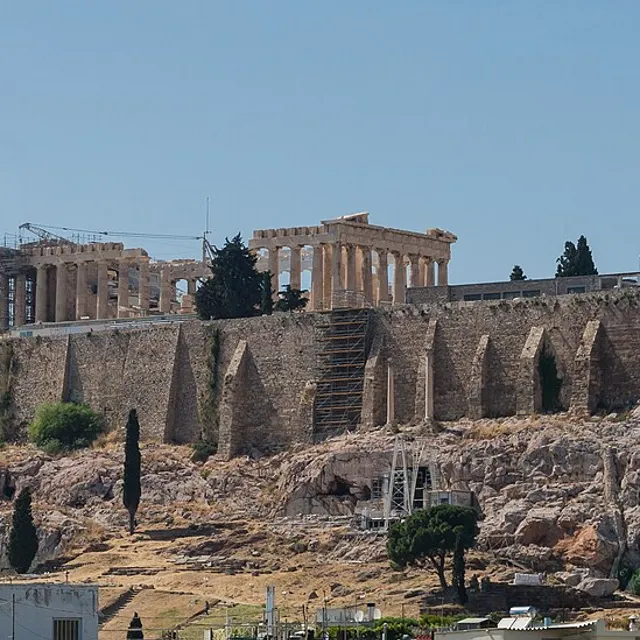
The Parthenon and Acropolis citadel above Athens

Wikimedia Commons

Country Record

Longest Recorded History in Greece

مجمع معمارياليونسكومميز

Acropolis of Athens

Seyfi Cem Baskin

Ακρόπολη Αθηνών447 ق.م – 1687 م

The fortified limestone citadel rising above Athens — crowned by the Parthenon, Erechtheion, and Propylaea — the supreme monument cluster of classical Greece and one of Europe's most visited archaeological sites.

31
اهتمام 87

الموقع

اليونان

37.97°N · 23.73°E · أوروبا

Peak building

Periclean programme c. 447–406 BCE

Key temples

Parthenon, Erechtheion, Athena Nike, Propylaea

Parthenon explosion

1687 CE Venetian siege (gunpowder stored inside)

UNESCO

World Heritage Site (1987)

Visitors

Greece's most visited archaeological site (millions annually)

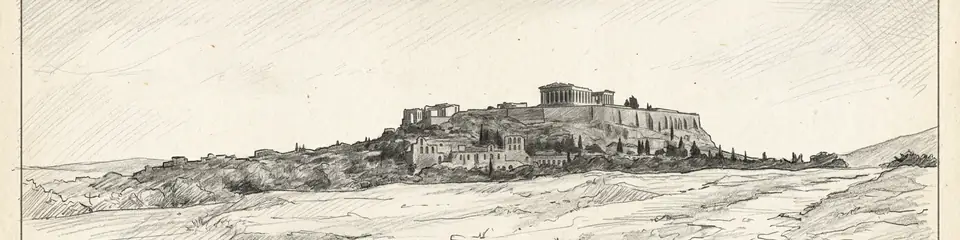
Graphite pencil sketch banner of Acropolis of Athens

“The Acropolis is the canonical landscape of classical democracy's visual culture — where architecture, sculpture, and civic religion were fused at city scale under Pericles.”

الموقع

نظرة عامة

The Acropolis of Athens is a flat-topped rock rising about 150 metres above the Attic plain, its natural cliffs forming defences on three sides. Human occupation dates to the Neolithic, but the monuments that define the site belong chiefly to the 5th century BCE, when Athens, enriched by the Delian League and led by Pericles, embarked on a building programme under the architects Ictinus, Callicrates, Mnesicles, and the sculptor Phidias. The Propylaea (monumental gateway), Temple of Athena Nike, Erechtheion (with its Caryatid porch), and above all the Parthenon — temple of Athena Parthenos — transformed the citadel into a unified sacred landscape visible across the city.

The Parthenon (447–432 BCE) is a Doric peripteral temple of Pentelic marble housing Phidias's chryselephantine Athena; its sculptural programme (metopes, frieze, pediments) remains central to art history. The Erechtheion incorporates multiple cults, including Athena and Poseidon-Erechtheus, on uneven ground sacred in myth. Earlier Archaic temples destroyed by the Persians in 480 BCE preceded these Classical buildings; traces survive in fill and foundations.
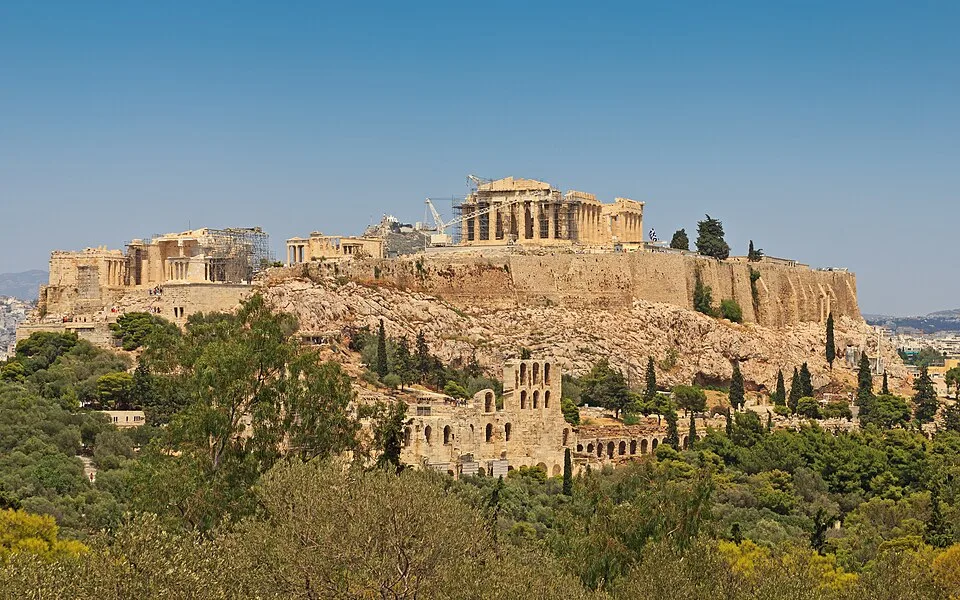
Attica 06-13 Athens 50 View from Philopappos - Acropolis Hill
Attica 06-13 Athens 50 View from Philopappos - Acropolis Hill | A.Savin (CC BY-SA 3.0)
"For though they were created in a short time, they were made to last for a very long time. Each work in its individual beauty was at the moment of its creation already venerable."
— Plutarch, Life of Pericles 13.5, on the Acropolis building programme (1st century CE)
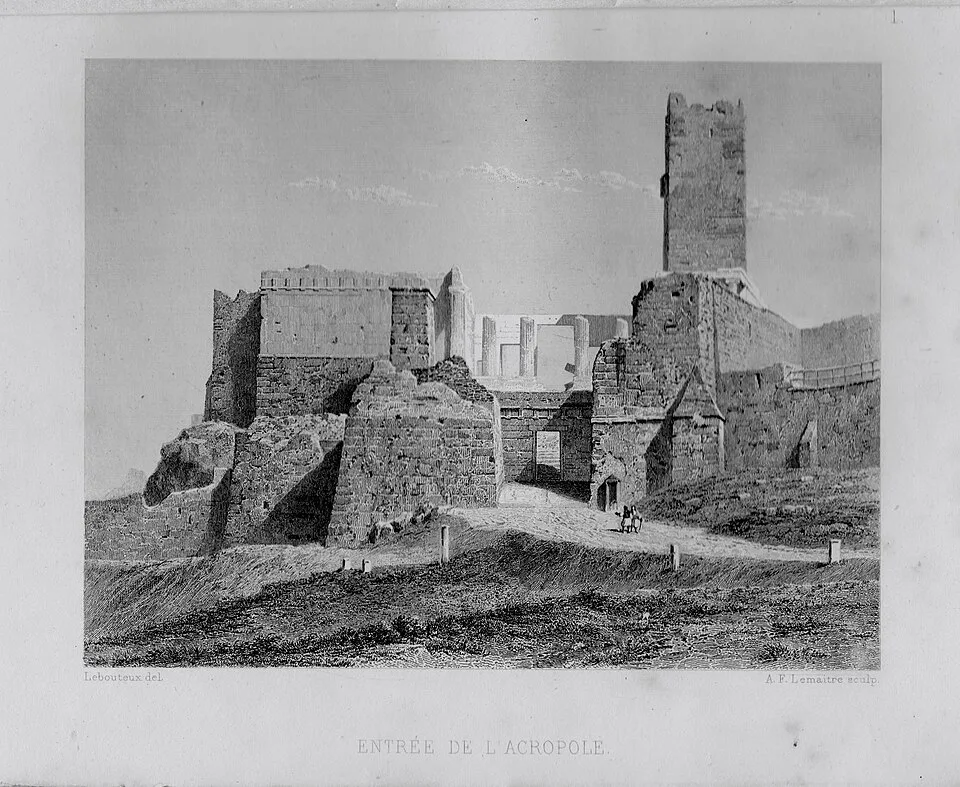
The entrance to the Acropolis before 1853
The entrance to the Acropolis before 1853 | Unknown authorUnknown author (Public domain)
"Ascending the Acropolis one finds the Propylaea, the temple of Athena Nike, and the Parthenon — a triad of fifth-century mastery."
— Pausanias, Description of Greece I.22–24 (composite paraphrase)
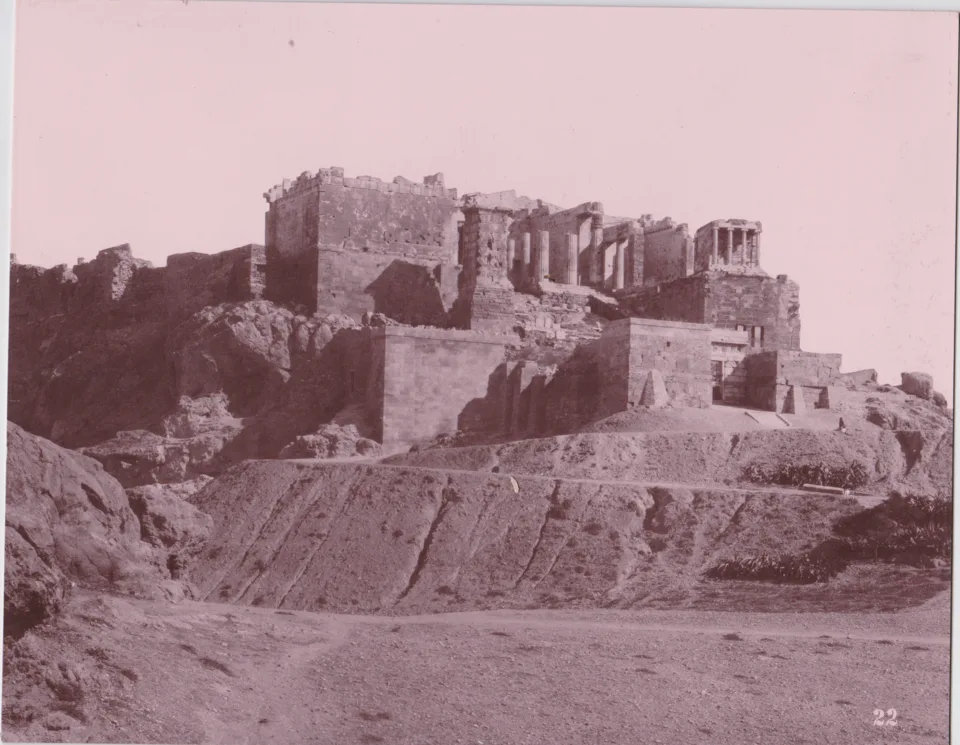
The Acropolis entrance with the heaped earth
The Acropolis entrance with the heaped earth | Rhomiades (Public domain)

In antiquity the Acropolis was primarily religious, not residential. Roman, Byzantine, Frankish, and Ottoman phases added modifications, a church inside the Parthenon, and later a gunpowder magazine — whose explosion in 1687 during the Venetian siege shattered the Parthenon. Greek independence began systematic excavations and anastylosis; the Acropolis Museum (2009) displays sculptures in climate-controlled galleries. UNESCO inscribed the site in 1987. Annual visitor figures exceed four million, making it Greece's most visited archaeological destination.
لماذا يهم

The Acropolis is the canonical landscape of classical democracy's visual culture — where architecture, sculpture, and civic religion were fused at city scale under Pericles. Its survival, destruction, and modern restoration embody the entire modern debate over cultural heritage: Elgin marbles, anastylosis ethics, and mass tourism at a fragile limestone plateau.

الأدلة والتفسير

التمييز بين ما هو راسخ وما لا يزال موضع نقاش.

حقائق راسخة

3
  • Building accounts and literary sources (Plutarch, inscriptions) document the Periclean construction programme and Phidias's supervision of sculpture.
  • Architectural measurement confirms Doric and Ionic orders, Pentelic marble quarrying, and refinements (entasis, curvature) described by ancient authors.
  • The 1687 explosion damage to the Parthenon is documented in Venetian and Ottoman sources and visible in the standing ruin.

تفسيرات متنازع عليها

1
  • The extent to which the Acropolis functioned as treasury versus purely sacred space in the 5th century BCE is debated among historians of Athenian finance.

صور المجتمع

شارك تجربتك

هل قمت بزيارة هذا الموقع؟ ارفع صورك لمساعدة الآخرين في اكتشافه.

قصص ذات صلة

كيفية الاستشهاد بهذه الصفحة

Atlas Anatolia. (447). Acropolis of Athens. Atlas Anatolia. https://atlasanatolia.com/ar/site/acropolis-athens

المحتوى مرخّص بموجب CC BY-SA 4.0 — يجب ذكر المصدر عند إعادة الاستخدام.

رسم بياني

روابط بالمواقع والقصص ذات الصلة.

المصادر

  • The Athenian Acropolis: History, Mythology, and Archaeology from the Neolithic Era to the Present — Hurwit, Jeffrey M. (1999)
  • UNESCO — Acropolis, Athensرابط

الأسئلة الشائعة

أين يقع Acropolis of Athens؟

يقع Acropolis of Athens في Greece.

كم يبلغ عمر Acropolis of Athens؟

يعود تاريخ Acropolis of Athens إلى حوالي 447 ق.م – 1687 م.

ما هي الحضارات المرتبطة بـ Acropolis of Athens؟

يرتبط Acropolis of Athens بحضارة Greek, Roman.

لماذا يعتبر Acropolis of Athens مهماً؟

The Acropolis is the canonical landscape of classical democracy's visual culture — where architecture, sculpture, and civic religion were fused at city scale under Pericles.

هل Acropolis of Athens موقع تراث عالمي لليونسكو؟

نعم — Acropolis of Athens مدرج في قائمة التراث العالمي لليونسكو.