The Amazons are one of the most persistent myths of the ancient world. From the walls of the Parthenon to the coins of Ephesus, from Herodotus to the founding myths of Athens, the legend of a society of female warriors appears repeatedly in Greek art and literature. The Greeks believed the Amazons lived somewhere near the Black Sea coast — a region they associated with the edges of the known world. For most of modern history, scholars treated this as pure invention.
Then archaeology started finding women buried with weapons.
"The Amazons lived on the river Thermodon. They were a nation of women, mighty in war."
— Herodotus, Histories IV.110 (c. 430 BCE)
The Problem with the Evidence
The question of whether the Amazons were "real" depends on what we mean by the word. There was certainly no kingdom of warrior women who spent their time fighting the heroes of Greek mythology. But that may not be the right question. Greek myths about the world beyond the Aegean frequently encode observations about real cultures, transformed beyond recognition by time, distance, and literary convention.
The Scythians, the nomadic peoples of the Eurasian steppes who were well-known to Greek traders along the Black Sea coast, were a society where women routinely rode horses and participated in warfare. Herodotus, writing in the fifth century BCE, described Scythian women who fought alongside men and who could not marry until they had killed an enemy. He placed the Amazons' origins among the Scythians, describing them as a separate group who had separated from the main population.
What the Burials Show
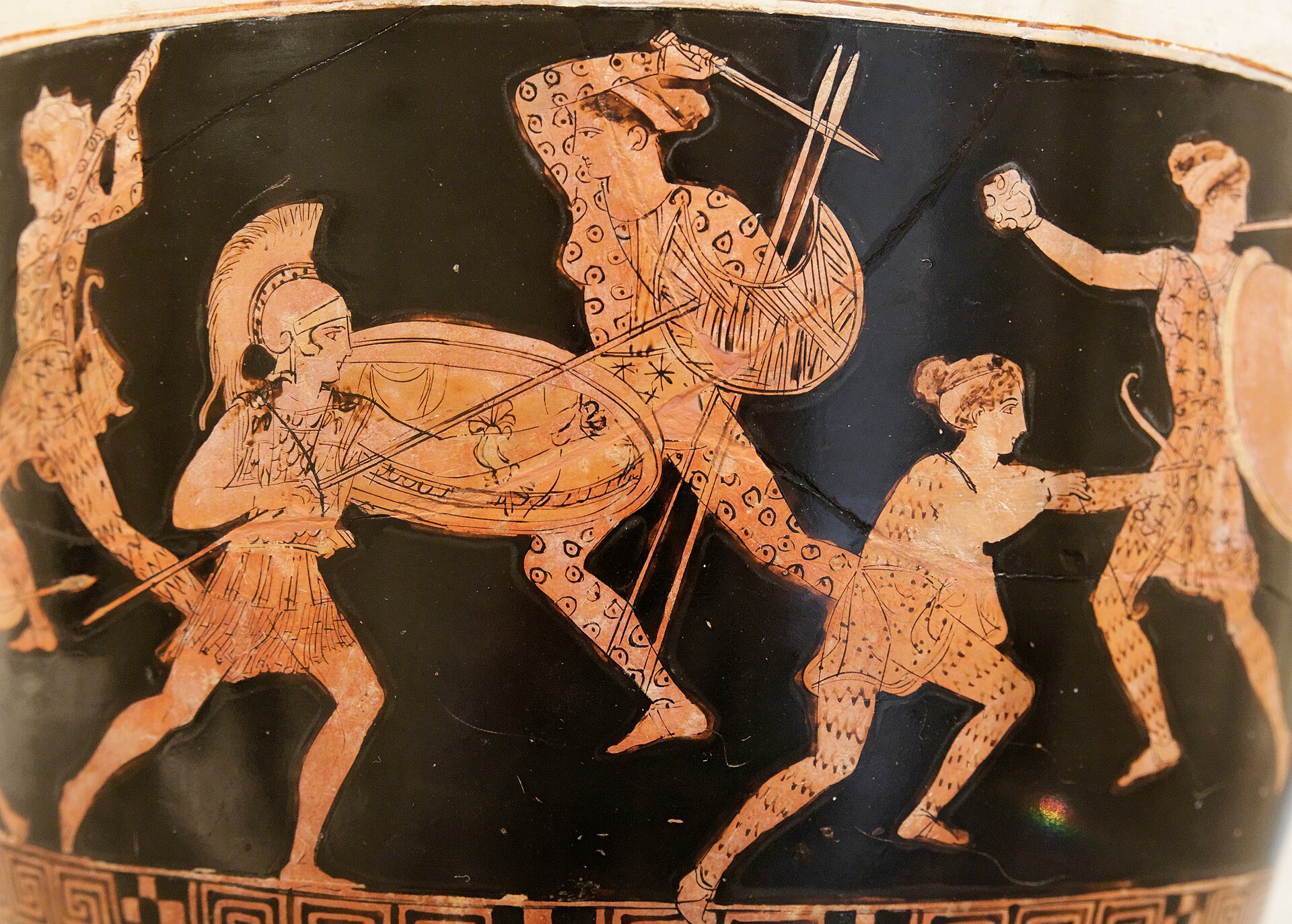
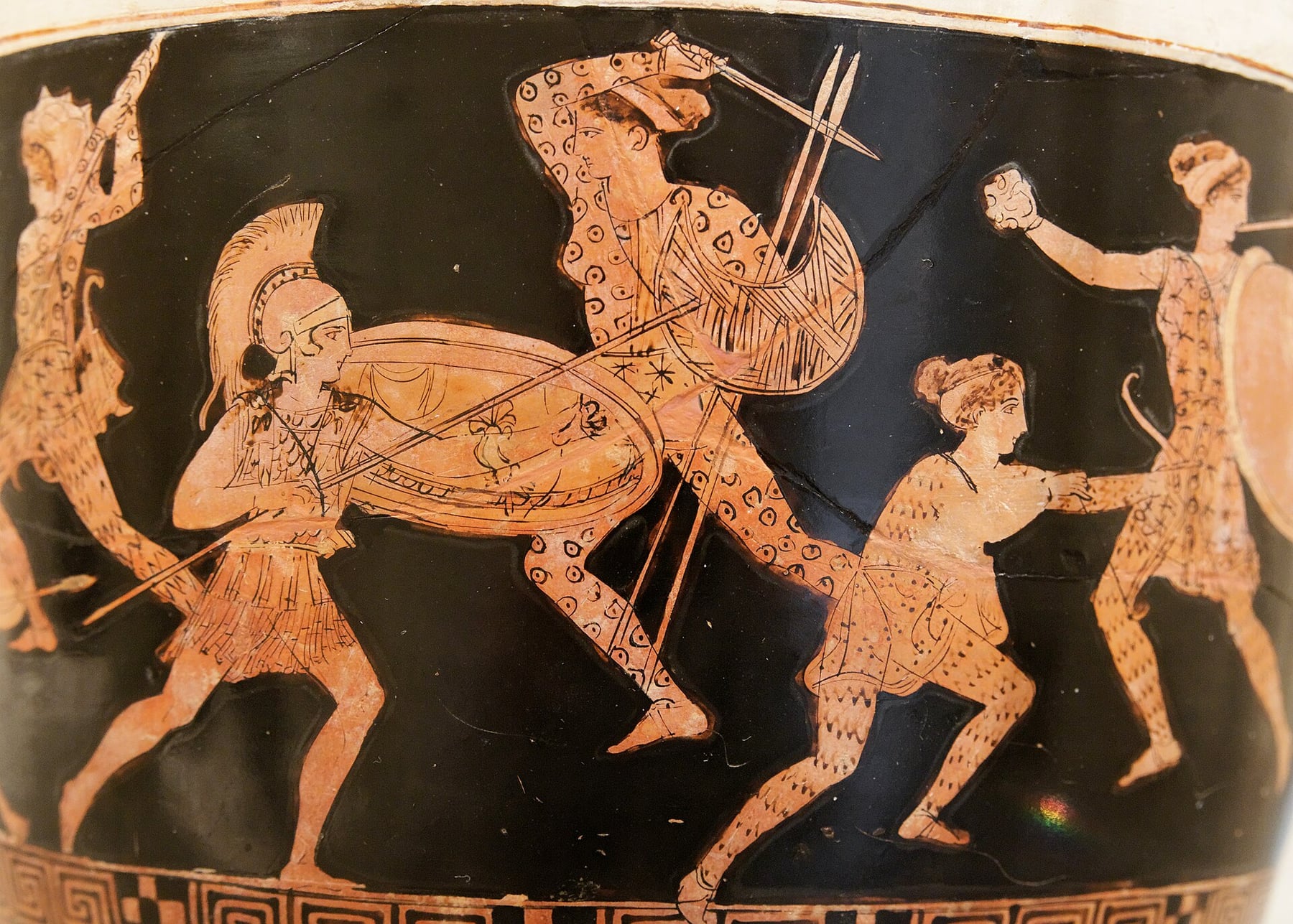
!Amazonomachy — Attic red-figure volute-krater Metropolitan Museum
Amazonomachy — Attic red-figure volute-krater Metropolitan Museum | Marie-Lan Nguyen (CC BY 2.5)
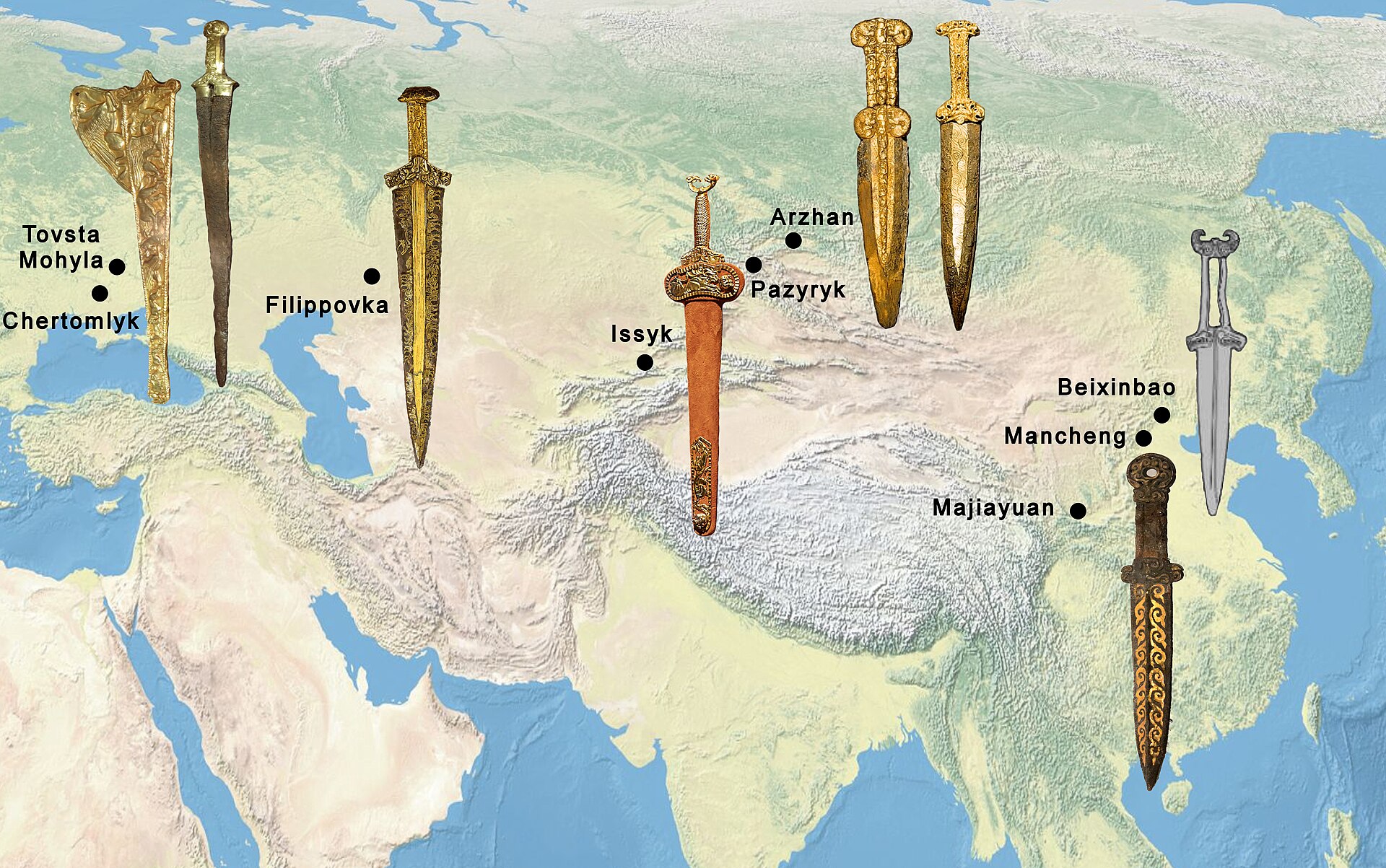
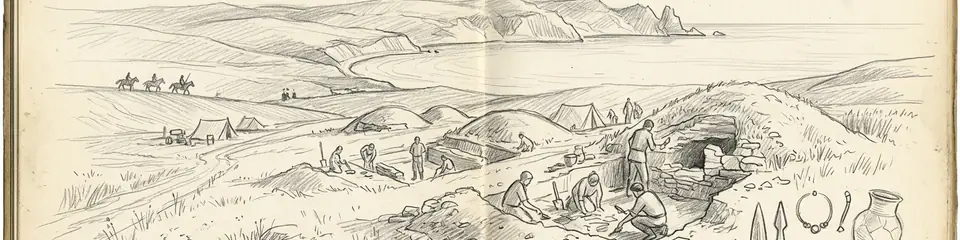
Beginning in the 1990s and accelerating in the 2000s, excavations of nomadic burial mounds across the Eurasian steppe from Ukraine to Kazakhstan have revealed graves of women buried with weapons, armor, and horse equipment. The evidence is systematic, not exceptional: in some cemeteries, roughly a third of warrior burials with weapons belong to women. Osteological analysis has shown that some of these women had the bone structure of people who spent significant time on horseback from childhood.
This is not the Amazons of myth. But it is something: a world in which the Greek observations that crystallized into the Amazon legend had a genuine basis in the cultures of the steppe. Women who fought existed. Women who rode horses existed. The mythologized version, transplanted to a convenient edge of the map and transformed into foils for Greek heroes, is a literary artifact built on a real substratum.
The Sites
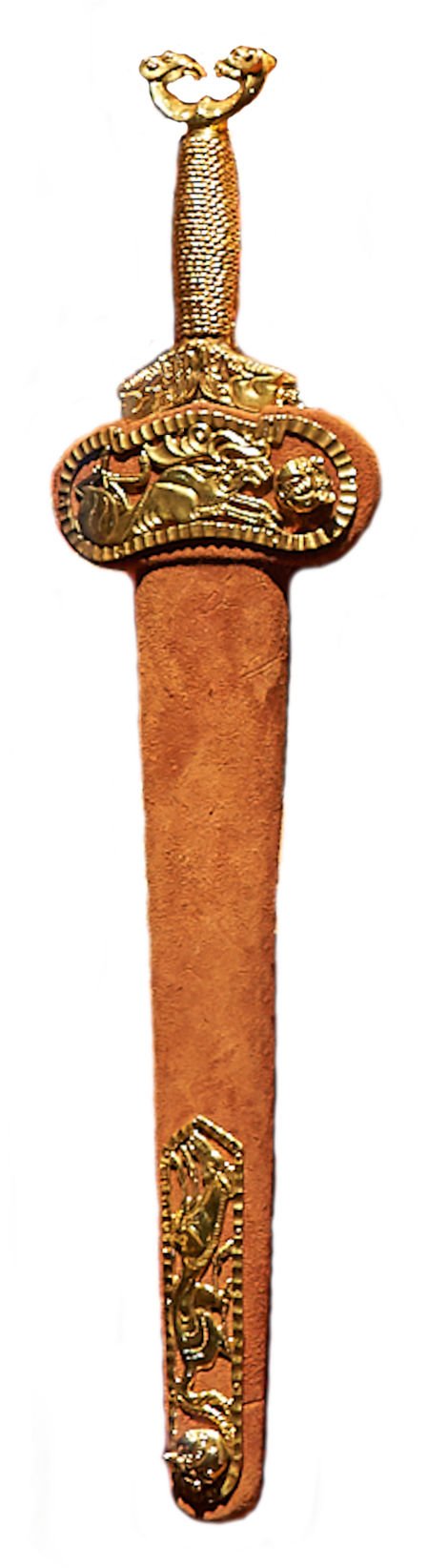
!Sword from the Issyk kurgan — Scythian warrior burial tradition
Sword from the Issyk kurgan — Scythian warrior burial tradition | eggry (CC BY 2.5)
The site of Terme on the Black Sea coast is identified in antiquity as the location of the Amazon city of Themiscyra. It sits near the mouth of the Terme River, which ancient sources called the Thermodon. No Amazon city has been found, but the broader region is archaeologically consistent with cultures where women played active military roles.
Giresun Island, a small volcanic island a kilometer off the coast near the modern city of Giresun, was in antiquity known as the Island of Ares. Ancient sources described it as sacred to the war god and associated it with Amazonian ritual. The island has a Byzantine monastery, likely built on earlier foundations. The harbor town of Giresun (ancient Kerasous) claims to be where cherry trees were first cultivated for export to the Roman world — the Latin word for cherry, cerasus, derives from the ancient name of the city.
Sinop, the northernmost point of the Anatolian peninsula, was a major Greek colonial city and trading port. The birthplace of Diogenes the Cynic, who famously told Alexander the Great to stop blocking his sunlight, the site preserves a well-maintained Byzantine-era city wall incorporating Hellenistic and Roman elements.
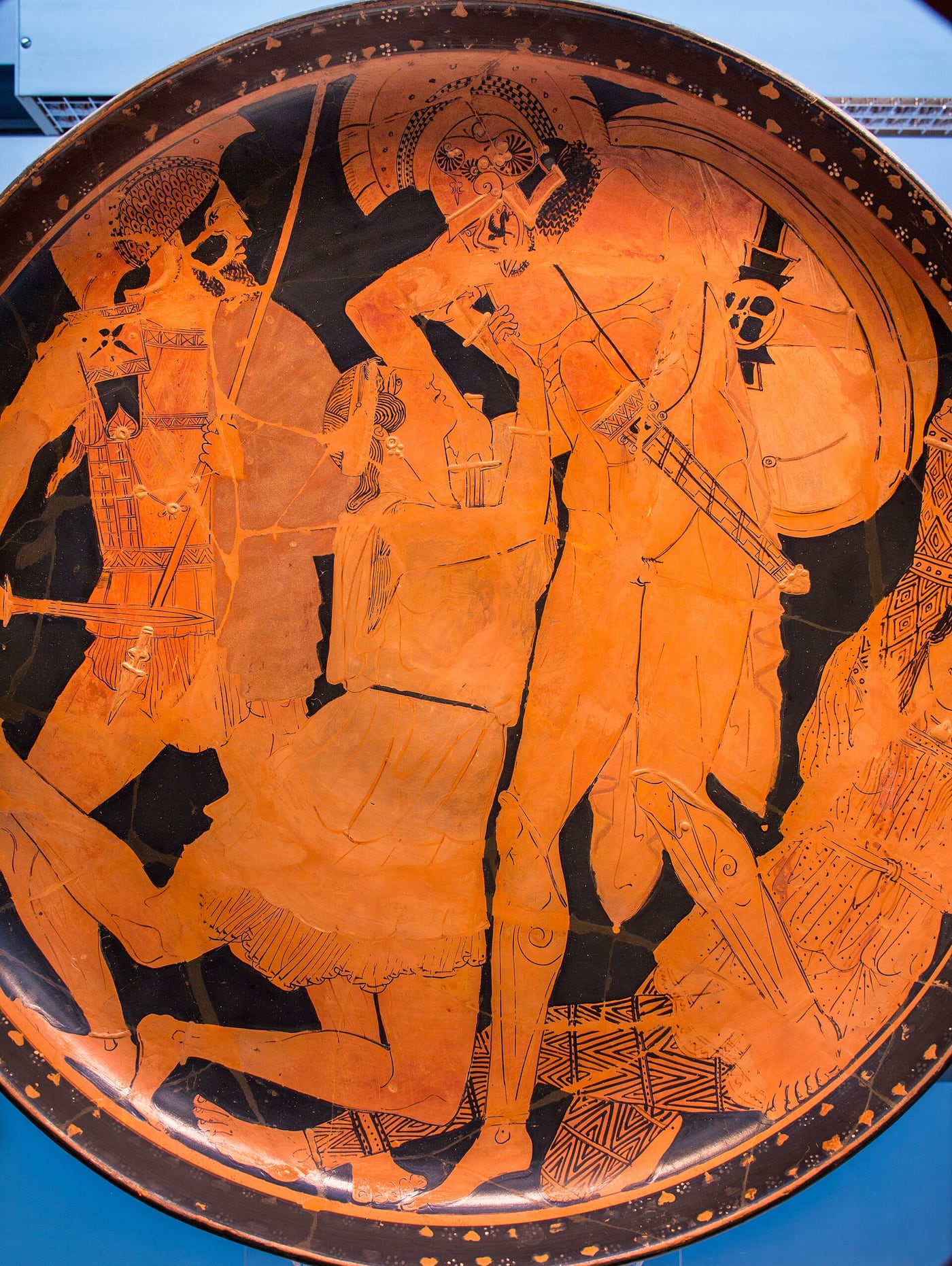
!Achilles and Penthesilea on an Attic cup by the Penthesilea Painter
Achilles and Penthesilea — Attic red-figure cup (Penthesilea Painter) | Wikimedia Commons (CC)
The Myth Machine
What is equally interesting is how the Amazon myth functioned in Greek culture. Amazons appear on the Parthenon, on the Temple of Apollo at Bassai, and in dozens of vase paintings. They are almost always depicted being defeated by Greek heroes. The Amazonomachy — the battle against the Amazons — became one of the standard subjects of Greek architectural sculpture, placed alongside scenes of the Gigantomachy and the Centauromachy as symbols of civilization defeating chaos.
This tells us something about the myth's function. The Amazons represented inversion: a society where gender roles were reversed, where women did what men were supposed to do. Defeating them was proof that the natural order had been restored. The myth was less about real women warriors than about Greek anxieties regarding gender, civilization, and the foreign.
!Steppe iron weapons, 700–400 BCE — the archaeology behind the legend
Steppe iron weapons, 700–400 BCE | Wikimedia Commons (CC BY-SA 4.0)
The archaeological picture neither confirms nor refutes the Amazon myth as the Greeks told it. What it does confirm is that women who fought and rode horses existed throughout the steppe cultures north and east of the Black Sea. The landscape that inspired the myth is real, and it is worth walking.
!Giresun Island ancient Aretias off the Black Sea coast
Giresun Island ancient Aretias off the Black Sea coast | Zeynel Cebeci (CC BY-SA 4.0)