


Overview
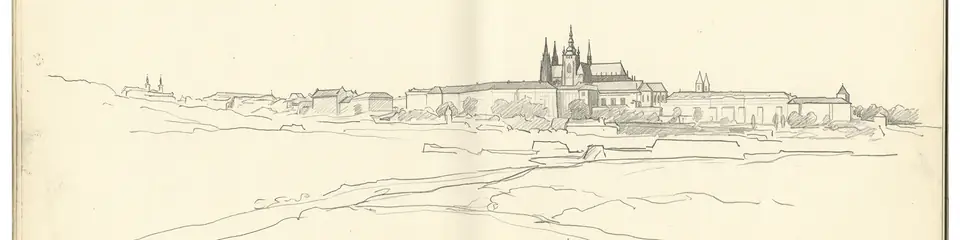
Prague Castle crowns Hradčany hill above the Vltava River in Prague, Czechia. Chronicle tradition dates a fortification to the 9th century; the Romanesque Basilica of St George and the Gothic St Vitus Cathedral grew under the Přemyslid and Luxembourg dynasties. Charles IV made the castle the seat of the Holy Roman Empire in the 14th century, commissioning the cathedral nave and the royal palace halls that still frame the third courtyard.
After the Hussite wars and Jagiellon interlude, the Habsburgs from 1526 reshaped the complex into a Renaissance and Baroque palace — the Spanish Hall, Matthias Gate, and Teresa of Savoy's chapel layers document court life from Rudolf II's alchemists to the Defenestrations of Prague. The cathedral received its neo-Gothic west front in the 19th century; St Wenceslas Chapel preserves medieval Bohemian coronation regalia.
The castle remains the official residence of the Czech president. UNESCO inscribed "Historic Centre of Prague" in 1992, with the castle ensemble as its dominant landmark. Pair with Himeji Castle for contrasting European and East Asian fortress-palace traditions.