
Skip to content
Atlas AnatoliaAtlas Anatolia
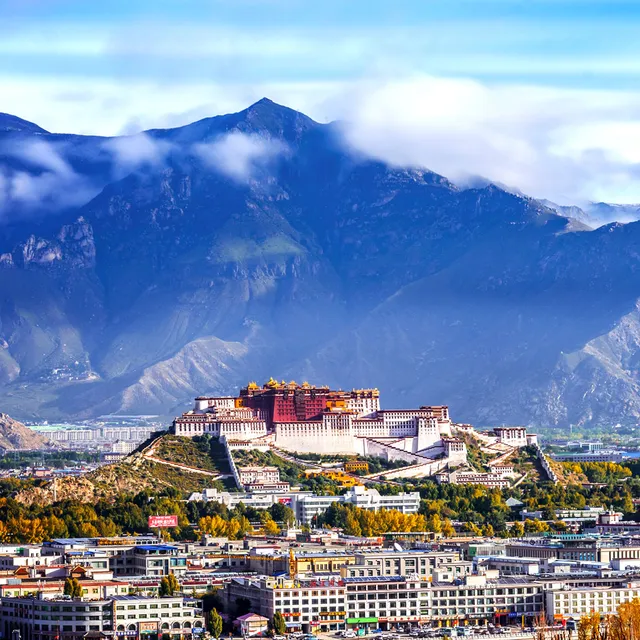
The Potala Palace on Red Hill above Lhasa, Tibet

Country Record

Longest Recorded History in China

Potala Palace

པོ་ཏ་ལ637 CE – 1959 CE

Elevation

~3,700 m above sea level on Red Hill

Height

13 storeys; over 1,000 rooms (traditional count)

Major rebuild

17th century under the Fifth Dalai Lama

UNESCO

Historic Ensemble of the Potala Palace (1994)

The Potala is the supreme architectural expression of Tibetan Buddhist governance — a palace-temple whose scale and altitude embody the unique fusion of spiritual and temporal authority in the Himalaya.”

Location

Overview

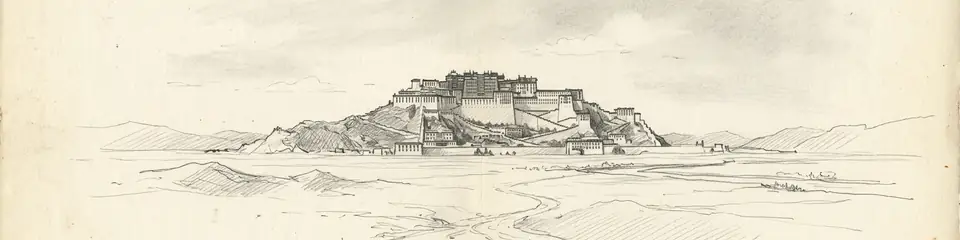
The Potala Palace crowns Marpo Ri (Red Hill) in the centre of the Lhasa Valley, Tibet Autonomous Region, China, at roughly 3,700 metres elevation. Tradition associates the hill with Songtsen Gampo (7th century), who built a palace for his marriage alliances; the present monumental complex largely reflects the 17th-century reconstruction under the Fifth Dalai Lama, Ngawang Lobsang Gyatso, with major expansion continuing under the Thirteenth Dalai Lama.

The White Palace (Phodrang Karpo) contains the Dalai Lama's residential and administrative quarters; the Red Palace (Phodrang Marpo) houses chapels, stupas of successive Dalai Lamas, and assembly halls dense with murals, thangkas, and gilded tombs. The building integrates fortress walls, sloping stone foundations, and timber superstructure engineered for seismic and alpine conditions.

The UNESCO Historic Ensemble of the Potala Palace, Lhasa (1994, extended 2000–2001) also includes Jokhang Temple and Norbulingka summer palace. The Potala remains among the most photographed monuments in Asia and a focal point of Tibetan cultural identity.

Why It Matters

The Potala is the supreme architectural expression of Tibetan Buddhist governance — a palace-temple whose scale and altitude embody the unique fusion of spiritual and temporal authority in the Himalaya. Its 1994 UNESCO listing anchored international recognition of Tibetan heritage conservation at a moment of rapid modernisation in Lhasa.

Stay curious

New stories and sites, once a month. No spam.

Evidence & Interpretation

Distinguishing what is well-established from what remains debated.

Well-Established Facts

2
  • Tibetan chronicles and copper inscriptions document 17th-century expansion under the Fifth Dalai Lama and subsequent Dalai Lama burials in the Red Palace.
  • Architectural survey confirms layered timber–masonry construction, sloping batter walls, and chapel layouts typical of Ganden Phodrang-period building.

Scholarly Inferences

1
  • Early 7th-century occupation of Red Hill by Songtsen Gampo is supported by tradition and limited archaeology; extent of his original structure is uncertain.

More Photos

Museum Artifacts

Community Photos

Share your experience

Have you visited this site? Upload your photos to help others discover it.

How to cite this page

Atlas Anatolia. (637). Potala Palace. Atlas Anatolia. https://atlasanatolia.com/site/potala-palace

Content licensed CC BY-SA 4.0 — attribution required when reusing.

Sources

  • The Temples of LhasaAlexander, André (2005)
  • UNESCO — Potala PalaceLink

Research Papers

Frequently Asked Questions

Where is Potala Palace located?

Potala Palace is located in China.

How old is Potala Palace?

Potala Palace dates to approximately 637 CE – 1959 CE.

Which civilizations are associated with Potala Palace?

Potala Palace is associated with the Tibetan.

Why is Potala Palace important?

The Potala is the supreme architectural expression of Tibetan Buddhist governance — a palace-temple whose scale and altitude embody the unique fusion of spiritual and temporal authority in the Himalaya.

Is Potala Palace a UNESCO World Heritage Site?

Yes — Potala Palace is inscribed as a UNESCO World Heritage Site.