

Overview
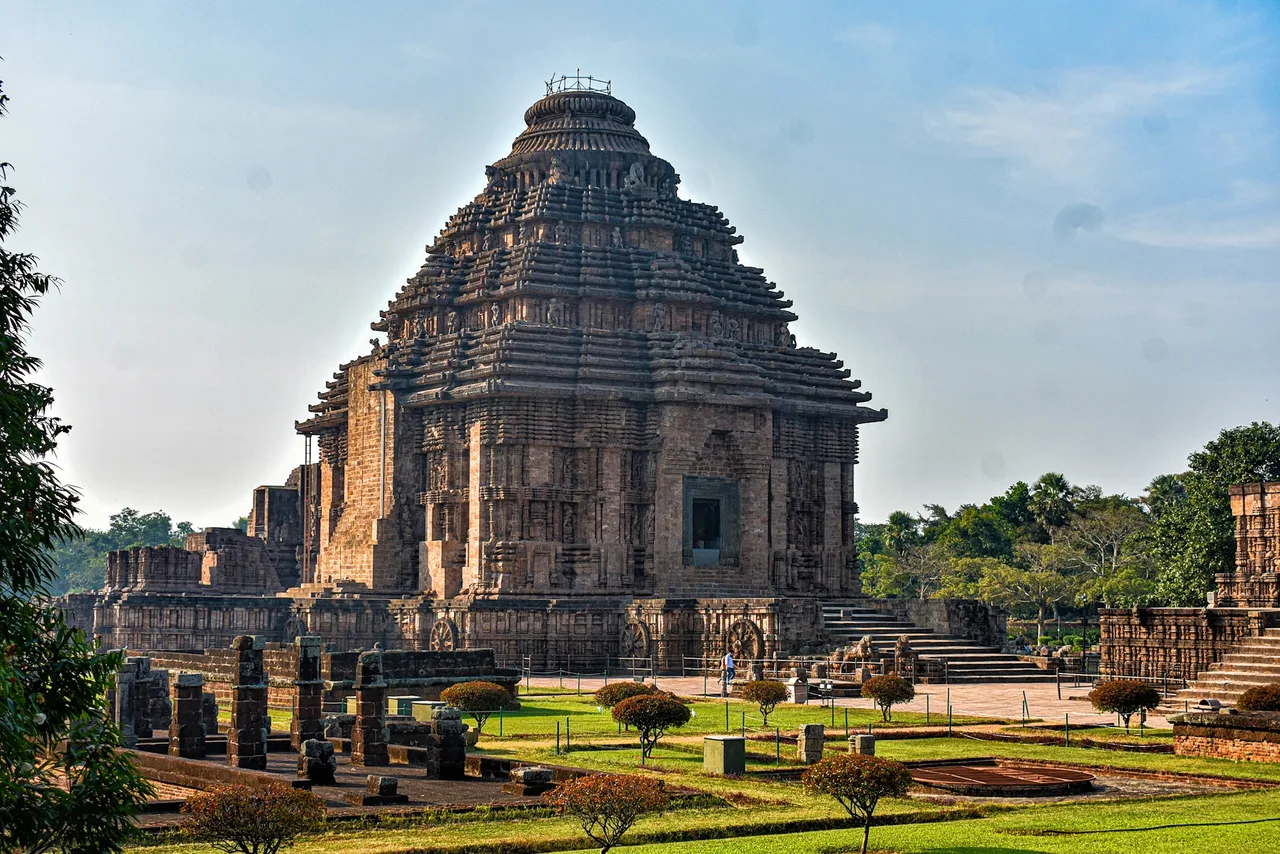
Konark Sun Temple stands on the Bay of Bengal coast in Odisha (Orissa), eastern India, approximately 65 kilometres from the state capital Bhubaneswar. It was constructed around 1250 CE by King Narasimhadeva I of the Eastern Ganga dynasty, one of the most powerful rulers of medieval India. The temple was conceived as a colossal stone chariot of the sun god Surya: the entire platform rides on 24 intricately carved stone wheels (each about 3 metres in diameter) pulled by seven rearing horses, representing the seven days of the week.
The scale of the original structure was extraordinary. The main sanctuary (deul) once rose to an estimated height of 70 metres and was visible from the sea — European sailors called it the "Black Pagoda" and used it as a navigation landmark. The dancing hall (jagamohana) still stands at about 40 metres. The temple's exterior is covered from base to top with a dense programme of sculpture: solar deities, celestial musicians and dancers, erotic couples (mithuna), animals, mythological scenes, and an extraordinary series of images of everyday life. The precision and vitality of the carving is unmatched in Indian stone sculpture.
The main deul collapsed at some point between the 16th and 18th centuries — possibly from structural instability, an earthquake, or the removal of the lodestone that reportedly held the central idol in suspension. The surviving jagamohana and subsidiary shrines were designated a UNESCO World Heritage Site in 1984.