
Overview
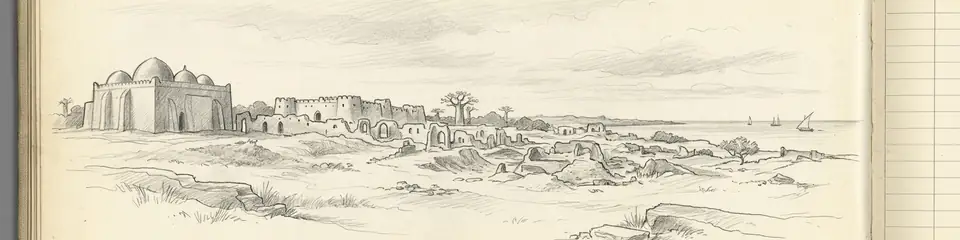
Kilwa Kisiwani ("Kilwa on the island") occupies a small island in the Indian Ocean off the southern coast of modern Tanzania. Founded by Shirazi settlers from the Persian Gulf around the 9th century CE, it grew into the most powerful city-state on the Swahili Coast, commanding trade routes that linked the gold-producing interior of southern Africa to merchants from Arabia, Persia, India, and China.
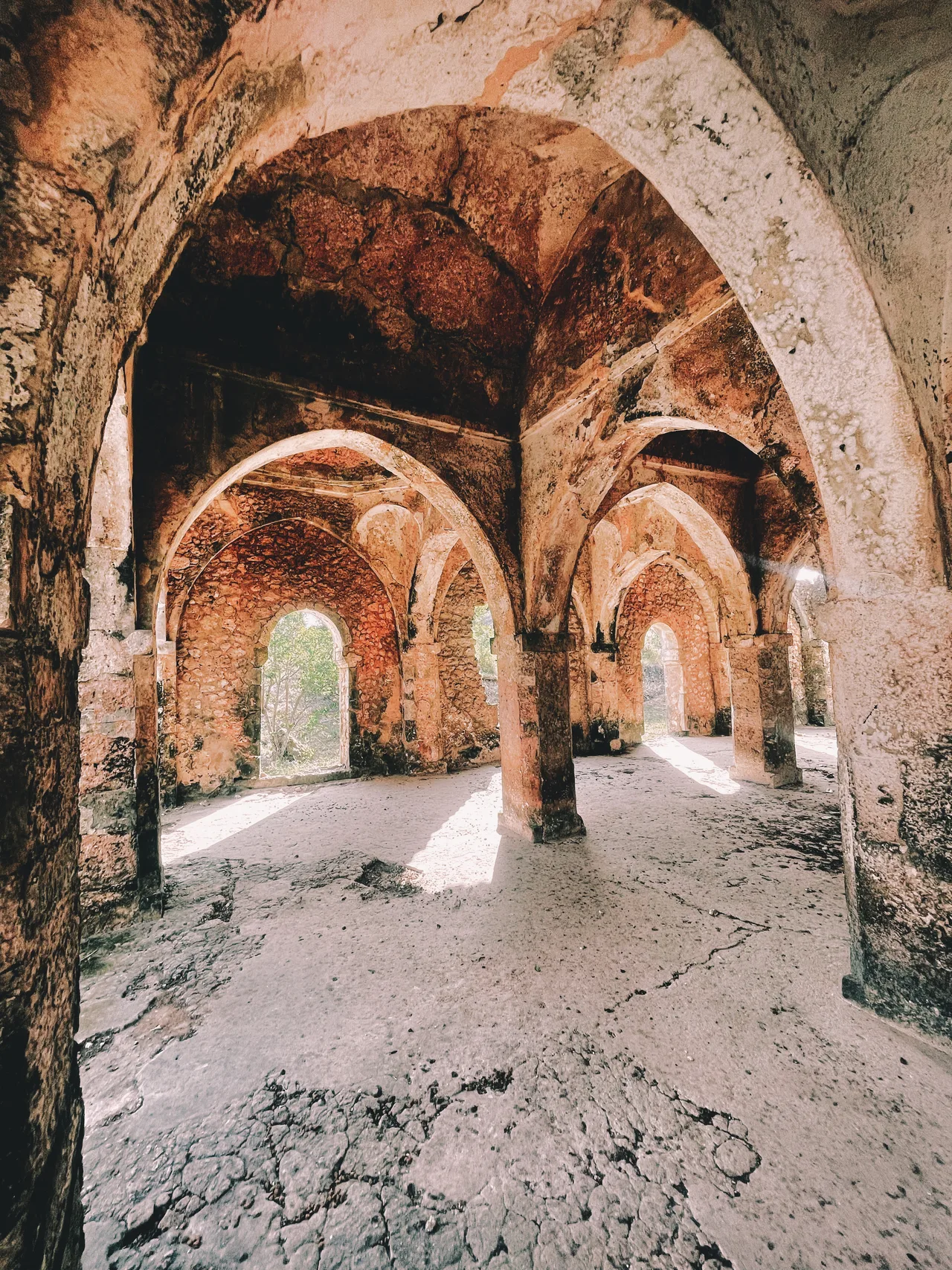
At its commercial peak in the 13th and 14th centuries, Kilwa controlled the export of gold, ivory, iron, and copper across the western Indian Ocean. The wealth this generated built the Great Mosque of Kilwa — the largest pre-European mosque in sub-Saharan Africa — whose vaulted coral-rag nave survives largely intact. Adjacent stood Husuni Kubwa, an extraordinary 14th-century palace complex covering nearly a hectare with a sunken octagonal swimming pool and over a hundred rooms — the largest medieval building in sub-Saharan Africa.
The town minted its own copper and gold coins — the earliest locally struck coinage in sub-Saharan Africa — and finds of Chinese porcelain and Persian glazed-ware confirm participation in Asia-wide trade networks. In 1505 the Portuguese bombarded Kilwa and established a fort (the Gereza, whose ruins survive), breaking the city's commercial power. UNESCO inscribed the site in 1981.