
Skip to content
Atlas AnatoliaAtlas Anatolia
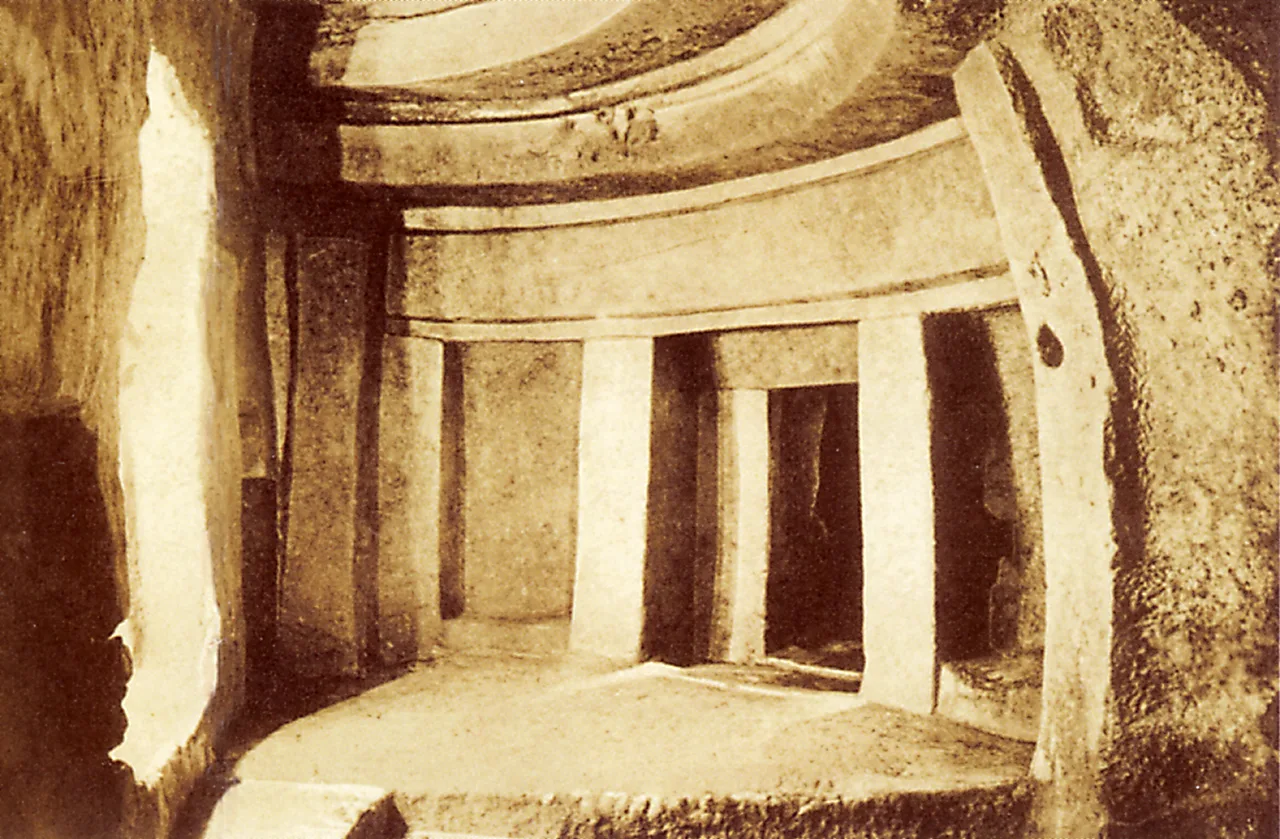
The carved limestone chambers of the Hal Saflieni Hypogeum, Malta

Hal Saflieni Hypogeum

Il-Hipogjew ta' Hal Saflieni3300 BCE – 2500 BCE
65

Interest

NeolithicMegalithic European

Period

c. 3300-2500 BCE (Maltese Temple Period)

Structure

3-level underground complex, 480 m2, 11 m deep — carved by hand

Burials

Remains of over 7,000 individuals — largest prehistoric ossuary in the Mediterranean

Acoustics

Oracle Chamber tuned to 110 Hz resonance — oldest known acoustically designed space

Famous find

"Sleeping Lady" terracotta figurine, National Museum of Archaeology, Valletta

UNESCO

World Heritage Site 1980

The Hal Saflieni Hypogeum is the single most extraordinary prehistoric monument in the Mediterranean.”

Overview

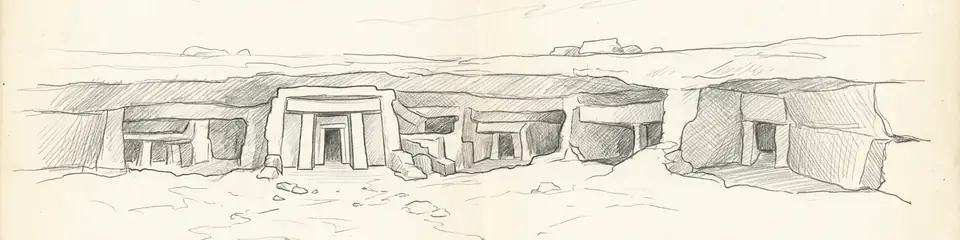
The Hal Saflieni Hypogeum lies beneath the modern town of Paola in Malta, discovered accidentally by workers cutting cisterns in 1902. It is a unique monument: a three-level underground complex cut entirely by hand from the soft globigerina limestone, covering approximately 480 square metres and extending to a depth of about 11 metres below the present street level.

The complex was constructed and used from approximately 3300 to 2500 BCE by the people of the Maltese Temple Period, the same culture that built the above-ground megalithic temples of Mnajdra, Hagar Qim, and Ggantija. The upper level preserves the earliest chambers, while the middle and lower levels contain the most elaborate spaces. Among these is the Oracle Chamber, a small room whose curved ceiling creates an extraordinary acoustic phenomenon: a male voice speaking in the lower registers produces a reverberant bass resonance that fills the entire hypogeum. This effect appears to be deliberate — modern acoustic analysis suggests the builders tuned the chamber to a resonant frequency of 110 Hz, matching the frequency associated with altered states of consciousness in modern neurological research.

The remains of more than 7,000 individuals were found within the complex when it was excavated, making it both a sanctuary and an ossuary of enormous scale. Among the finds was the remarkable "Sleeping Lady" figurine, a small terracotta figure of a reclining woman of ample proportions, now displayed in the National Museum of Archaeology in Valletta. The site was inscribed as a UNESCO World Heritage Site in 1980, and visitor numbers are strictly limited to protect the delicate environment.

Why It Matters

The Hal Saflieni Hypogeum is the single most extraordinary prehistoric monument in the Mediterranean. It represents a level of planning, technical skill, and conceptual ambition — cutting multiple storeys from living rock without metal tools — that challenges everything we think we know about Neolithic society. Its acoustic properties raise profound questions about the ritual life of prehistoric Malta: was sound — particularly resonant, altered states of consciousness-inducing sound — a central feature of the ceremonies performed here? The combination of the largest prehistoric ossuary in the Mediterranean with an architecturally sophisticated underground space suggests a religion of the dead of great complexity. The Hypogeum and the Sleeping Lady figurine also contribute to ongoing debates about the nature of the gender and fertility cult visible throughout the Maltese temples.

Stay curious

New stories and sites, once a month. No spam.

Evidence & Interpretation

Distinguishing what is well-established from what remains debated.

Well-Established Facts

3
  • The complex is carved entirely from globigerina limestone using stone, bone, and antler tools (no metal); tool marks and unfinished chambers preserve the construction process in detail.
  • Skeletal remains of over 7,000 individuals have been identified, many showing signs of intentional deposition in groups and with grave goods including pottery, amulets, and figurines.
  • Acoustic measurements have confirmed a resonant frequency of approximately 110 Hz in the Oracle Chamber; the curvature of the ceiling is consistent with deliberate acoustic design.

Scholarly Inferences

1
  • The ritual function of the complex — whether primarily an ossuary, a sanctuary for oracular consultation, a place of incubation ritual, or some combination — remains debated; no written or pictorial evidence describes the practices performed here.

More Photos

Museum Artifacts

Community Photos

Share your experience

Have you visited this site? Upload your photos to help others discover it.

Location

Sources

  • The Hal Saflieni Hypogeum, PaolaPace, Anthony (2000)
  • Prehistoric Malta: The Tarxien PeriodStoddart, Simon (ed.) (2009)

Research Papers

Frequently Asked Questions

Where is Hal Saflieni Hypogeum located?

Hal Saflieni Hypogeum is located in Malta.

How old is Hal Saflieni Hypogeum?

Hal Saflieni Hypogeum dates to approximately 3300 BCE – 2500 BCE.

Which civilizations are associated with Hal Saflieni Hypogeum?

Hal Saflieni Hypogeum is associated with the Megalithic European.

Why is Hal Saflieni Hypogeum important?

The Hal Saflieni Hypogeum is the single most extraordinary prehistoric monument in the Mediterranean.

Is Hal Saflieni Hypogeum a UNESCO World Heritage Site?

Yes — Hal Saflieni Hypogeum is inscribed as a UNESCO World Heritage Site.