
Skip to content
Atlas AnatoliaAtlas Anatolia
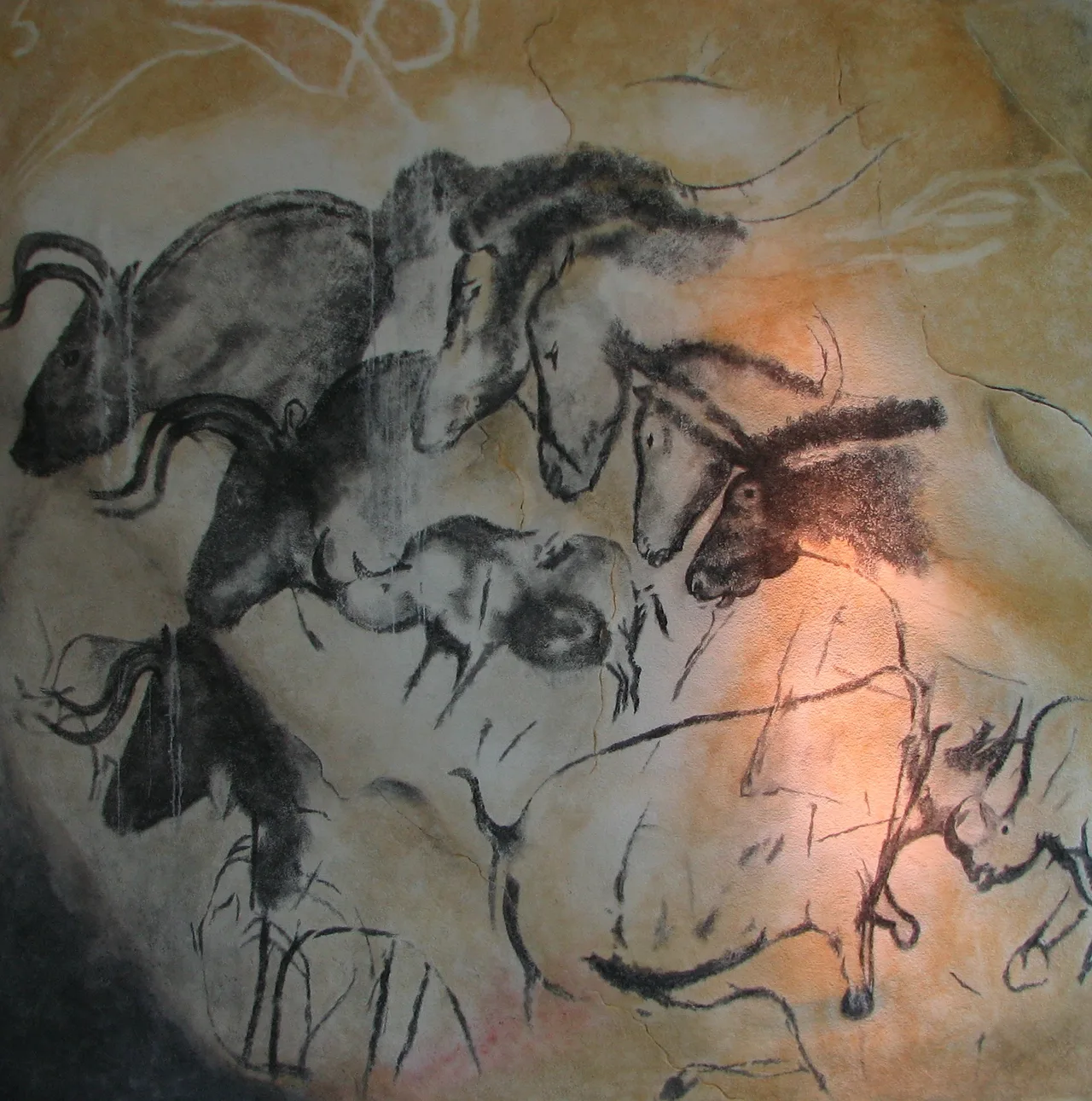
Prehistoric paintings of cave lions on the wall of Chauvet Cave, Ardèche, France, dated to c. 36,000 years ago

Chauvet Cave

Grotte Chauvet36000 BCE – 21000 BCE
69

Interest

PaleolithicAurignacian

Discovery

18 December 1994, by Jean-Marie Chauvet and companions

Age

c. 36,000 years old (Aurignacian phase) — more than twice as old as Lascaux

Content

Over 1,000 images, 13+ animal species, unusually dominated by predators/megafauna

Sealed

Naturally sealed by rockfall c. 21,000 years ago, preserving pristine condition

Access

Never opened to the public — full-scale replica (Caverne du Pont-d'Arc) opened 2015

Chauvet fundamentally rewrote the accepted timeline of human artistic development.”

Overview

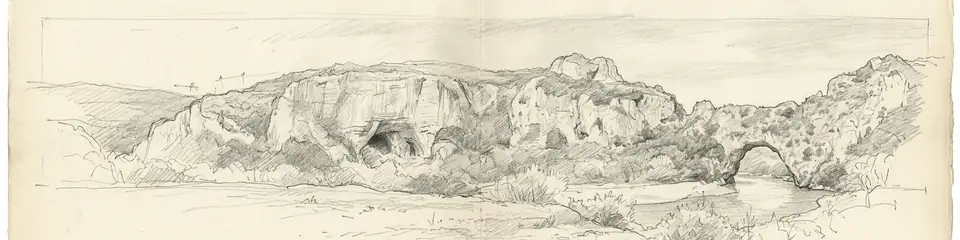
Chauvet Cave lies in a limestone cliff above a former channel of the Ardèche River in southeastern France, near the Pont d'Arc natural rock arch. On 18 December 1994, three speleologists — Jean-Marie Chauvet, Éliette Brunel, and Christian Hillaire — discovered the cave after detecting a draft of air from a small gap in the rock, revealing a series of chambers whose walls were covered with prehistoric paintings and engravings of a scale and quality never before documented in a single site.

Radiocarbon dating of the charcoal used in many of the paintings, along with subsequent uranium-thorium dating of calcite formations overlying some images, established two main phases of artistic activity: an earlier Aurignacian phase around 36,000 years ago, and a later Gravettian phase around 31,000–28,000 years ago. These dates make Chauvet's paintings more than twice as old as those at Lascaux (approximately 17,000 years old), fundamentally revising the timeline of when sophisticated figurative art first appeared in human prehistory.

The cave contains over 1,000 individual images across roughly 8,500 square metres of surface area, depicting at least 13 different animal species. Unlike most other Upper Paleolithic cave art sites, which are dominated by horses, bison, and deer, Chauvet features an unusually high proportion of dangerous predator and megafauna species — cave lions, woolly rhinoceroses, mammoths, cave bears, and a single depiction of a possible cave hyena — rendered with techniques including scraping the cave wall to create a lighter background before painting, shading to suggest volume and musculature, and multiple overlapping outlines that some researchers interpret as an attempt to convey motion, an effect sometimes compared to early animation. A famous panel depicting a pride of lions hunting bison demonstrates coordinated, dynamic composition across a large connected wall surface.

Beyond the paintings, the cave floor preserves footprints, hearths, and the bones of animals including cave bears that hibernated and died there, some skulls apparently deliberately placed on rocky outcrops by the cave's human visitors — evidence interpreted by some researchers as ritual activity, though this remains debated. Because the cave was sealed by a rockfall roughly 21,000 years ago and its entrance remained hidden until 1994, the interior environment — temperature, humidity, and untouched surfaces — was preserved in an exceptional, near-pristine state.

Learning from the severe degradation Lascaux suffered after opening to mass tourism in the mid-20th century (closed to the public since 1963 due to mold and calcite damage from visitor breath and body heat), French authorities never opened Chauvet itself to public access. Instead, a precise full-scale facsimile, the Caverne du Pont-d'Arc, was constructed nearby and opened to visitors in 2015, reproducing the cave's geology and artwork in exhaustive detail while the original remains sealed and scientifically monitored. Chauvet Cave was inscribed as a UNESCO World Heritage Site in 2014.

Why It Matters

Chauvet fundamentally rewrote the accepted timeline of human artistic development. Before its discovery, scholars generally assumed cave art evolved gradually in technical sophistication over tens of thousands of years, with simpler forms preceding more complex ones. Chauvet's paintings — among the very oldest known — already display shading, perspective, and dynamic compositional techniques as accomplished as, or in some respects more ambitious than, art made twenty thousand years later, suggesting that the cognitive and technical capacity for sophisticated symbolic art was present in Homo sapiens far earlier than previously believed, rather than developing along a simple linear progression. The cave's unusual emphasis on dangerous predators rather than prey animals has become a central puzzle in the study of Paleolithic art's meaning and purpose, fuelling ongoing debate about whether such imagery relates to shamanic practice, hunting magic, territorial marking, or forms of symbolic thought not yet fully understood — a debate Chauvet keeps unusually open precisely because its art defies the more prey-animal-dominated pattern seen elsewhere. The decision to protect Chauvet by never opening it to the public, learning directly from Lascaux's documented deterioration, established an influential conservation model now applied to other sensitive prehistoric sites worldwide: preserve the irreplaceable original in isolation, and give the public access through a scientifically faithful replica instead.

Stay curious

New stories and sites, once a month. No spam.

Evidence & Interpretation

Distinguishing what is well-established from what remains debated.

Well-Established Facts

3
  • Radiocarbon dating of charcoal pigment used in the paintings, cross-validated with uranium-thorium dating of overlying calcite formations, established two main phases of artistic activity at approximately 36,000 and 31,000–28,000 years ago.
  • Geological analysis of the rockfall sealing the cave entrance dates the blockage to approximately 21,000 years ago, explaining the exceptional preservation of the interior until 1994.
  • Systematic cataloguing has documented over 1,000 individual painted and engraved images across at least 13 animal species, with cave lions, rhinoceroses, and mammoths represented at markedly higher frequency than in most other known Upper Paleolithic cave art sites.

Debated Interpretations

1
  • The purpose and meaning of the cave's art, including the deliberate placement of cave bear skulls on rock outcrops, remains actively debated among specialists, with hypotheses ranging from shamanic or ritual practice to territorial or narrative functions not yet firmly established.

Discovery & Excavation

1994

Discovery

Jean-Marie Chauvet, Éliette Brunel, and Christian Hillaire discover the cave via an air draft from a hidden gap in the rock face.

1998–2001

Jean Clottes scientific survey

Comprehensive scientific documentation and dating programme led by prehistorian Jean Clottes, establishing the cave's chronology and conservation protocols.

2015

Caverne du Pont-d'Arc replica opens

Full-scale facsimile of the cave opens to the public near the original site, providing public access while the original remains permanently sealed and monitored.

More Photos

Museum Artifacts

Community Photos

Share your experience

Have you visited this site? Upload your photos to help others discover it.

Location

Sources

  • Dawn of Art: The Chauvet CaveChauvet, Jean-Marie; Deschamps, Éliette Brunel; Hillaire, Christian (1996)
  • Evolution of prehistoric cave artValladas, Hélène et al. (2001)
  • UNESCO — Decorated Cave of Pont d'Arc, known as Grotte Chauvet-Pont d'Arc, ArdècheLink

Research Papers

Frequently Asked Questions

Where is Chauvet Cave located?

Chauvet Cave is located in Ardèche, France.

How old is Chauvet Cave?

Chauvet Cave dates to approximately 36000 BCE – 21000 BCE.

Which civilizations are associated with Chauvet Cave?

Chauvet Cave is associated with the Aurignacian.

Why is Chauvet Cave important?

Chauvet fundamentally rewrote the accepted timeline of human artistic development.

Is Chauvet Cave a UNESCO World Heritage Site?

Yes — Chauvet Cave is inscribed as a UNESCO World Heritage Site.