
Skip to content
Atlas AnatoliaAtlas Anatolia
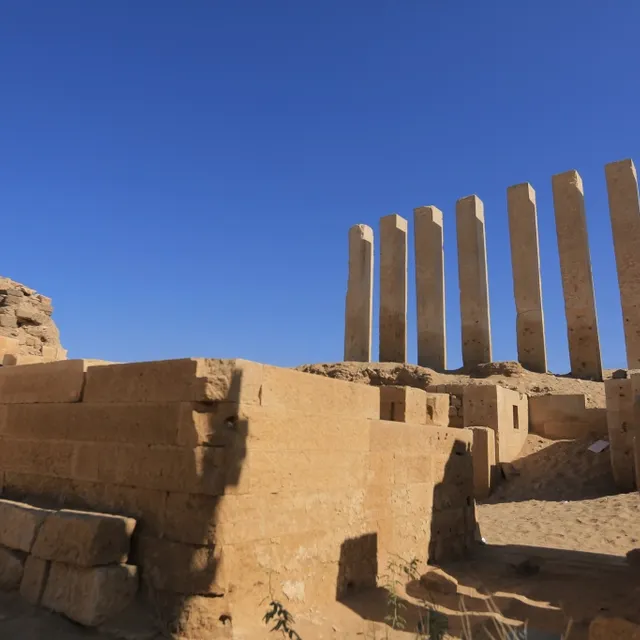
Standing pillars of the Temple of Awwam (Mahram Bilqis) near Marib, Yemen

Country Record

Known by the Most Names in Yemen

Temple of Awwam

محرم بلقيس700 BCE – 500 CE

Deity

Almaqah, chief god of the Sabaean kingdom

Popular name

Mahram Bilqis — "sanctuary of Bilqis" (Queen of Sheba tradition)

Architecture

Oval limestone temenos with monumental inscribed façade pillars

Evidence base

Thousands of votive inscriptions in Sabaic

Awwam is the clearest architectural and epigraphic window onto Sabaean state religion — royal piety, pilgrimage, and the god Almaqah — comparable in documentary density to major Near Eastern temple archives.”

Location

Overview

The Temple of Awwam lies a short distance east of the ruins of ancient Marib in Yemen's Marib Governorate. Its massive oval temenos wall of dressed limestone — over 250 metres long on some axes — enclosed a sacred precinct approached by a monumental propylon and decorated with rows of inscribed and sculpted votive offerings. The temple served Almaqah (also Ilumquh), national god of Saba and recipient of royal dedications from across South Arabia.

Excavations and epigraphic campaigns (notably American Foundation for the Study of Man work mid-20th century, and later German and Yemeni teams) recovered thousands of inscribed bronze and stone dedications, animal offerings, and ritual architecture that make Awwam a primary archive of Sabaean religion, dynasty, and language. Columns of the hypostyle or porticoed hall and the famous "Pillar" façade remain iconic images of South Arabian archaeology.
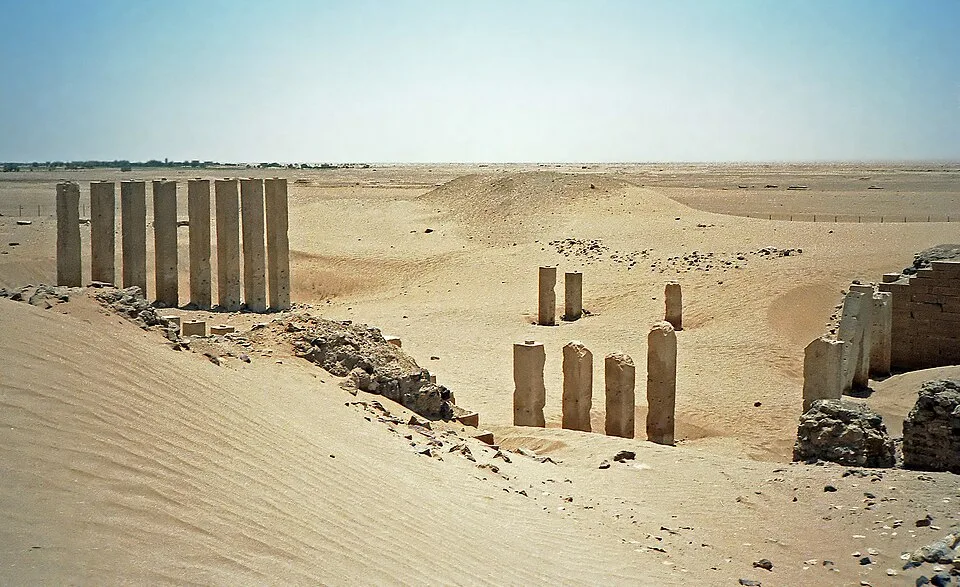
Bar'an temple 1986-1

Bar'an temple 1986-1 | Bernard Gagnon (CC BY-SA 3.0)

"Almaqah of Awwām — the lord of Awwām — for whom kings and commoners offered bronze and blood, whose house stood east of Maryab as the heart of Sabaean piety."
— Composite from Sabaean dedicatory formulae at the Temple of Awwam (modern scholarly paraphrase of corpus)

Classical and later Arabic traditions associated the sanctuary with Bilqis, the Queen of Sheba, giving rise to the popular name Mahram Bilqis — a folk attribution not confirmed as historical fact, but one that places Awwam within the long memory of Sabaean-Israelite and Qurʾanic lore.
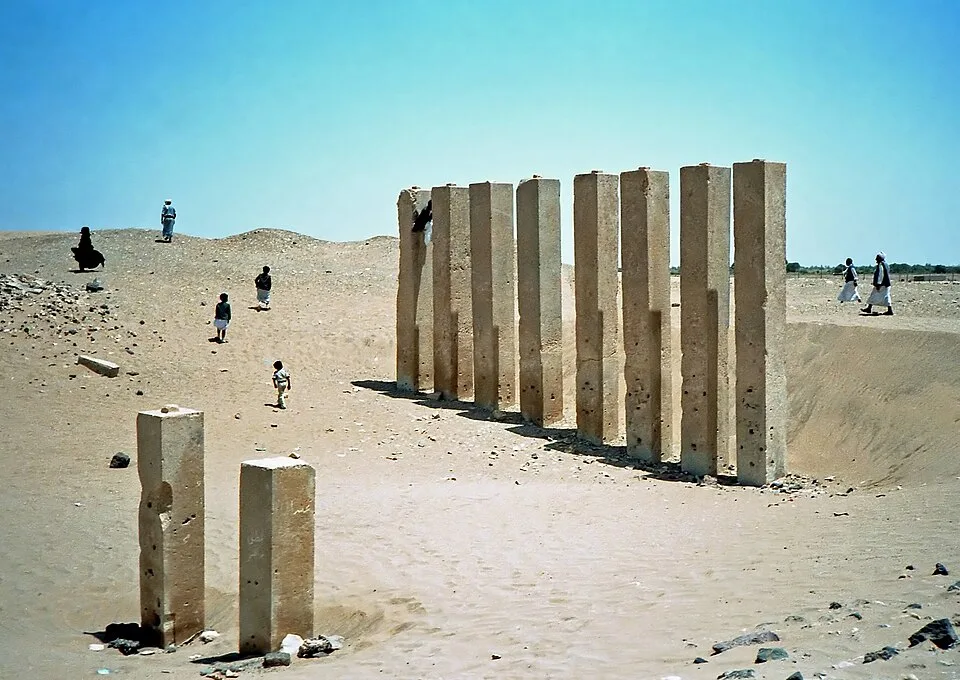
Bar'an temple 1986-2

Bar'an temple 1986-2 | Bernard Gagnon (CC BY-SA 3.0)

Together with the Marib Dam and other Marib monuments, Awwam forms a core of the UNESCO Ancient Kingdom of Saba listing.
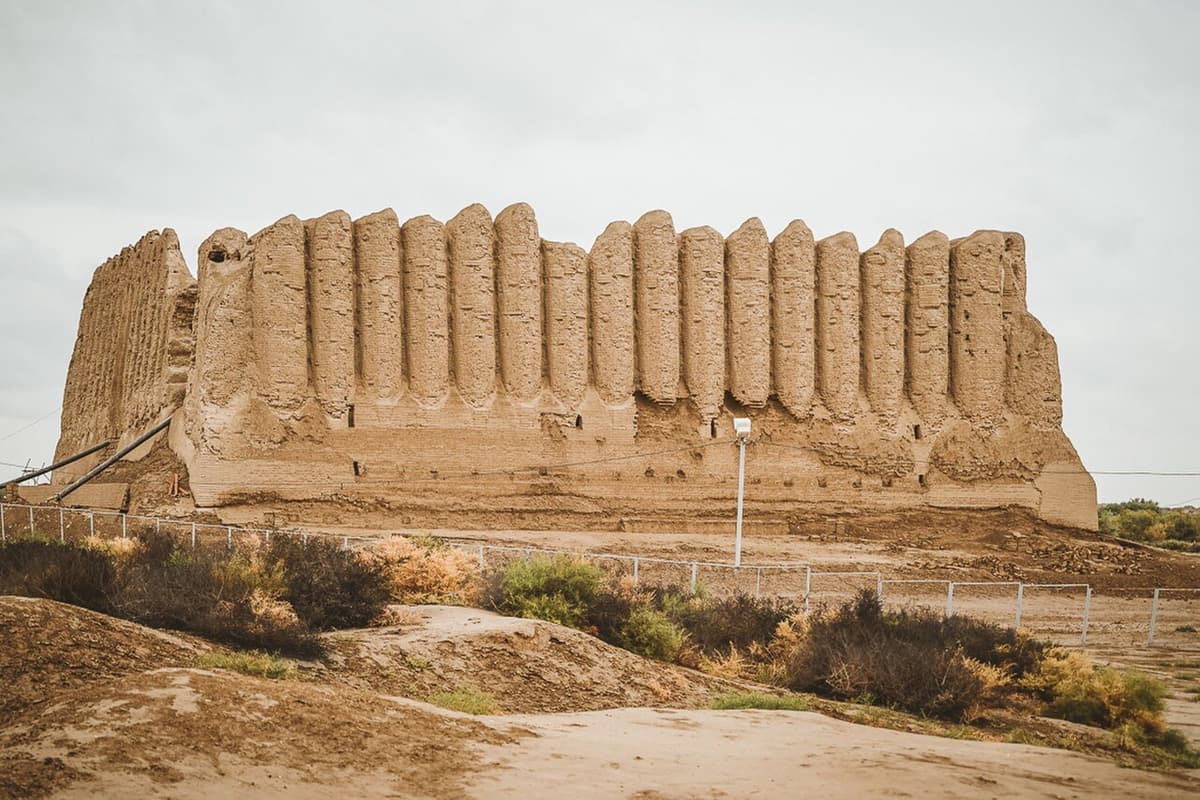
Why It Matters

Awwam is the clearest architectural and epigraphic window onto Sabaean state religion — royal piety, pilgrimage, and the god Almaqah — comparable in documentary density to major Near Eastern temple archives. The association with the Queen of Sheba tradition made the site a crossroads of archaeology, biblical studies, and Arabian cultural memory — for better and worse for conservation.

Stay curious

New stories and sites, once a month. No spam.

Evidence & Interpretation

Distinguishing what is well-established from what remains debated.

Well-Established Facts

2
  • Architecture and dedicatory inscriptions identify Awwam as a major sanctuary of Almaqah used by Sabaean royalty and elites.
  • Large corpora of bronze and stone inscriptions provide a chronological backbone for Sabaean dynastic history.

Debated Interpretations

1
  • Direct historical identity between the Awwam sanctuary and the biblical Queen of Sheba is not archaeologically demonstrated; the Bilqis name is later tradition.

More Photos

Museum Artifacts

Community Photos

Share your experience

Have you visited this site? Upload your photos to help others discover it.

How to cite this page

Atlas Anatolia. (700). Temple of Awwam. Atlas Anatolia. https://atlasanatolia.com/site/awwam-temple

Content licensed CC BY-SA 4.0 — attribution required when reusing.

Knowledge Graph

Connections to related sites and stories.

Sources

  • Queen of Sheba: Treasures from Ancient YemenSimpson, St John (2002)
  • An Examination of the Building Campaign of Yadaʿʾil Dhariḥ I (Temple of Awwam)Glanzman, William D. (1998)

Research Papers

Frequently Asked Questions

Where is Temple of Awwam located?

Temple of Awwam is located in Yemen.

How old is Temple of Awwam?

Temple of Awwam dates to approximately 700 BCE – 500 CE.

Which civilizations are associated with Temple of Awwam?

Temple of Awwam is associated with the Sabaean.

Why is Temple of Awwam important?

Awwam is the clearest architectural and epigraphic window onto Sabaean state religion — royal piety, pilgrimage, and the god Almaqah — comparable in documentary density to major Near Eastern temple archives.

Is Temple of Awwam a UNESCO World Heritage Site?

Yes — Temple of Awwam is inscribed as a UNESCO World Heritage Site.