
Перейти к содержанию
Atlas Anatolia
НовостиЗубы ледникового периода на Сулавеси отодвигают использование бетеля на 25 000 лет назадРимская мозаика и голова Эрота обнаружены в базилике Помпейополиса, Кастамону
The yellow façade and gardens of Schönbrunn Palace, Vienna

Wikimedia Commons (CC BY-SA 4.0)

НаследиеКомплексЮНЕСКО

Schönbrunn Palace

Seyfi Cem Baskin

Schloss Schönbrunn1696 н. э. – 1918 н. э.

The Habsburg summer palace in Vienna — 1,441 rooms, formal gardens, and the Gloriette viewpoint — ranks among the most searched palaces in German and Chinese Wikipedia and rivals Versailles for Baroque court spectacle.

21
Интерес 78

Местоположение

Австрия

48.18°N · 16.31°E · Европа

Rooms

1,441; state rooms open to visitors

Maria Theresa

Major Baroque remodelling 1740s–50s

Gloriette

Colonnade viewpoint above formal gardens

UNESCO

Palace and Gardens of Schönbrunn (1996)

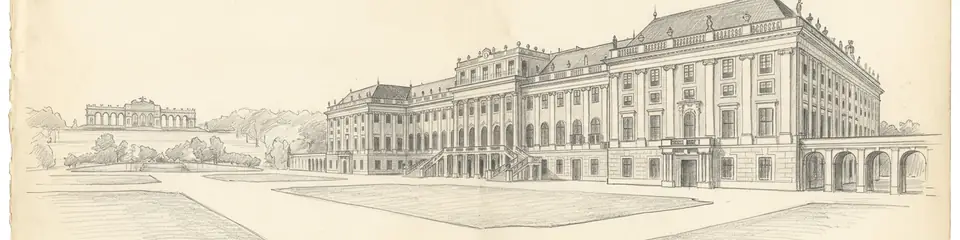
Graphite pencil sketch banner of Schönbrunn Palace

“Schönbrunn condenses Habsburg imperial history — Maria Theresa, Mozart, Franz Joseph, and the end of empire — into one Baroque ensemble.”

Местоположение

Обзор

Schönbrunn Palace stands in Hietzing, Vienna, Austria, on the site of a hunting lodge the Habsburgs expanded after the failed 1683 Ottoman siege. Empress Maria Theresa remodelled the palace in the 1740s–50s into the chief summer residence of the Austrian monarchy. Johann Bernhard Fischer von Erlach and Nicolaus Pacassi shaped the yellow façade stretching 180 metres.

State rooms include the Great Gallery where Mozart performed as a child and where metternich-era diplomacy unfolded. The gardens feature the Neptune Fountain, Roman Ruin folly, maze, and the Gloriette colonnade on the hill. Franz Joseph was born and died here; the last Habsburg emperor Karl I signed his abdication in 1918.

UNESCO inscribed the Palace and Gardens of Schönbrunn in 1996. Visitor numbers rank among Europe's highest for historic houses. The zoo (Tiergarten) on the grounds is the world's oldest continuously operating menagerie.

Почему это важно

Schönbrunn condenses Habsburg imperial history — Maria Theresa, Mozart, Franz Joseph, and the end of empire — into one Baroque ensemble. Its German-language search dominance makes it essential for a multilingual atlas serving DE audiences.

Свидетельства и интерпретация

Различать, что хорошо установлено, а что остаётся предметом дискуссий.

Хорошо установленные факты

2
  • Habsburg court records and Fischer von Erlach plans document 18th-century rebuilding campaigns.
  • Franz Joseph's birth (1830) and death (1916) at Schönbrunn recorded in imperial chronicles.

Научные выводы

1
  • Garden axes align with Baroque triumphal symbolism — Gloriette frames palace as hilltop exedra.

Фотографии сообщества

Поделитесь своими впечатлениями

Вы посещали это место? Загрузите свои фотографии, чтобы помочь другим открыть его для себя.

Как цитировать эту страницу

Atlas Anatolia. (1696). Schönbrunn Palace. Atlas Anatolia. https://atlasanatolia.com/ru/site/schonbrunn-palace

Материалы распространяются по лицензии CC BY-SA 4.0 — при повторном использовании указание авторства обязательно.

Источники

  • Music and Spectacle in Baroque Rome — Hammond, Frederick (1994)
  • UNESCO — Palace and Gardens of SchönbrunnСсылка

Часто задаваемые вопросы

Где находится Schönbrunn Palace?

Schönbrunn Palace находится в Austria.

Сколько лет Schönbrunn Palace?

Schönbrunn Palace датируется приблизительно 1696 н. э. – 1918 н. э..

С какими цивилизациями связано место Schönbrunn Palace?

Schönbrunn Palace связано с цивилизацией: Habsburg.

Почему Schönbrunn Palace имеет важное значение?

Schönbrunn condenses Habsburg imperial history — Maria Theresa, Mozart, Franz Joseph, and the end of empire — into one Baroque ensemble.

Входит ли Schönbrunn Palace в список Всемирного наследия ЮНЕСКО?

Да — Schönbrunn Palace включено в список Всемирного наследия ЮНЕСКО.