
Перейти к содержанию
Atlas Anatolia
НовостиЗубы ледникового периода на Сулавеси отодвигают использование бетеля на 25 000 лет назадРимская мозаика и голова Эрота обнаружены в базилике Помпейополиса, Кастамону
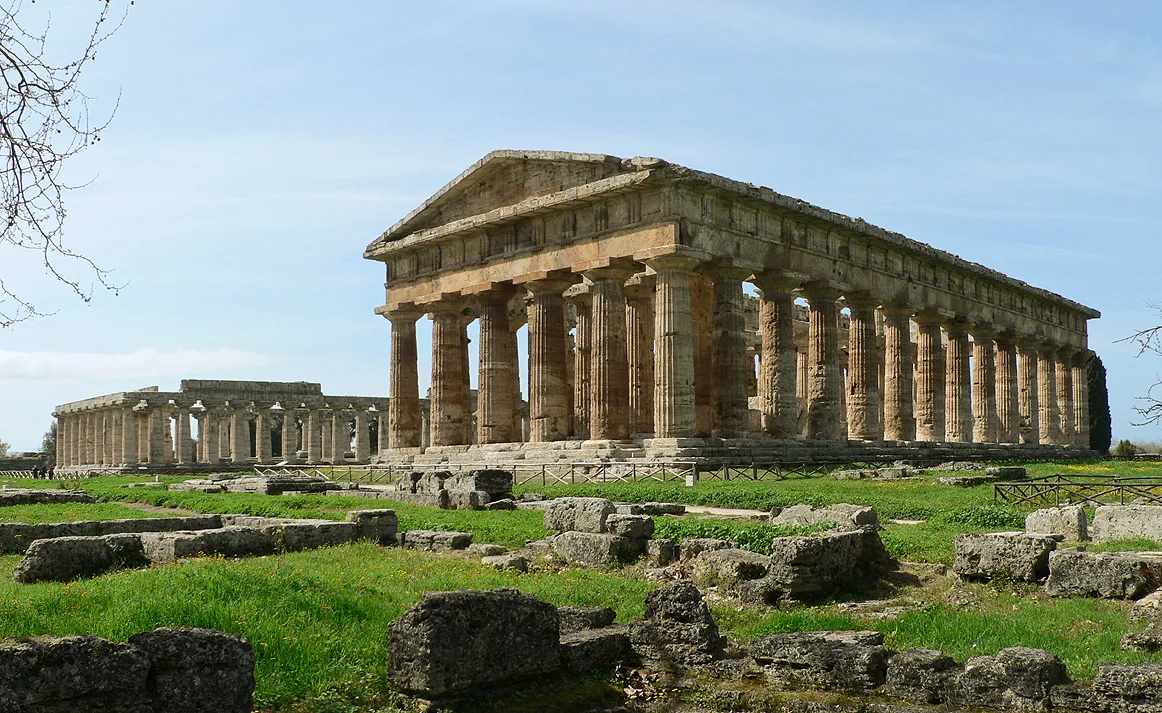
The three Greek temples at Paestum, with the Temple of Hera II in the foreground

Wikimedia Commons

Country Record

Longest Continuously Occupied Site in Italy

ГородЮНЕСКОИзбранное

Paestum

Seyfi Cem Baskin

600 до н. э. – 700 н. э.

A Greek colonial city on the Tyrrhenian coast of southern Italy (Campania) containing three of the best-preserved ancient Greek temples in the world — older and more complete than most surviving temples in Greece itself.

21
Интерес 66

Местоположение

Италия

40.42°N · 15.00°E · Европа

Founded

c. 600 BCE by Greek settlers from Sybaris

Temple of Hera II date

c. 460 BCE (finest surviving Doric temple)

Tomb of the Diver

Found 1968; only complete Greek narrative mural from Classical period

Rediscovered

1746, during road survey

Distance from Naples

85 km south

UNESCO

World Heritage Site (with Cilento) since 1998

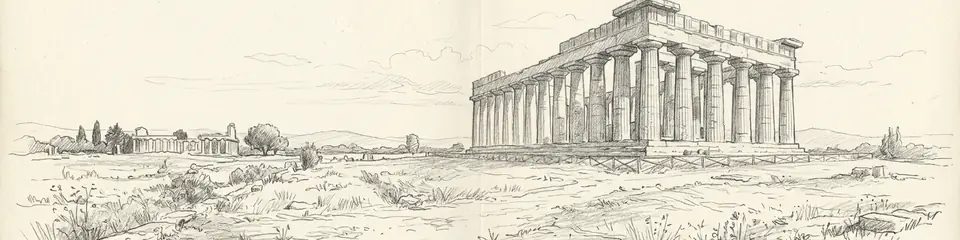
Graphite pencil sketch banner of Paestum

“Paestum provides what Greece itself rarely does: temples that survive above the level of the column capital, so that the proportions, entablature, and spatial experience intended by their architects can be directly experienced.”

Местоположение

Обзор

Paestum (originally Poseidonia) lies on a flat coastal plain in the Cilento region of Campania, 85 km south of Naples, 1.5 km from the Tyrrhenian Sea. It was founded by Greek settlers from Sybaris around 600 BCE and retained its Greek character until its conquest by the Lucanians c. 400 BCE and later incorporation into the Roman world c. 273 BCE. Three temples survive in extraordinary condition: the Temple of Hera I (commonly called the "Basilica"), c. 550 BCE, the oldest and largest, with its original 50 squat Doric columns still standing; the Temple of Hera II (commonly misidentified as the Temple of Neptune), c. 460 BCE, the best-preserved Doric temple in the world, with entablature complete to the cornice; and the Temple of Athena (misidentified as "Ceres"), c. 500 BCE, preserving its original painted terracotta roof decorations. The reason for the survival is the region's depopulation: Paestum declined sharply in the late Roman period following the silting of its harbor and the spread of malaria, and the site was gradually covered by vegetation and forgotten. Medieval travelers avoided the area; the temples stood undisturbed. The site was rediscovered by engineers surveying for the Salerno-Reggio Calabria road in 1746.
Почему это важно

Paestum provides what Greece itself rarely does: temples that survive above the level of the column capital, so that the proportions, entablature, and spatial experience intended by their architects can be directly experienced. The Temple of Hera II is, technically, the finest surviving example of the mature Doric order anywhere. Paestum also produced one of the most important single archaeological finds of the twentieth century: the Tomb of the Diver (1968), a fifth-century BCE painted tomb with a complete cycle of banquet and symposium scenes on four walls and a ceiling showing a youth diving into a sea — the only complete Greek narrative mural painting to survive from the Classical period, and the only one of its kind found in the Western Greek world. The paintings transformed understanding of Greek mural traditions, of which almost nothing else survived.

Свидетельства и интерпретация

Различать, что хорошо установлено, а что остаётся предметом дискуссий.

Хорошо установленные факты

2
  • The Temple of Hera II (c. 460 BCE) survives with its complete Doric colonnade, frieze, and most of the entablature intact — the most complete example of Greek Doric architecture above column-height surviving anywhere in the world.
  • The Tomb of the Diver, excavated in 1968, is a painted limestone chamber dated to c. 480–470 BCE. Its five slabs (four walls and a lid) retain vivid red and black figure paintings unique in the Greek world: the only complete Greek figural mural cycle from the Classical period.

Научные выводы

1
  • The three temples have traditionally been misnamed since their rediscovery (the "Temple of Neptune" is almost certainly dedicated to Hera; the "Temple of Ceres" to Athena). Correct identification comes from ceramic deposits, sculptural fragments, and the spatial relationship of the temples to the city's sanctuary zones.

Фотографии сообщества

Поделитесь своими впечатлениями

Вы посещали это место? Загрузите свои фотографии, чтобы помочь другим открыть его для себя.

Похожие истории

Как цитировать эту страницу

Atlas Anatolia. (600). Paestum. Atlas Anatolia. https://atlasanatolia.com/ru/site/paestum

Материалы распространяются по лицензии CC BY-SA 4.0 — при повторном использовании указание авторства обязательно.

График

Связи с соответствующими памятниками и историями.

Источники

  • Paestum: Greek and Roman Architecture — Giovanni Pugliese Carratelli (ed.) (1996)
  • The Tomb of the Diver at Paestum — Mario Napoli (1970)

Часто задаваемые вопросы

Где находится Paestum?

Paestum находится в Italy.

Сколько лет Paestum?

Paestum датируется приблизительно 600 до н. э. – 700 н. э..

С какими цивилизациями связано место Paestum?

Paestum связано с цивилизацией: Greek, Roman.

Почему Paestum имеет важное значение?

Paestum provides what Greece itself rarely does: temples that survive above the level of the column capital, so that the proportions, entablature, and spatial experience intended by their architects can be directly experienced.

Входит ли Paestum в список Всемирного наследия ЮНЕСКО?

Да — Paestum включено в список Всемирного наследия ЮНЕСКО.