
Pular para o conteúdo
Atlas Anatolia
NotíciasIce Age teeth in Sulawesi push betel-nut use back as far as 25,000 yearsRoman mosaic and Eros head uncovered in the basilica at Pompeiopolis, Kastamonu
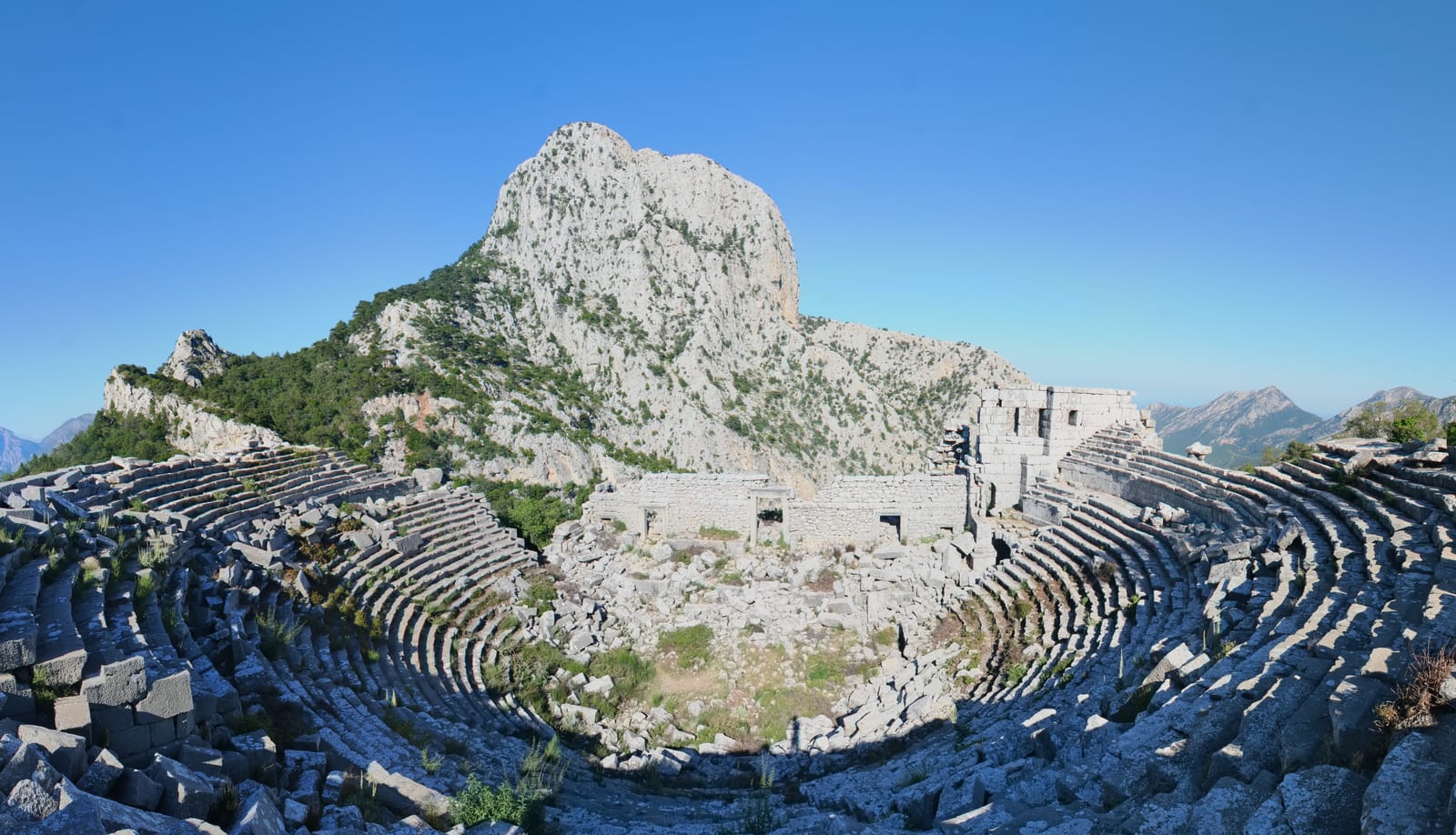
The theatre of Termessos perched high in the Taurus Mountains with clouds below

Wikimedia Commons (CC BY-SA)

Fortaleza

Termessos

Seyfi Cem Baskin

700 a.C. – 400 d.C.

The mountain fortress city that Alexander the Great besieged but never conquered, perched at 1,000 meters in the Taurus range with its theatre floating above the clouds and its necropolis scattered through wild pine forests.

411
Interesse 52

Localização

Antalya · Mediterranean · Turquia

36.97°N · 30.46°E · Ásia

Altitude

1,000+ meters

Alexander's Siege

333 BCE (unsuccessful)

Theatre Capacity

~4,200

National Park

Turkey's first (1970)

Notable Monument

The Tomb of Alcetas, a decorated heroon for a Macedonian general who died in the city in 319 BCE.

Dating Method

Epigraphic and numismatic evidence, with key inscriptions dated to the 2nd century BCE and 1st century CE.

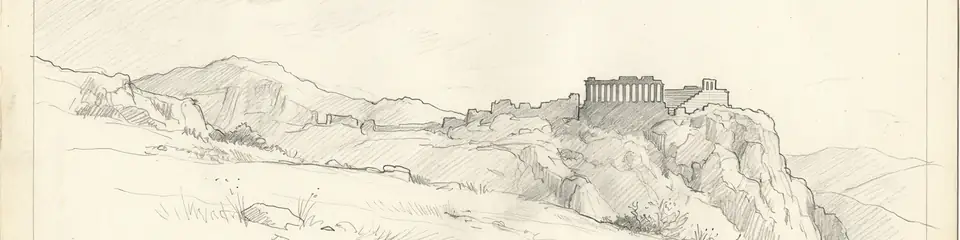
Graphite pencil sketch banner of Termessos

“Termessos is the supreme example of an ancient mountain fortress city.”

Da Wikipédia

Termessos was a Pisidian city built at an altitude of more than 1,000 metres on the western slopes of the Taurus Mountains, notable for resisting Alexander the Great.

Ler o artigo completo na Wikipédia →

Localização

Visão geral

Termessos is ancient defiance made architectural. Perched at over 1,000 meters on the slopes of Gulluk Dagi (Mount Solymos) in the western Taurus Mountains, this Pisidian city was so formidably positioned that Alexander the Great — who conquered everything from Egypt to India — laid siege to it in 333 BCE and withdrew without taking it, comparing the city to an eagle's nest.

The approach to Termessos follows the ancient King's Road through a narrow mountain pass that was easily defended. The city itself occupies a series of natural terraces protected by sheer cliffs on multiple sides. The theatre, seating approximately 4,200, commands one of the most spectacular views of any ancient structure — on clear days, the panorama extends across forested peaks to the Mediterranean coast below.

"Termessos is a city built on a mountain pass, naturally fortified and difficult to capture."
— Arrian, c. 2nd century AD (Anabasis Alexandri)

The site was never systematically excavated and remains largely overgrown, lending it a wild, romantic quality. Sarcophagi from the vast necropolis are scattered through pine forests, many with their lids displaced by earthquakes. The agora, five cisterns, a gymnasium, an odeon, and several temples (including one to Artemis and another to Zeus Solymeus, the local patron deity) survive among the trees.

Termessos was designated as Turkey's first national park in 1970, protecting both the ruins and the surrounding mountain ecosystem, which harbors wild goats, eagles, and Mediterranean flora.
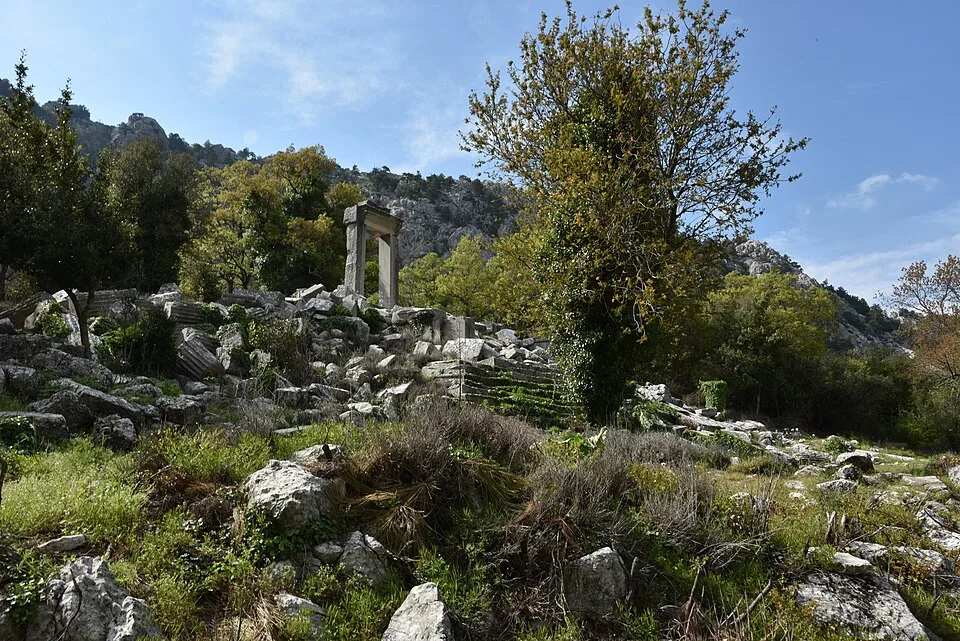
Ancient ruins at Termessos
Ancient ruins at Termessos | 7oanna (CC BY-SA 4.0)

The city's architecture, built from the local grey limestone, is a testament to its prosperity and Hellenistic influence, seen in the five monumental temples, the colonnaded street, and the well-preserved gymnasium complex. Daily life was sustained by an ingenious system of cisterns and at least one aqueduct channeling mountain water, crucial for a settlement at such an altitude. While fiercely independent, Termessos was connected to regional trade networks, evidenced by finds of imported pottery and its strategic position overlooking the Attaleia (Antalya) plain. Its ultimate abandonment by the 5th century CE is attributed not to conquest but to the gradual decay of its vital water infrastructure, likely after a major earthquake, leaving the city to be reclaimed by the forest.

Por que isso importa

Termessos is the supreme example of an ancient mountain fortress city. Its survival of Alexander's siege demonstrates that not all of Anatolia yielded willingly to Hellenization — the Pisidians maintained their independence and cultural identity for centuries. Because Termessos was never excavated or reconstructed, it offers visitors the rare experience of encountering an ancient city as early travelers found it — ruins emerging from forest, sarcophagi among the trees, a theatre open to the sky. It represents the untouched face of Anatolian archaeology, where nature and antiquity remain entangled.

Evidências e interpretação

Distinguir o que está bem estabelecido do que permanece em debate.

Fatos bem estabelecidos

4
  • Arrian records that Alexander the Great besieged Termessos in 333 BCE but withdrew, comparing the city to an eagle's nest (Anabasis, I.27).
  • Termessos maintained a degree of autonomy under Roman rule, as confirmed by treaty inscriptions calling it a "friend and ally of Rome."
  • The city was dedicated to Zeus Solymeus, the patron deity of the Solymi (Pisidians), based on temple inscriptions and coin iconography.
  • The city minted its own coinage from the 2nd century BCE to the 3rd century CE, featuring the head of Zeus Solymeus and the city's name in Greek (TERMESSOS).

Inferências acadêmicas

1
  • The city was likely abandoned after a severe earthquake in the 5th century CE that damaged the water supply system, based on disrupted cisterns and aqueduct damage.

Interpretações debatidas

1
  • Whether the inhabitants of Termessos were ethnically Pisidian or Solymian is debated, though ancient sources use both terms.

Descoberta e escavação

1842

First modern visit

Edward Forbes visited and described the ruins of Termessos during a natural history expedition.

1884

Austrian expedition

Dirigido por Karl Lanckoronski

Karl Lanckoronski documented the site in detail and published the first comprehensive plans.

1970

National park designation

Termessos and its surroundings were declared Turkey's first national park, protecting the site from development.

1990–2010

Survey and documentation

Turkish and international teams conducted non-invasive surveys and photogrammetric documentation.

Fotos da comunidade

Compartilhe sua experiência

Você visitou este sítio? Envie suas fotos para ajudar outros a descobri-lo.

Como citar esta página

Atlas Anatolia. (700). Termessos. Atlas Anatolia. https://atlasanatolia.com/pt/site/termessos

Conteúdo licenciado sob CC BY-SA 4.0 — atribuição necessária ao reutilizar.

Leia o artigo completo na World History Encyclopedia
World History Encyclopedia · CC BY-NC-SA

Fontes

  • Stadte Pamphyliens und Pisidiens — Karl Lanckoronski (1892)
  • The Pisidian Survey: Termessos and its Territory — Stephen Mitchell (1990)

Perguntas frequentes

Onde fica Termessos?

Termessos está localizado em Antalya, Mediterranean, Türkiye.

Qual é a antiguidade de Termessos?

Termessos data de aproximadamente 700 a.C. – 400 d.C..

Quais civilizações estão associadas a Termessos?

Termessos está associado à civilização Greek, Roman.

Por que Termessos é importante?

Termessos is the supreme example of an ancient mountain fortress city.

Termessos é um Patrimônio Mundial da UNESCO?

Termessos não está atualmente inscrito na Lista do Patrimônio Mundial da UNESCO.