
Pular para o conteúdo
Atlas Anatolia
NotíciasIce Age teeth in Sulawesi push betel-nut use back as far as 25,000 yearsRoman mosaic and Eros head uncovered in the basilica at Pompeiopolis, Kastamonu
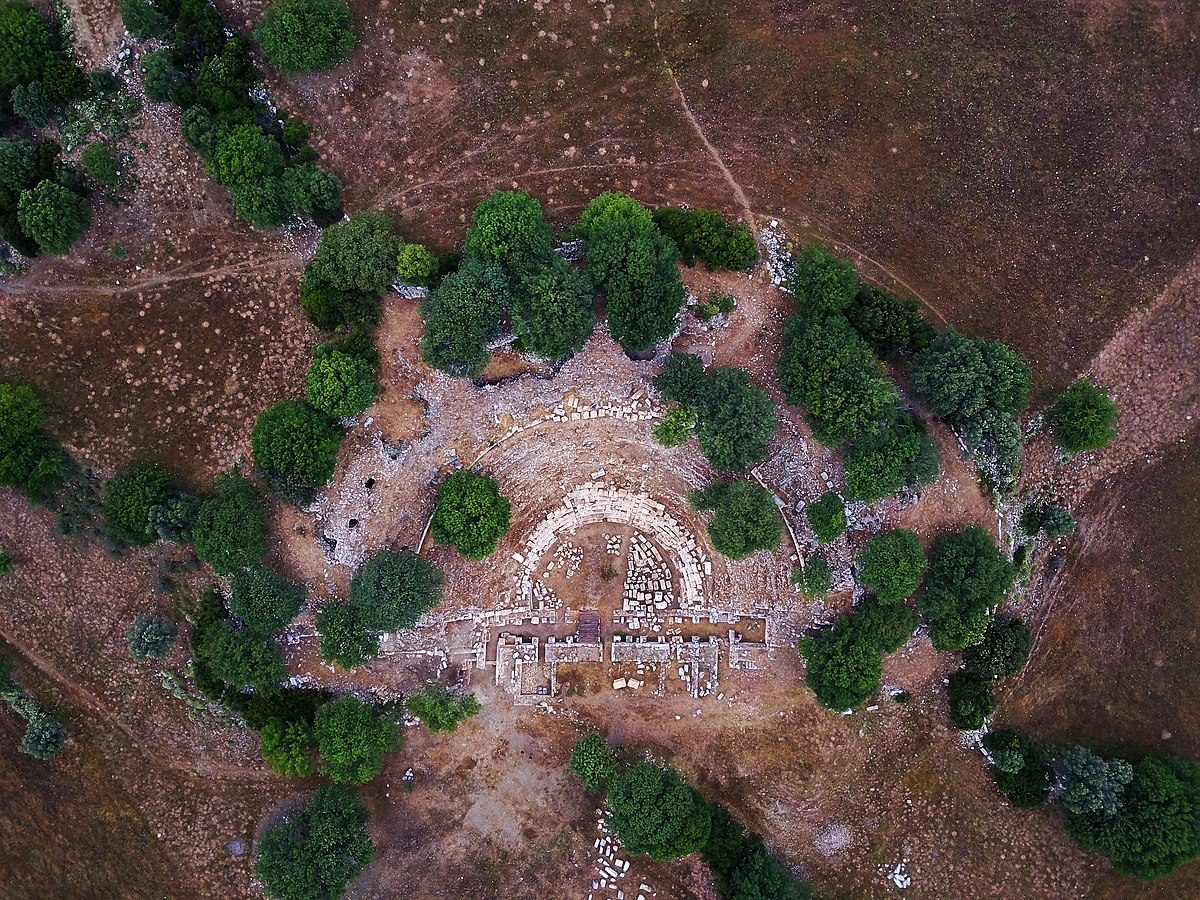
Temple of Dionysus at Teos

Wikimedia Commons (CC BY-SA)

Cidade

Teos

Seyfi Cem Baskin

Sığacık1000 a.C. – 200 d.C.

One of the twelve cities of the Ionian League, home to the grandest temple of Dionysus in the ancient world and birthplace of the lyric poet Anacreon, set on a beautiful harbor peninsula near modern Sığacık.

321
Interesse 47

Localização

İzmir · Aegean · Turquia

38.18°N · 26.79°E · Ásia

League

One of the twelve cities of the Ionian League

Temple

Temple of Dionysus by architect Hermogenes, most important in the ancient world

Guild

Headquarters of the Artists of Dionysus (performers' guild)

Poet

Birthplace of lyric poet Anacreon (c. 582–485 BCE)

Status

Declared inviolable (asylia) by Hellenistic kingdoms

Location

Coastal peninsula near modern Sığacık, İzmir

Graphite pencil sketch banner of Teos

“Teos demonstrates how cultural prestige could rival military power in the ancient world.”

Da Wikipédia

Teos was one of the twelve cities of the Ionian League, famous for its Temple of Dionysus designed by Hermogenes, headquarters of the Dionysiac Artists guild, and birthplace of the poet Anacreon.

Ler o artigo completo na Wikipédia →

Localização

Visão geral

Teos occupies a picturesque coastal peninsula south of modern Sığacık in İzmir province, overlooking a sheltered harbor that made it one of the preeminent maritime cities of ancient Ionia. As one of the twelve member cities of the Ionian League — the cultural and political confederation that helped define Greek civilization in Asia Minor — Teos played a role in Aegean history far outsized for its modest physical extent.

The city's greatest monument was the Temple of Dionysus, designed by the celebrated architect Hermogenes in the 2nd century BCE. This Ionic peripteral temple was considered the most important sanctuary of Dionysus in the ancient world, and Teos served as the headquarters of the Artists of Dionysus (Technitai), the guild of actors, musicians, and performers who organized theatrical festivals across the Greek-speaking world. This connection to the performing arts gave Teos an outsized cultural influence, as the Dionysiac artists carried the city's reputation throughout the Mediterranean.

"Teos is a city of the Ionians, with a harbor, and a temple of Dionysus."
— Strabo, Geography (c. 7 BCE - 23 CE)

Teos was also the birthplace of Anacreon (c. 582-485 BCE), one of the great lyric poets of ancient Greece, whose poems celebrating wine, love, and song earned him lasting fame. The tradition of Anacreontic poetry — lighter verses on pleasure and conviviality — influenced Western literature for millennia, and the French national anthem "La Marseillaise" drew on this literary tradition.

The ancient city preserves substantial remains. The Temple of Dionysus, though heavily ruined, retains its massive platform and scattered architectural elements. A well-preserved odeon, sections of the harbor fortifications, a gymnasium, and portions of the residential quarter have been documented through ongoing Turkish-German excavations. Recent work has uncovered remarkably preserved Hellenistic houses with painted walls and mosaic floors.
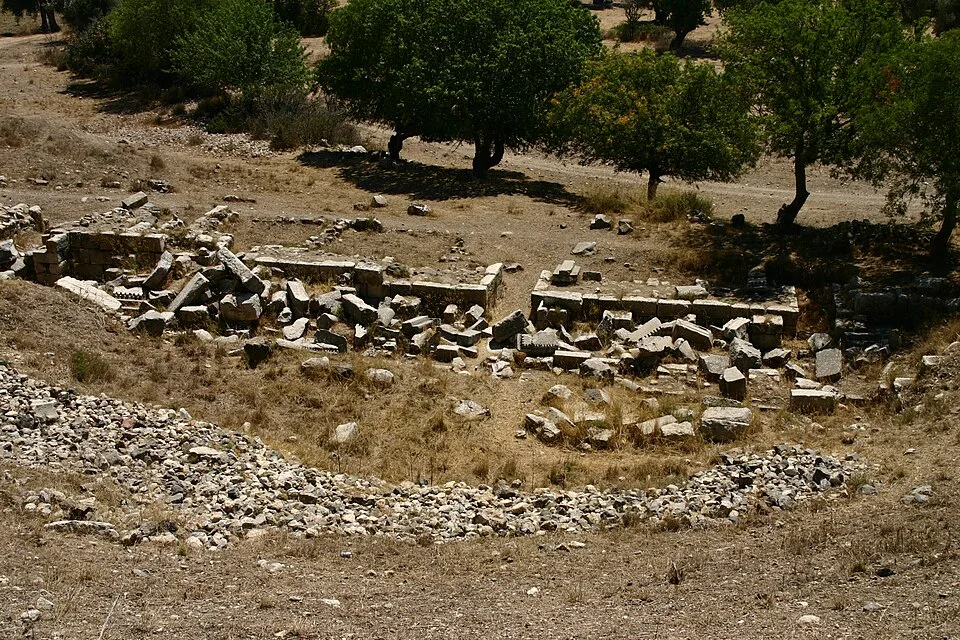
Theater teos
Theater teos | Philipp Pilhofer (CC BY-SA 3.0)

Teos also holds significance for the history of international law. In the 3rd century BCE, the city was declared asylia (inviolable) by multiple Hellenistic kingdoms, a status that protected it from military attack — one of the earliest examples of internationally recognized protected status for a city.

Por que isso importa

Teos demonstrates how cultural prestige could rival military power in the ancient world. As headquarters of the Dionysiac Artists guild, the city wielded influence across the Greek-speaking world through the soft power of theater and music. Its declaration as an inviolable city anticipates modern concepts of protected heritage sites. The Temple of Dionysus by Hermogenes influenced Roman temple architecture through Vitruvius, who studied and described Hermogenes' innovations. Teos thus stands as a crucial link in the architectural tradition connecting Greek innovation to Roman practice and, ultimately, to the classical revival movements that shaped Western architecture.

Evidências e interpretação

Distinguir o que está bem estabelecido do que permanece em debate.

Fatos bem estabelecidos

3
  • The Temple of Dionysus platform and scattered Ionic architectural elements confirm the sanctuary described by Vitruvius (De Architectura 3.3.6-8) as designed by Hermogenes.
  • Multiple inscriptions recovered from the site document the presence and activities of the Artists of Dionysus guild, confirming Teos as their headquarters.
  • Decrees from Hellenistic kingdoms granting Teos inviolable status (asylia) have been found inscribed on stone at the site and preserved in literary sources.

Inferências acadêmicas

2
  • The high quality of Hellenistic residential architecture, including wall paintings and mosaics, suggests considerable private wealth derived from the city's maritime trade and cultural prominence.
  • The harbor fortifications suggest Teos maintained significant naval capacity, consistent with its role as a maritime member of the Ionian League.

Interpretações debatidas

1
  • The extent to which Hermogenes' architectural innovations at Teos influenced Roman temple design directly versus through Vitruvius's later literary transmission remains debated among architectural historians.

Descoberta e escavação

1924

French excavations

First systematic excavations documented the Temple of Dionysus platform and recovered architectural fragments of the Ionic order designed by Hermogenes.

1962–1967

Turkish excavations

Ankara University excavations investigated the theater, odeon, and harbor fortifications, establishing the city plan.

2010–2024

Turkish-German excavations

Ongoing joint project has uncovered Hellenistic residential quarters with painted walls, mosaic floors, the gymnasium complex, and new inscriptions documenting the Dionysiac Artists guild.

2015

Harbor survey

Underwater and coastal survey documented the ancient harbor infrastructure including breakwaters and mooring facilities.

2020

Residential quarter discoveries

Remarkably preserved Hellenistic houses with wall paintings and domestic artifacts revealed daily life in the city.

Fotos da comunidade

Compartilhe sua experiência

Você visitou este sítio? Envie suas fotos para ajudar outros a descobri-lo.

Como citar esta página

Atlas Anatolia. (1000). Teos. Atlas Anatolia. https://atlasanatolia.com/pt/site/teos

Conteúdo licenciado sob CC BY-SA 4.0 — atribuição necessária ao reutilizar.

Fontes

  • Hermogenes and the Temple of Dionysus at Teos — Joseph C. Carter (2015)
  • Greek Sanctuaries: New Approaches — Nanno Marinatos & Robin Hägg (1993)
  • Wikipedia — TeosLink

Perguntas frequentes

Onde fica Teos?

Teos está localizado em İzmir, Aegean, Türkiye.

Qual é a antiguidade de Teos?

Teos data de aproximadamente 1000 a.C. – 200 d.C..

Quais civilizações estão associadas a Teos?

Teos está associado à civilização Greek, Ionian.

Por que Teos é importante?

Teos demonstrates how cultural prestige could rival military power in the ancient world.

Teos é um Patrimônio Mundial da UNESCO?

Teos não está atualmente inscrito na Lista do Patrimônio Mundial da UNESCO.