
Pular para o conteúdo
Atlas Anatolia
NotíciasIce Age teeth in Sulawesi push betel-nut use back as far as 25,000 yearsRoman mosaic and Eros head uncovered in the basilica at Pompeiopolis, Kastamonu
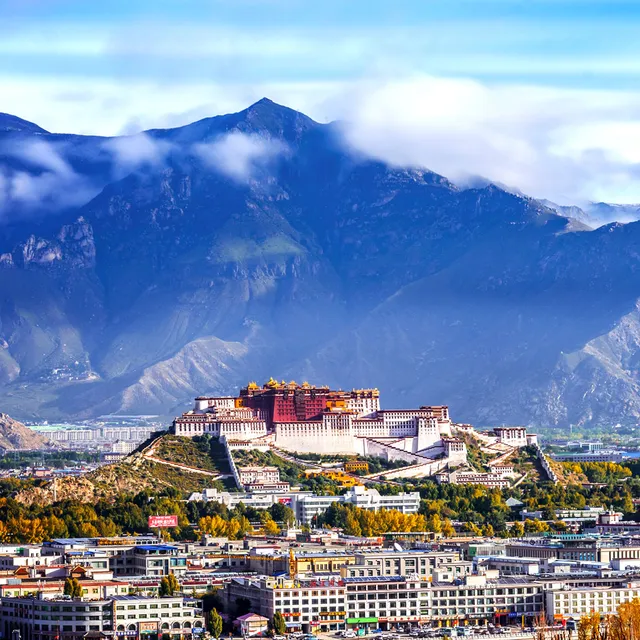
The Potala Palace on Red Hill above Lhasa, Tibet

Wikimedia Commons

Country Record

Known by the Most Names in China

PatrimônioComplexoUNESCODestaque

Potala Palace

Seyfi Cem Baskin

པོ་ཏ་ལ637 d.C. – 1959 d.C.

The fortress-palace rising 13 storeys on Red Mountain above Lhasa — winter residence of the Dalai Lamas since the 7th century and symbol of Tibetan Buddhism — whose white and red wings, golden roofs, and chapels dominate the Himalaya skyline at 3,700 metres.

21
Interesse 78

Localização

China

29.66°N · 91.12°E · Ásia

Elevation

~3,700 m above sea level on Red Hill

Height

13 storeys; over 1,000 rooms (traditional count)

Major rebuild

17th century under the Fifth Dalai Lama

UNESCO

Historic Ensemble of the Potala Palace (1994)

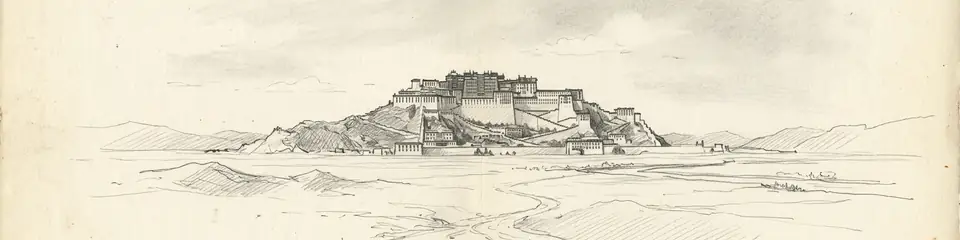
Graphite pencil sketch banner of Potala Palace

“The Potala is the supreme architectural expression of Tibetan Buddhist governance — a palace-temple whose scale and altitude embody the unique fusion of spiritual and temporal authority in the Himalaya.”

Localização

Visão geral

The Potala Palace crowns Marpo Ri (Red Hill) in the centre of the Lhasa Valley, Tibet Autonomous Region, China, at roughly 3,700 metres elevation. Tradition associates the hill with Songtsen Gampo (7th century), who built a palace for his marriage alliances; the present monumental complex largely reflects the 17th-century reconstruction under the Fifth Dalai Lama, Ngawang Lobsang Gyatso, with major expansion continuing under the Thirteenth Dalai Lama.

The White Palace (Phodrang Karpo) contains the Dalai Lama's residential and administrative quarters; the Red Palace (Phodrang Marpo) houses chapels, stupas of successive Dalai Lamas, and assembly halls dense with murals, thangkas, and gilded tombs. The building integrates fortress walls, sloping stone foundations, and timber superstructure engineered for seismic and alpine conditions.

The UNESCO Historic Ensemble of the Potala Palace, Lhasa (1994, extended 2000–2001) also includes Jokhang Temple and Norbulingka summer palace. The Potala remains among the most photographed monuments in Asia and a focal point of Tibetan cultural identity.

Por que isso importa

The Potala is the supreme architectural expression of Tibetan Buddhist governance — a palace-temple whose scale and altitude embody the unique fusion of spiritual and temporal authority in the Himalaya. Its 1994 UNESCO listing anchored international recognition of Tibetan heritage conservation at a moment of rapid modernisation in Lhasa.

Evidências e interpretação

Distinguir o que está bem estabelecido do que permanece em debate.

Fatos bem estabelecidos

2
  • Tibetan chronicles and copper inscriptions document 17th-century expansion under the Fifth Dalai Lama and subsequent Dalai Lama burials in the Red Palace.
  • Architectural survey confirms layered timber–masonry construction, sloping batter walls, and chapel layouts typical of Ganden Phodrang-period building.

Inferências acadêmicas

1
  • Early 7th-century occupation of Red Hill by Songtsen Gampo is supported by tradition and limited archaeology; extent of his original structure is uncertain.

Fotos da comunidade

Compartilhe sua experiência

Você visitou este sítio? Envie suas fotos para ajudar outros a descobri-lo.

Como citar esta página

Atlas Anatolia. (637). Potala Palace. Atlas Anatolia. https://atlasanatolia.com/pt/site/potala-palace

Conteúdo licenciado sob CC BY-SA 4.0 — atribuição necessária ao reutilizar.

Fontes

  • The Temples of Lhasa — Alexander, André (2005)
  • UNESCO — Potala PalaceLink

Perguntas frequentes

Onde fica Potala Palace?

Potala Palace está localizado em China.

Qual é a antiguidade de Potala Palace?

Potala Palace data de aproximadamente 637 d.C. – 1959 d.C..

Quais civilizações estão associadas a Potala Palace?

Potala Palace está associado à civilização Tibetan.

Por que Potala Palace é importante?

The Potala is the supreme architectural expression of Tibetan Buddhist governance — a palace-temple whose scale and altitude embody the unique fusion of spiritual and temporal authority in the Himalaya.

Potala Palace é um Patrimônio Mundial da UNESCO?

Sim — Potala Palace está inscrito na Lista do Patrimônio Mundial da UNESCO.