Pular para o conteúdo
Atlas Anatolia
NotíciasIce Age teeth in Sulawesi push betel-nut use back as far as 25,000 yearsRoman mosaic and Eros head uncovered in the basilica at Pompeiopolis, Kastamonu
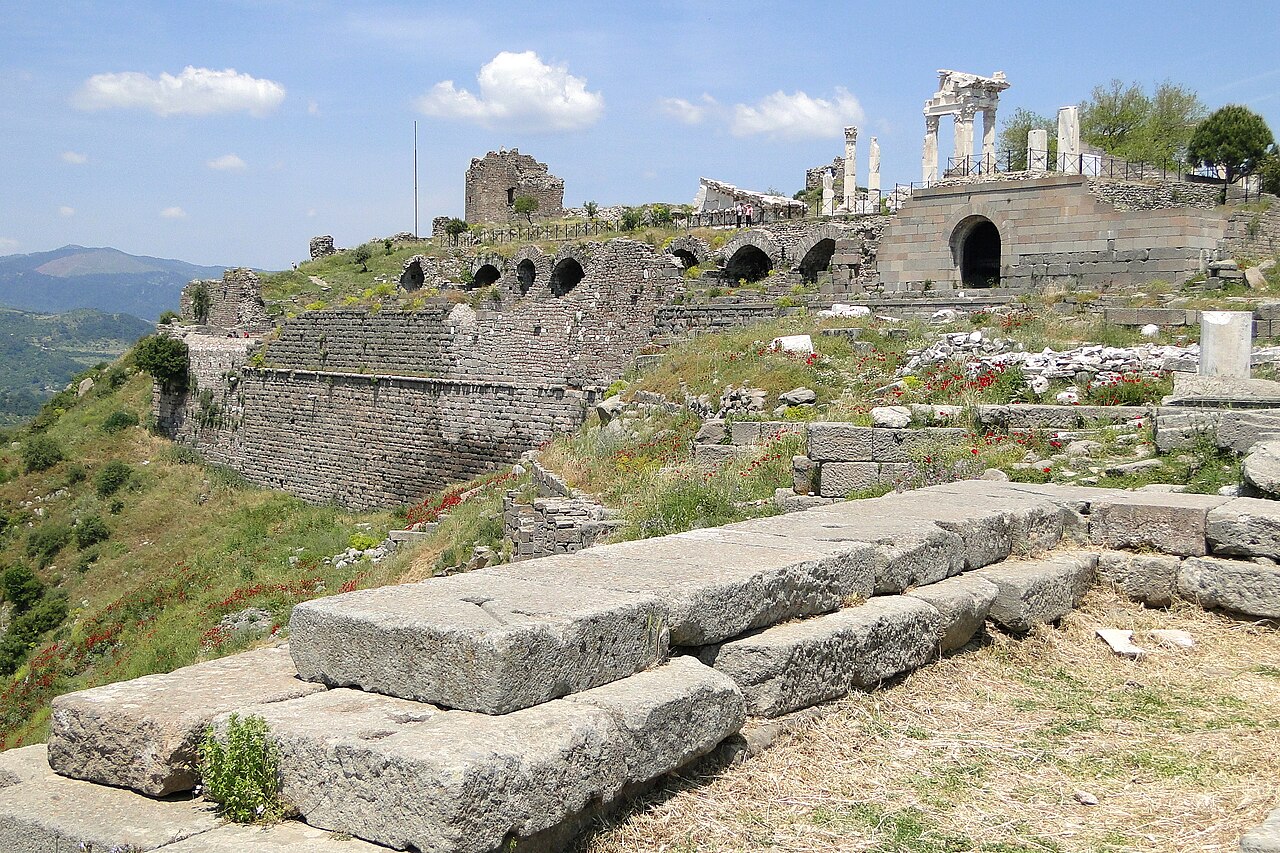
The Acropolis of Pergamon (Bergama)

Wikimedia Commons (CC BY-SA)

CidadeUNESCO

Pergamon

Seyfi Cem Baskin

Bergama800 a.C. – 700 d.C.

A major Hellenistic capital perched on a dramatic acropolis, renowned for its Great Altar, its library rivaling Alexandria, and the Asclepion healing center.

211
Interesse 69

Localização

İzmir · Aegean · Turquia

39.13°N · 27.18°E · Ásia

Acropolis Height

335 m above plain

Library Holdings

~200,000 volumes

UNESCO Status

World Heritage Site (2014)

Famous For

Great Altar, Asclepion

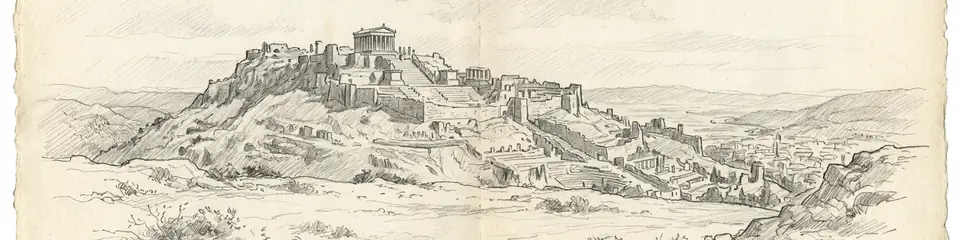
Graphite pencil sketch banner of Pergamon

“Pergamon represents one of the high points of Hellenistic civilization — a center where art, architecture, scholarship, and medicine flourished under royal patronage.”

Da Wikipédia

Pergamon was a rich and powerful ancient Greek city in Aeolis. It is located 26 km from the modern coastline of the Aegean Sea on a promontory on the north side of the river Caicus, northwest of the modern city of Bergama, Turkey.

Ler o artigo completo na Wikipédia →

Localização

Visão geral

Pergamon, located at modern Bergama in İzmir Province, was the capital of the Attalid Kingdom (281–133 BCE) and one of the most important cultural centers of the Hellenistic world.

The city's acropolis, rising 335 meters above the surrounding plain, held monumental buildings including the Great Altar of Zeus (now partially reconstructed in the Pergamon Museum in Berlin), a theatre carved into the steep hillside with seating for 10,000, a library said to have held 200,000 volumes, and the Temple of Athena.

"Here at Pergamon there is a magnificent library, and Eumenes II has such a passion for books that he rivals Ptolemy."
— Varro, Rerum Rusticarum, 1st century BCE

The Asclepion, located in the lower city, was one of the ancient world's most famous healing centers. It functioned as a combination of hospital, spa, and religious sanctuary dedicated to the healing god Asclepius. The physician Galen, one of the most influential medical writers in history, practiced here in the 2nd century CE.

Pergamon is also credited with the development of parchment (pergamene), reportedly invented when Egypt cut off papyrus exports.
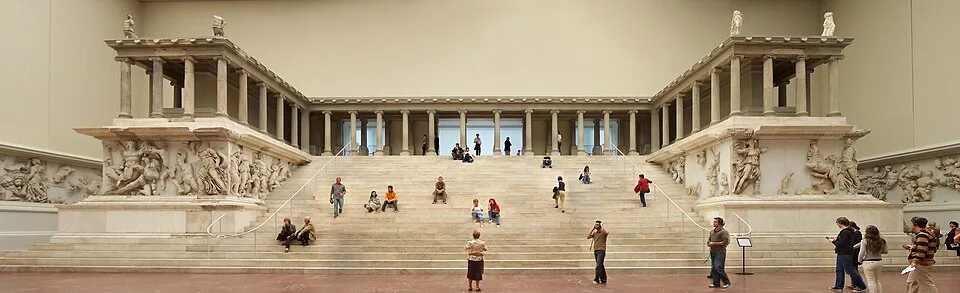
Berlin - Pergamonmuseum - Altar 01
Berlin - Pergamonmuseum - Altar 01 | Lestat (Jan Mehlich) (CC BY-SA 3.0)

Beyond its monumental core, Pergamon was a sprawling, terraced city with distinct residential quarters, agoras, and extensive fortifications. Its economy was bolstered by agriculture, textile production (notably parchment, or 'pergamena'), and its role as a trade hub connecting the Aegean coast with the Anatolian interior. The city prospered under Roman rule, with emperors like Trajan and Hadrian adding significant structures, including the massive Trajaneum temple on the acropolis and the sprawling 'Red Hall' complex in the lower city. Following its sacking by the Goths in the 3rd century CE, Pergamon transitioned into a significant Byzantine bishopric and later a Seljuk and Ottoman center, with the modern town of Bergama preserving its legacy within the archaeological layers.
Por que isso importa

Pergamon represents one of the high points of Hellenistic civilization — a center where art, architecture, scholarship, and medicine flourished under royal patronage. The Great Altar of Zeus is considered one of the masterpieces of ancient sculpture. The city's library was second only to Alexandria. The Asclepion was a pioneering medical institution. UNESCO inscribed Pergamon as a World Heritage Site in 2014.

Evidências e interpretação

Distinguir o que está bem estabelecido do que permanece em debate.

Fatos bem estabelecidos

2
  • The Great Altar of Pergamon featured a monumental sculpted frieze depicting the Gigantomachy.
  • Galen of Pergamon practiced medicine at the Asclepion in the 2nd century CE.

Inferências acadêmicas

1
  • The Pergamon library may have contained approximately 200,000 scrolls, based on ancient sources.

Interpretações debatidas

1
  • Whether parchment was actually invented at Pergamon or merely popularized there is debated.

Descoberta e escavação

1878

German excavations begin

Dirigido por Carl Humann

Carl Humann began excavations that uncovered the Great Altar and shipped the frieze to Berlin.

1900

Continuing German work

Dirigido por German Archaeological Institute

Systematic excavation of the acropolis and lower city continued under various German directors.

Fotos da comunidade

Compartilhe sua experiência

Você visitou este sítio? Envie suas fotos para ajudar outros a descobri-lo.

Histórias relacionadas

Como citar esta página

Atlas Anatolia. (800). Pergamon. Atlas Anatolia. https://atlasanatolia.com/pt/site/pergamon

Conteúdo licenciado sob CC BY-SA 4.0 — atribuição necessária ao reutilizar.

Gráfico

Conexões com sítios e histórias relacionados.

Leia o artigo completo na World History Encyclopedia
World History Encyclopedia · CC BY-NC-SA

Fontes

  • Pergamon: Citadel of the Gods — Helmut Koester (1998)
  • UNESCO World Heritage — PergamonLink

Perguntas frequentes

Onde fica Pergamon?

Pergamon está localizado em İzmir, Aegean, Türkiye.

Qual é a antiguidade de Pergamon?

Pergamon data de aproximadamente 800 a.C. – 700 d.C..

Quais civilizações estão associadas a Pergamon?

Pergamon está associado à civilização Roman, Greek, Pergamene.

Por que Pergamon é importante?

Pergamon represents one of the high points of Hellenistic civilization — a center where art, architecture, scholarship, and medicine flourished under royal patronage.

Pergamon é um Patrimônio Mundial da UNESCO?

Sim — Pergamon está inscrito na Lista do Patrimônio Mundial da UNESCO.