
Pular para o conteúdo
Atlas Anatolia
NotíciasIce Age teeth in Sulawesi push betel-nut use back as far as 25,000 yearsRoman mosaic and Eros head uncovered in the basilica at Pompeiopolis, Kastamonu
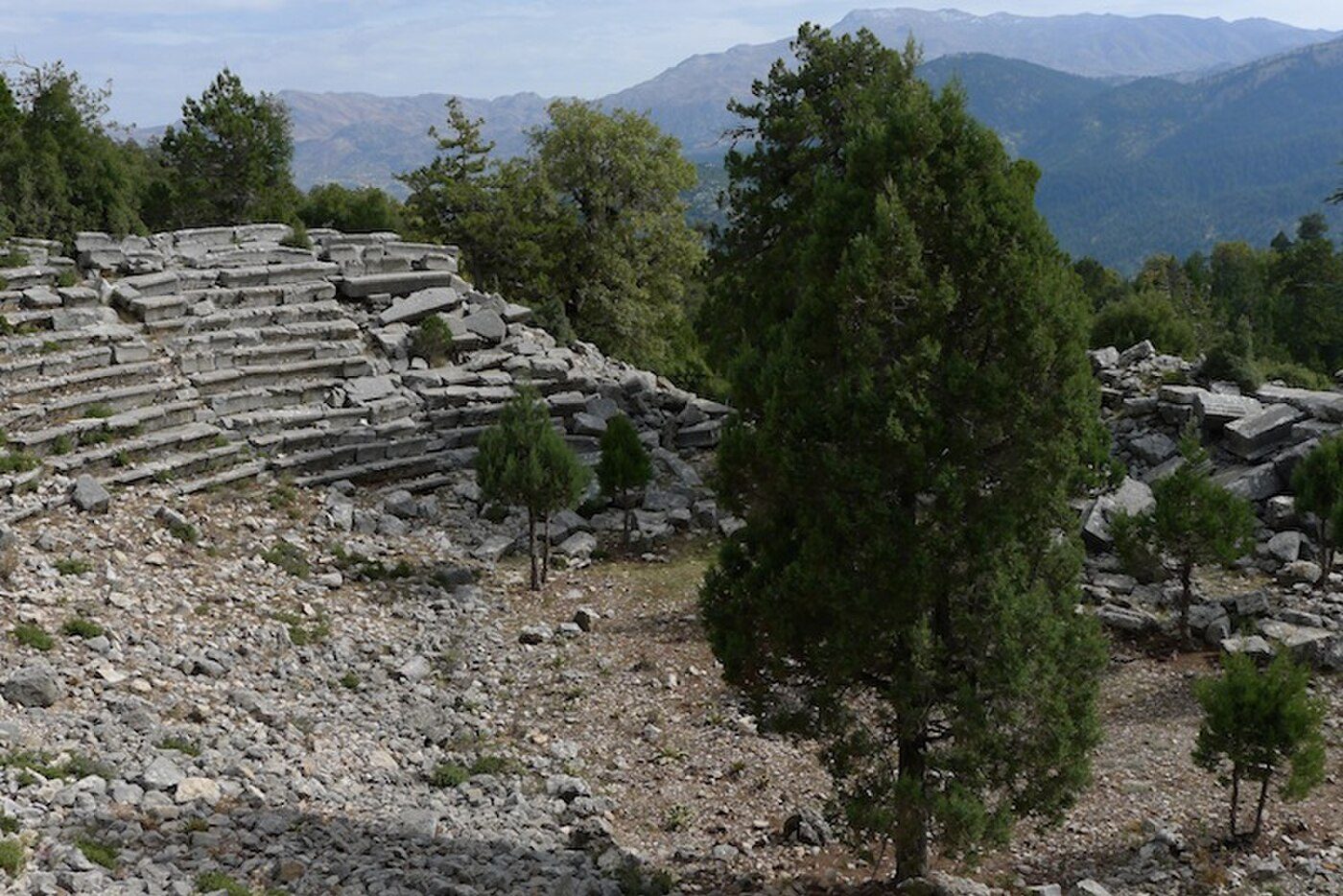
Stone blocks bearing the philosophical inscription of Diogenes at the ancient city of Oenoanda

Wikimedia Commons

Cidade

Oenoanda

Seyfi Cem Baskin

Incealiler300 a.C. – 700 d.C.

A remote mountain city in northern Lycia where a 2nd century CE philosopher named Diogenes carved the world's largest known ancient philosophical inscription — an entire Epicurean treatise spanning over 25,000 words across a massive stone wall.

321
Interesse 37

Localização

Mugla · Aegean · Turquia

36.75°N · 29.52°E · Ásia

Inscription

World's largest ancient philosophical inscription (25,000+ surviving words)

Philosopher

Carved by Diogenes of Oenoanda, 2nd century CE Epicurean

Philosophy

Comprehensive Epicurean treatise on physics, ethics, and death

Elevation

Mountain city at approximately 1,450 meters above sea level

Original Length

Estimated 80,000+ words; roughly one-third survives

Province

Mugla, northern Lycia

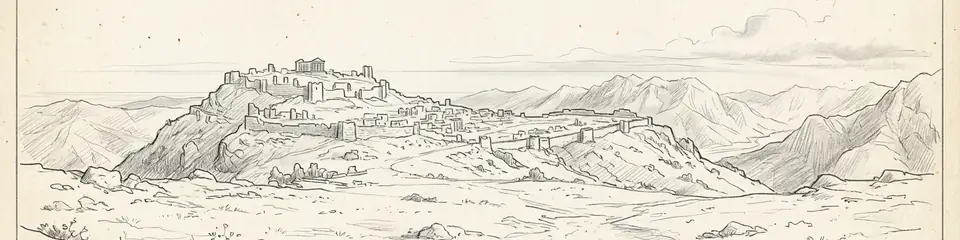
Graphite pencil sketch banner of Oenoanda

“The Diogenes inscription at Oenoanda is one of the most important documents in the history of philosophy.”

Da Wikipédia

Oenoanda is an ancient Lycian-Roman mountain city famous for the world's largest known ancient philosophical inscription, carved by the Epicurean philosopher Diogenes in the 2nd century CE.

Ler o artigo completo na Wikipédia →

Localização

Visão geral

Oenoanda is an ancient city located on a dramatic mountain plateau near the village of Incealiler in Mugla province, on the northern frontier of ancient Lycia. While the site preserves conventional Greco-Roman urban remains including an aqueduct, theater, agora, and city walls, its global fame rests on a single extraordinary monument: the inscription of Diogenes of Oenoanda, the largest known philosophical inscription from the ancient world.

In the 2nd century CE, a wealthy citizen named Diogenes commissioned the carving of his philosophical teachings across a massive stone wall in the city's public area. The inscription, written in Greek, presented a comprehensive summary of Epicurean philosophy — covering physics, ethics, the nature of the gods, the fear of death, and the pursuit of pleasure as the highest good. The surviving fragments, totaling over 25,000 words across hundreds of inscribed blocks, represent roughly one-third of the original text, which may have extended to 80,000 words or more.

"Diogenes, in his old age, wished to help those who came after, and set up this inscription in the stoa."
— Diogenes of Oenoanda (from the inscription itself)

Diogenes explained his motivation in the inscription itself: having reached old age and nearing death, he wished to share the gift of Epicurean wisdom with his fellow citizens and with foreigners passing through. He explicitly stated that he was carving the wall because he could not travel to spread the philosophy in person, making this perhaps the ancient world's most ambitious public education project — a philosopher's last testament written in stone for eternity.

The city itself occupies a strategic but remote position at approximately 1,450 meters elevation, overlooking the upper Xanthus valley. Its urban plan follows the typical pattern of a prosperous Lycian-Roman city, with the aqueduct that supplied the settlement still traceable across the surrounding landscape. The theater, partially carved from the living rock, provided seating for perhaps 5,000 spectators. The city walls show multiple phases of construction from the Hellenistic through Byzantine periods.

Por que isso importa

The Diogenes inscription at Oenoanda is one of the most important documents in the history of philosophy. As the largest ancient philosophical text preserved in its original monumental form, it provides our most extensive direct source for popular Epicurean thought outside the writings of Epicurus himself and Lucretius. Diogenes's remarkable decision to carve an entire philosophical system into a public wall reveals a deeply democratic impulse — the belief that philosophy should be freely available to all, not confined to elite schools. The inscription represents an ancient experiment in public education and intellectual accessibility that resonates powerfully with modern ideals of open knowledge and democratic learning.

Evidências e interpretação

Distinguir o que está bem estabelecido do que permanece em debate.

Fatos bem estabelecidos

3
  • Over 300 inscribed stone blocks bearing the Diogenes inscription have been documented, totaling more than 25,000 words of Epicurean philosophical text in Greek.
  • Diogenes states his purpose explicitly in the text: to share Epicurean wisdom with fellow citizens and visitors because old age prevents him from traveling to spread the philosophy in person.
  • The inscription covers major Epicurean topics including atomic physics, the mortality of the soul, the nature of pleasure, and the non-intervention of the gods in human affairs.

Inferências acadêmicas

2
  • The estimated original length of 80,000+ words suggests the inscription wall extended over 80 meters, making it one of the largest monumental inscriptions ever erected in the ancient world.
  • Diogenes's wealth, evident from the massive cost of the inscription, combined with his democratic motivation suggests a distinctive social class of philosophically inclined provincial elites in Roman Asia Minor.

Interpretações debatidas

1
  • Whether Diogenes was presenting original philosophical arguments or primarily summarizing existing Epicurean texts (some now lost) remains debated among historians of philosophy.

Descoberta e escavação

1884

Discovery of the inscription

French epigraphers first documented fragments of Diogenes's philosophical inscription among the ruins, recognizing its exceptional importance for the history of Epicurean philosophy.

1968–1983

Martin Ferguson Smith's epigraphic work

Dirigido por Martin Ferguson Smith

Martin Ferguson Smith began systematic documentation of the Diogenes inscription, locating, recording, and translating hundreds of inscribed blocks scattered across the site.

1997–2010

British-Turkish excavation project

Joint excavation investigated the city's urban plan, documenting the theater, agora, aqueduct, and the original location of the inscription wall, while recovering additional inscribed fragments.

2007

New inscription fragments

Discovery of significant new fragments of the Diogenes inscription including sections on the nature of the gods and the physics of the cosmos previously unknown.

2012–2020

Continuing epigraphic survey

Ongoing epigraphic documentation continued to identify new fragments among the tumbled stonework, gradually expanding the known text of the world's largest philosophical inscription.

Fotos da comunidade

Compartilhe sua experiência

Você visitou este sítio? Envie suas fotos para ajudar outros a descobri-lo.

Como citar esta página

Atlas Anatolia. (300). Oenoanda. Atlas Anatolia. https://atlasanatolia.com/pt/site/oenoanda

Conteúdo licenciado sob CC BY-SA 4.0 — atribuição necessária ao reutilizar.

Fontes

  • The Epicurean Inscription of Diogenes of Oinoanda — Martin Ferguson Smith (1993)
  • Diogenes of Oenoanda: New Fragments and Recent Studies — Martin Ferguson Smith (2003)
  • Wikipedia — OenoandaLink

Perguntas frequentes

Onde fica Oenoanda?

Oenoanda está localizado em Mugla, Aegean, Türkiye.

Qual é a antiguidade de Oenoanda?

Oenoanda data de aproximadamente 300 a.C. – 700 d.C..

Quais civilizações estão associadas a Oenoanda?

Oenoanda está associado à civilização Lycian, Roman.

Por que Oenoanda é importante?

The Diogenes inscription at Oenoanda is one of the most important documents in the history of philosophy.

Oenoanda é um Patrimônio Mundial da UNESCO?

Oenoanda não está atualmente inscrito na Lista do Patrimônio Mundial da UNESCO.