
Pular para o conteúdo
Atlas Anatolia
NotíciasIce Age teeth in Sulawesi push betel-nut use back as far as 25,000 yearsRoman mosaic and Eros head uncovered in the basilica at Pompeiopolis, Kastamonu
Great Zimbabwe — Zimbabwe

Wikimedia Commons (CC BY-SA)

CidadeUNESCODestaque

Great Zimbabwe

Seyfi Cem Baskin

Dzimba dza Mabwe1100 d.C. – 1450 d.C.

The medieval capital of the Kingdom of Zimbabwe, built without mortar between 1100–1450 CE, its massive stone ruins are the largest in sub-Saharan Africa and a testament to a thriving trade empire.

322
Interesse 76

Localização

Masvingo Province · Southern Africa · Zimbabwe

20.27°S · 30.93°E · África

Built

c. 1100–1450 CE

Civilization

Kingdom of Zimbabwe (Shona people)

Discovered

Known locally; documented by Europeans from 1506; first scientific excavations 1905

Status

UNESCO World Heritage Site (since 1986)

Peak Population

~10,000–18,000

Area

~720 hectares

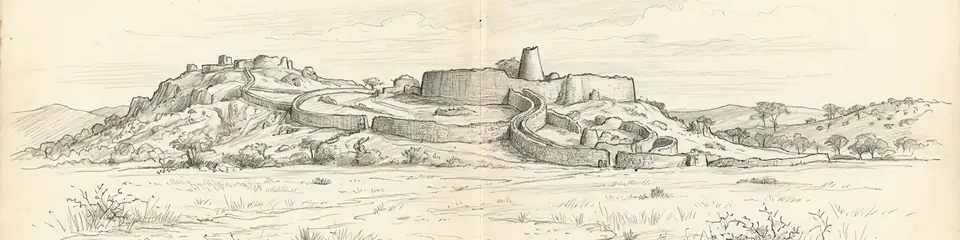
Graphite pencil sketch banner of Great Zimbabwe

“Great Zimbabwe challenges outdated colonial narratives that denied advanced African civilizations.”

Localização

Visão geral

Discovery and Early Misconceptions

European encounters with Great Zimbabwe began in the 16th century, but systematic exploration only started in the late 19th century. In 1871, German explorer Karl Mauch visited the site and, influenced by colonial biases, linked it to the biblical Queen of Sheba or King Solomon’s Mines. These exotic theories persisted until the early 20th century, when archaeological work began to reveal its true origins.

Architectural Marvel

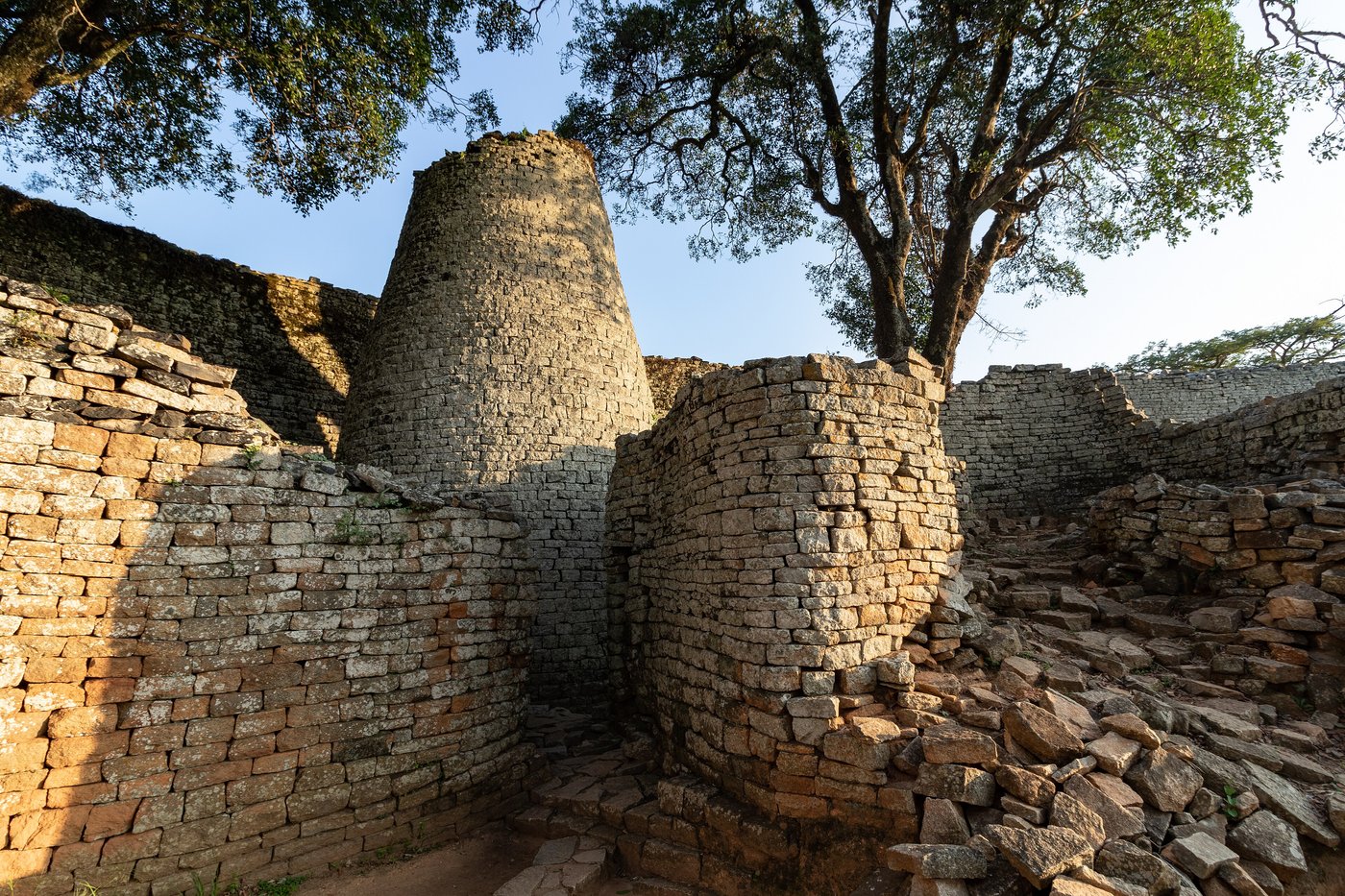
The site is renowned for its monumental dry-stone walls, some reaching over 11 meters high and extending for 250 meters. Constructed without any mortar, the precisely cut granite blocks were fitted together with exceptional skill. The three main architectural zones—the Hill Complex, the Great Enclosure, and the Valley Complex—served distinct functions, likely reflecting a hierarchical society with elite residences and ritual spaces.
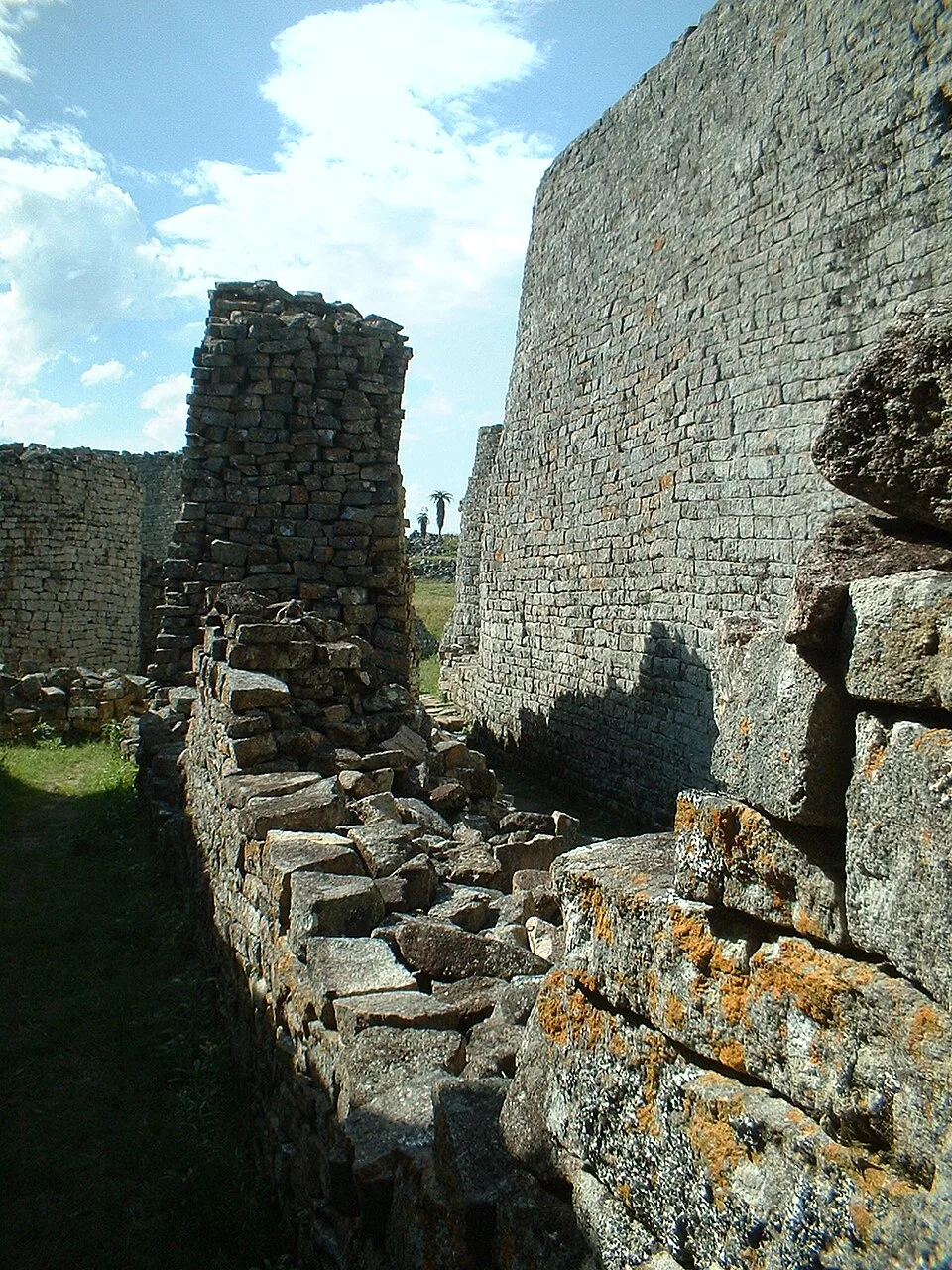
Stone Walls
Stone Walls | andryn2006 (CC BY-SA 2.0)
"These stones are constructed of the same material and the same workmanship as those of the fortress of Sofala. The natives of the country call them Symbaoe, which according to their language means a court."
— João de Barros, Décadas da Ásia, recording the first Portuguese reports of Great Zimbabwe, 1552

Trade and Economy

Excavations unearthed imports such as Chinese celadon pottery, Persian glass, and Arab coins, confirming Great Zimbabwe’s role in the Indian Ocean trade network. The kingdom thrived by controlling the export of gold and ivory from the interior plateau. This wealth enabled the construction of elaborate stone structures and supported a population estimated between 10,000 and 18,000 at its peak.
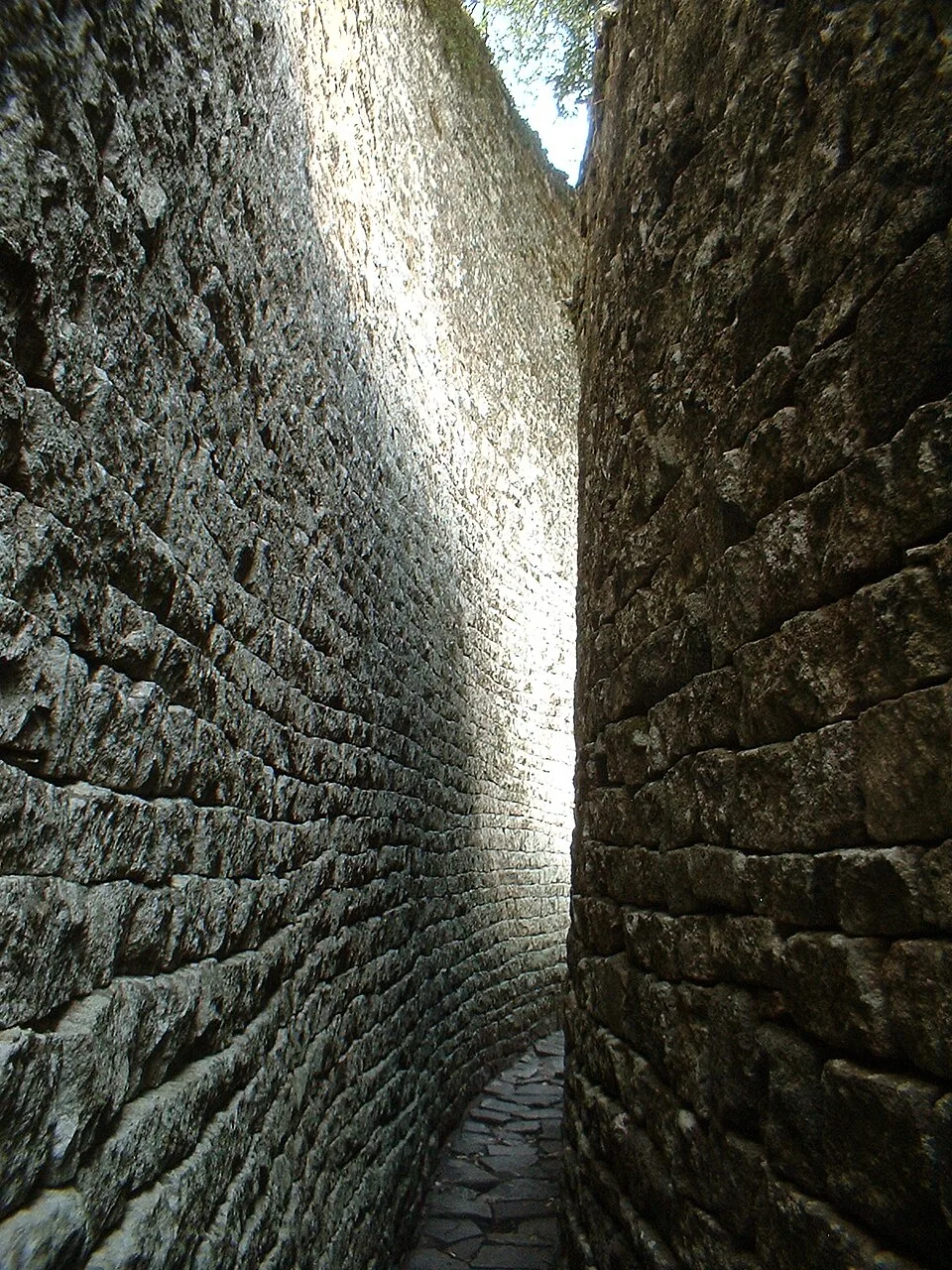
Stone Passage
Stone Passage | andryn2006 (CC BY-SA 2.0)

Society and Decline

The ruling elite likely occupied the Hill Complex, while commoners lived in the surrounding valleys. Artistic and symbolic motifs, including the famous soapstone birds, suggest a sophisticated spiritual and political ideology. The city’s decline around 1450 CE remains debated, with hypotheses ranging from environmental degradation to shifts in trade routes, but no single factor has been definitively proven.

Archaeological Significance and World Heritage

Systematic excavations by David Randall-MacIver (1905) and Gertrude Caton-Thompson (1929) conclusively proved the site’s African origins, predating any external influence. Their work laid the foundation for understanding state formation in southern Africa. Today, Great Zimbabwe is a UNESCO World Heritage Site and a powerful national symbol, preserving the legacy of a complex precolonial civilization.

Por que isso importa

Great Zimbabwe challenges outdated colonial narratives that denied advanced African civilizations. It stands as a monumental achievement of indigenous engineering and an economic powerhouse that integrated southern Africa into global networks centuries before European colonization. Its legacy informs modern debates on heritage, identity, and the capacities of past African societies.

Evidências e interpretação

Distinguir o que está bem estabelecido do que permanece em debate.

Fatos bem estabelecidos

3
  • The stone walls, built without mortar, use precisely cut granite blocks assembled with dry-stone techniques.
  • Imported goods (Chinese celadon, Persian glass, Arab coins) attest to extensive Indian Ocean trade.
  • The site’s cultural sequence clearly places its construction in the 11th to 15th centuries CE by ancestors of the Shona.

Inferências acadêmicas

2
  • The Hill Complex housed the political and religious elite, while the Valley Complex contained commoner residences.
  • Soapstone bird sculptures functioned as symbols of royal authority, possibly linked to chieftainship.

Interpretações debatidas

2
  • The cause of the site’s abandonment around 1450 CE is unclear: proposals include overgrazing, political fragmentation, or trade shifts.
  • The exact meaning and purpose of the Great Enclosure’s conical tower—granary, ritual, or gender symbol—remain unsettled.

Descoberta e escavação

Modern conservation and research

Dirigido por National Museums and Monuments of Zimbabwe

Ongoing work by the National Museums and Monuments of Zimbabwe, including non-invasive surveys, artifact conservation, and community outreach.

1880–1900

Early treasure hunting

Dirigido por Various unrecorded

Amateur digs by European prospectors and antiquarians, causing significant disturbance and removal of artifacts, including gold objects.

1905

First scientific excavation

Dirigido por David Randall-MacIver

David Randall-MacIver conducted stratigraphic test pits, conclusively dating the site and proving its African origin, challenging exotic theories.

1929

Confirming African origin

Dirigido por Gertrude Caton-Thompson

Gertrude Caton-Thompson’s meticulous excavation and pottery analysis confirmed Randall-MacIver’s findings and established the Shona cultural sequence.

1958–1962

Wide-scale mapping and conservation

Dirigido por Roger Summers

Roger Summers and the National Museums of Rhodesia undertook extensive excavation and restoration, producing detailed plans of the main enclosures.

Fotos da comunidade

Compartilhe sua experiência

Você visitou este sítio? Envie suas fotos para ajudar outros a descobri-lo.

Como citar esta página

Atlas Anatolia. (1100). Great Zimbabwe. Atlas Anatolia. https://atlasanatolia.com/pt/site/great-zimbabwe

Conteúdo licenciado sob CC BY-SA 4.0 — atribuição necessária ao reutilizar.

Fontes

  • Garlake, P. S. (1973), Great Zimbabwe — Peter S. Garlake (1973)
  • Huffman, T. N. (1996), Snakes and Crocodiles: Power and Symbolism in Ancient Zimbabwe — Thomas N. Huffman (1996)
  • Pikirayi, I. (2001), The Zimbabwe Culture: Origins and Decline of Southern Zambezian States — Innocent Pikirayi (2001)
  • New Perspectives on the Political Economy of Great Zimbabwe — Shadreck Chirikure et al. (2017)
  • The archaeology of Great Zimbabwe: 1100–1450 AD — Michelle M. Cameron (2008)
  • UNESCO World Heritage entry: Great Zimbabwe National MonumentLink

Perguntas frequentes

Onde fica Great Zimbabwe?

Great Zimbabwe está localizado em Masvingo Province, Southern Africa, Zimbabwe.

Qual é a antiguidade de Great Zimbabwe?

Great Zimbabwe data de aproximadamente 1100 d.C. – 1450 d.C..

Quais civilizações estão associadas a Great Zimbabwe?

Great Zimbabwe está associado à civilização Great Zimbabwe.

Por que Great Zimbabwe é importante?

Great Zimbabwe challenges outdated colonial narratives that denied advanced African civilizations.

Great Zimbabwe é um Patrimônio Mundial da UNESCO?

Sim — Great Zimbabwe está inscrito na Lista do Patrimônio Mundial da UNESCO.