
Pular para o conteúdo
Atlas Anatolia
NotíciasIce Age teeth in Sulawesi push betel-nut use back as far as 25,000 yearsRoman mosaic and Eros head uncovered in the basilica at Pompeiopolis, Kastamonu
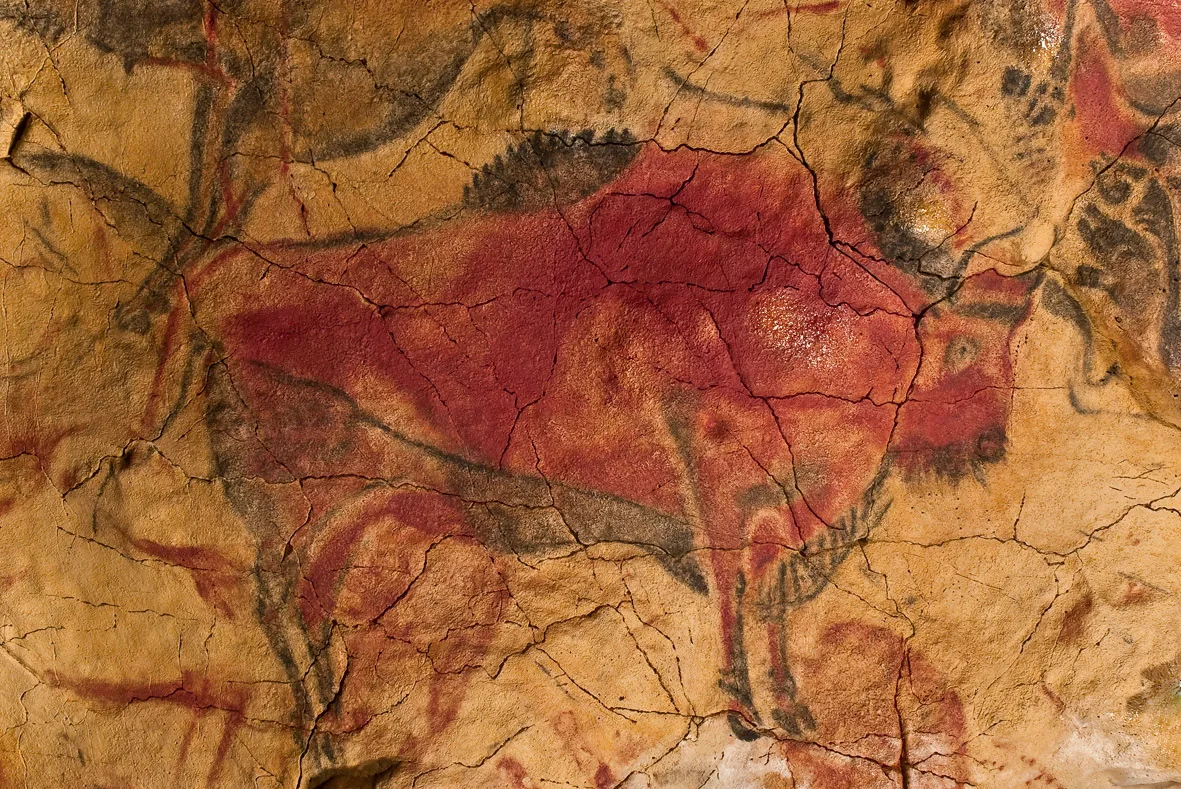
Polychrome Magdalenian bison painted on the ceiling of Altamira Cave, Cantabria, Spain

Wikimedia Commons

Continent Record

Earliest Known Site in Europe

SantuárioUNESCODestaque

Cave of Altamira

Seyfi Cem Baskin

Cueva de Altamira18500 a.C. – 13000 a.C.

The "Sistine Chapel of the Palaeolithic" — a limestone cave in northern Spain whose ceiling is painted with a panorama of Ice Age bison, horses, and deer dating to 18,500 years ago, the first prehistoric cave art ever recognised and among the greatest artistic achievements in human history.

31
Interesse 70

Localização

Espanha

43.38°N · 4.08°W · Europa

Main paintings

c. 18,500-14,000 BP (Magdalenian period)

Subjects

Bison (dominant), horses, deer, boar, wolf

Technique

Polychrome pigments (red, black, ochre) using rock relief for 3D effect

Discovery

1879 by Marcelino Sanz de Sautuola; rejected by science until 1902

Access

Closed in 2002; replica "Neocave" open to visitors

UNESCO

World Heritage Site 1985 (extended 2008 to include 17 Spanish caves)

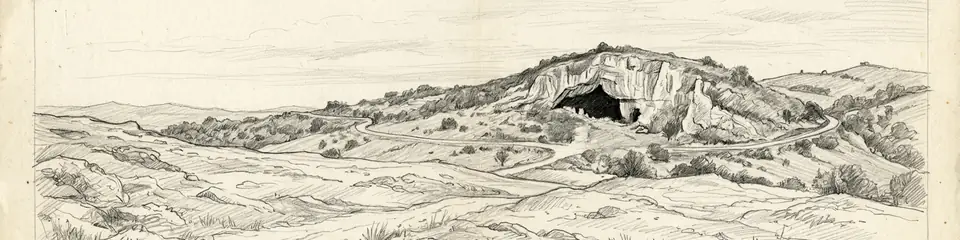
Graphite pencil sketch banner of Cave of Altamira

“Altamira forced a fundamental revision of what it means to be human.”

Localização

Visão geral

Altamira lies near the town of Santillana del Mar in Cantabria, northern Spain. The cave was used by Palaeolithic humans from roughly 35,000 BCE onward, but its greatest art was created during the Magdalenian period, approximately 18,500 to 14,000 years ago, when a ceiling chamber was painted with an extraordinary panorama of Ice Age animals.

The polychrome paintings on the ceiling of the Great Hall cover an area of about 270 square metres. They depict bison (the dominant subject), horses, deer, a boar, and a wolf — painted in red, black, and ochre pigments applied directly to natural undulations in the rock to create a three-dimensional sculptural effect. The largest bison, at about 2 metres long, are executed with a fluency and naturalism that stunned the modern world when they were first published.

The cave was discovered in 1868 by a local hunter, and the paintings were identified in 1879 by the landowner Marcelino Sanz de Sautuola with the help of his young daughter Maria, who was the first to look up and notice the figures on the ceiling. When Sautuola published his discovery, the scientific establishment refused to believe that prehistoric humans were capable of such art and accused him of fraud. His vindication came only in 1902, when similar paintings were accepted at La Mouthe and Font-de-Gaume in France. By then Sautuola had died, unjustly disgraced. The cave was closed to the public in 2002 to prevent further deterioration and can now only be visited via a full-scale replica. UNESCO inscribed it in 1985 alongside the caves of northern Spain.

Por que isso importa

Altamira forced a fundamental revision of what it means to be human. Its discovery proved that people living 18,000 years ago in the middle of the last Ice Age — before farming, writing, or permanent settlement — were capable of art of the highest aesthetic quality. The paintings are not primitive: they are accomplished, sophisticated, and deeply expressive works that rival any art produced in human history. The story of Altamira's discovery and initial rejection is also one of the most instructive episodes in the history of science: a layman's correct identification of the paintings was dismissed by experts because it contradicted their assumptions about primitive man. The cave reminds us that our understanding of the deep human past remains partial and subject to revision, and that art — in all its complexity — has been part of what it means to be human for as long as there have been humans.

Evidências e interpretação

Distinguir o que está bem estabelecido do que permanece em debate.

Fatos bem estabelecidos

3
  • Radiocarbon and uranium-series dating of calcite crusts overlying the paintings has established that the main polychrome works in the Great Hall date to approximately 18,500-14,000 BP, with some paintings possibly earlier.
  • Pigment analysis has identified charcoal (black), manganese dioxide (black), haematite (red), and ochre (yellow-brown) — materials available in the local Cantabrian environment and consistent with other Magdalenian sites.
  • The deliberate use of natural rock undulations to create three-dimensional illusions of muscle and movement has been confirmed by photogrammetric analysis — demonstrating intentional compositional design rather than random placement.

Inferências acadêmicas

1
  • The purpose of the paintings (ritual, shamanic, hunting magic, or aesthetic) is unknown; the chamber is deep enough that natural light never reaches it, suggesting torchlight was used, but whether the paintings were viewed repeatedly or made in a single event is debated.

Fotos da comunidade

Compartilhe sua experiência

Você visitou este sítio? Envie suas fotos para ajudar outros a descobri-lo.

Como citar esta página

Atlas Anatolia. (18500). Cave of Altamira. Atlas Anatolia. https://atlasanatolia.com/pt/site/altamira

Conteúdo licenciado sob CC BY-SA 4.0 — atribuição necessária ao reutilizar.

Fontes

  • The Cave Beneath the Sea: Palaeolithic Images at Cosquer — Clottes, Jean & Courtin, Jean (1996)
  • The Cave of Altamira — Freeman, Leslie & Echegaray, Joaquin Gonzalez (1998)

Perguntas frequentes

Onde fica Cave of Altamira?

Cave of Altamira está localizado em Spain.

Qual é a antiguidade de Cave of Altamira?

Cave of Altamira data de aproximadamente 18500 a.C. – 13000 a.C..

Por que Cave of Altamira é importante?

Altamira forced a fundamental revision of what it means to be human.

Cave of Altamira é um Patrimônio Mundial da UNESCO?

Sim — Cave of Altamira está inscrito na Lista do Patrimônio Mundial da UNESCO.