
콘텐츠로 건너뛰기
Atlas Anatolia
디그
뉴스술라웨시 빙하기 치아에서 빈랑 사용 25,000년 전까지 소급카스타모누 폼페이오폴리스 바실리카에서 로마 모자이크와 에로스 두상 발견
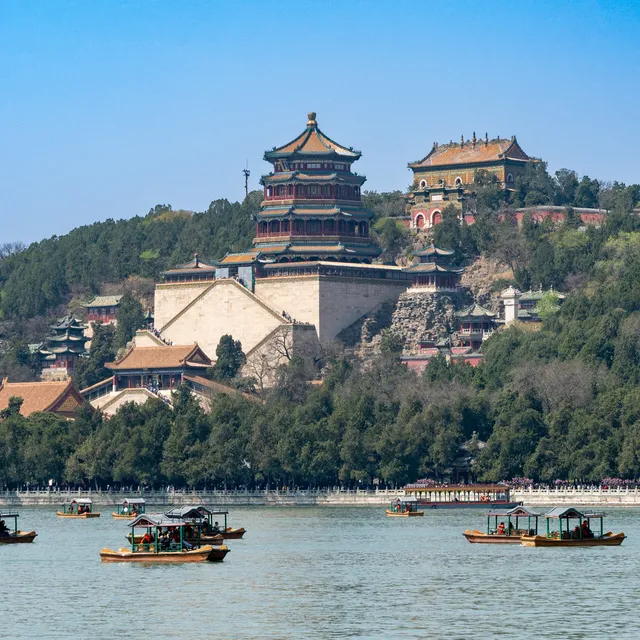
Kunming Lake and Longevity Hill at the Summer Palace, Beijing

Wikimedia Commons

유산복합 단지유네스코

Summer Palace

Seyfi Cem Baskin

颐和园1750 서기 – 1908 서기

The Qing dynasty's lakeside retreat northwest of Beijing — Kunming Lake and Longevity Hill studded with pavilions, corridors, and the Marble Boat — a masterpiece of Chinese landscape garden design and one of the most visited imperial sites in China.

21
관심 75

위치

중국

40.00°N · 116.28°E · 아시아

Area

~293 ha; Kunming Lake ~220 ha

Long Corridor

728 m painted gallery along the lake shore

Rebuild

Major restoration under Empress Dowager Cixi after 1888

UNESCO

World Heritage Site (1998)

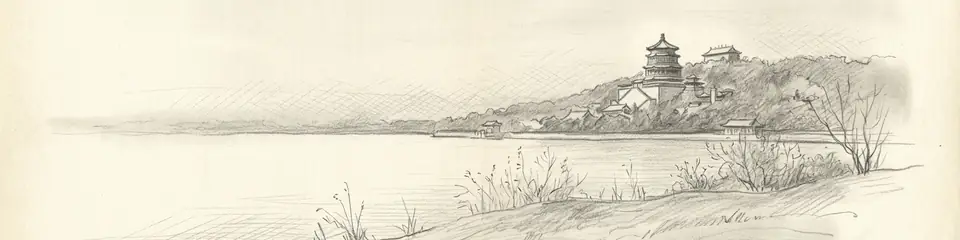
Graphite pencil sketch banner of Summer Palace

“The Summer Palace crystallises Qing imperial garden philosophy — manipulating water, hill, and architecture to embody cosmological order and literary allusion.”

위치

개요

The Summer Palace (Yiheyuan, "Garden of Nurtured Harmony") lies in the Haidian district northwest of central Beijing, China. The site originated as Qingyi Garden, expanded under the Qianlong Emperor in the 18th century; the present name and much of the layout reflect the rebuilding ordered by Empress Dowager Cixi after Anglo-French destruction in 1860 and further work after 1888, reputedly using funds intended for the navy.

Kunming Lake — expanded to resemble West Lake at Hangzhou — covers about three quarters of the 293-hectare park. Longevity Hill rises on the north shore, terraced with temples and halls linked by the Long Corridor (Chang Lang), a 728-metre painted gallery. The Marble Boat (清晏舫) on the lake shore symbolises the durability of the Qing throne. The Seventeen-Arch Bridge, Suzhou Street, and Tower of Buddhist Incense anchor key vistas.

UNESCO listed the Summer Palace in 1998 as an outstanding example of Chinese landscape garden design. It ranks among the top visitor attractions in Beijing alongside the Forbidden City and Temple of Heaven.

중요성

The Summer Palace crystallises Qing imperial garden philosophy — manipulating water, hill, and architecture to embody cosmological order and literary allusion. Its 19th-century rebuilding under Cixi documents the dynasty's final decades of luxury, naval reform debates, and encounter with Western military technology.

증거와 해석

확립된 사실과 논쟁 중인 사항을 구분합니다.

잘 확립된 사실

2
  • Qing imperial archives and stele inscriptions document Qianlong expansion and later Cixi-period rebuilding campaigns.
  • Garden layout follows documented Chinese landscape principles citing Hangzhou West Lake and Buddhist–Daoist iconography on Longevity Hill.

논쟁 중인 해석

1
  • The extent to which naval funds were diverted to the 1888 rebuild is attested in reformist polemic but disputed in detail by Qing fiscal historians.

커뮤니티 사진

당신의 경험을 공유하세요

이 유적지를 방문하셨나요? 다른 탐험가들을 위해 사진을 업로드해 보세요.

이 페이지 인용 방법

Atlas Anatolia. (1750). Summer Palace. Atlas Anatolia. https://atlasanatolia.com/ko/site/summer-palace-beijing

콘텐츠는 CC BY-SA 4.0 라이선스에 따라 제공됩니다 — 재사용 시 출처 표시가 필요합니다.

출처

  • The Forbidden City — Barmé, Geremie R. (2008)
  • UNESCO — Summer Palace링크

자주 묻는 질문

Summer Palace은(는) 어디에 위치해 있나요?

Summer Palace은(는) China에 위치해 있습니다.

Summer Palace의 연대는 언제인가요?

Summer Palace의 연대는 대략 1750 서기 – 1908 서기로 거슬러 올라갑니다.

Summer Palace과(와) 관련된 고대 문명은 무엇인가요?

Summer Palace은(는) Ming, Qing 문명과 관련이 있습니다.

Summer Palace이(가) 중요한 이유는 무엇인가요?

The Summer Palace crystallises Qing imperial garden philosophy — manipulating water, hill, and architecture to embody cosmological order and literary allusion.

Summer Palace은(는) 유네스코 세계유산인가요?

예 — Summer Palace은(는) 유네스코 세계유산으로 등재되어 있습니다.