콘텐츠로 건너뛰기
Atlas Anatolia
디그
뉴스술라웨시 빙하기 치아에서 빈랑 사용 25,000년 전까지 소급카스타모누 폼페이오폴리스 바실리카에서 로마 모자이크와 에로스 두상 발견
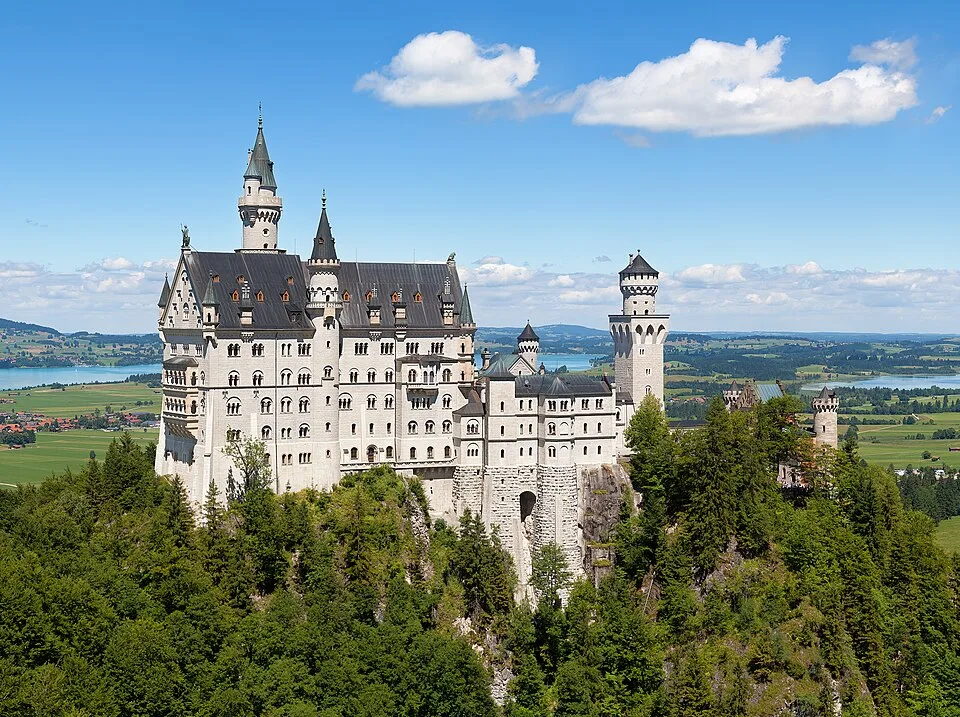
Neuschwanstein Castle on its forested hill, Bavaria, Germany

Wikimedia Commons (CC BY-SA 3.0)

Country Record

Known by the Most Names in Germany

유산요새주요

Neuschwanstein Castle

Seyfi Cem Baskin

Schloss Neuschwanstein1869 서기 – 1886 서기

King Ludwig II of Bavaria's Romantic cliff-top castle above Hohenschwangau — turrets, throne hall, and Wagnerian myth — is among the most searched castles on German Wikipedia and the template for countless fairytale images.

21
관심 87

Built

1869–1886 for Ludwig II of Bavaria

Style

Romanesque Revival historicism; modern structure

Inspiration

Wagner operas and Wartburg romanticism

Visitors

Among Europe's most visited castles

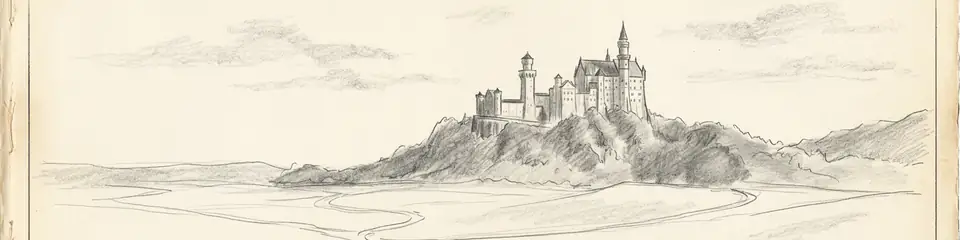
Graphite pencil sketch banner of Neuschwanstein Castle

“Neuschwanstein distils 19th-century Romantic nationalism into stone — Wagner, Bavarian identity, and fairy-tale tourism in one cliff-top package.”

위치

개요

Neuschwanstein Castle crowns a rugged hill above the village of Hohenschwangau in Bavaria, southern Germany, near the Austrian border. Ludwig II of Bavaria commissioned it in 1869 as a private retreat and homage to Richard Wagner's operatic worlds. Architect Eduard Riedel and later Georg von Dollmann designed a medievalising exterior masking modern steel and brick construction with scenic painting and polychrome rooms.

The Throne Hall evokes Byzantine church architecture; the Singers' Hall stages Grail imagery; Ludwig's bedroom features Gothic wood carving. The king lived there only briefly before his death in 1886 under disputed circumstances. Tourism began almost immediately — the castle that was never meant to be public now receives more than a million visitors yearly.

"I want to remain an eternal mystery to myself and others."
— Ludwig II of Bavaria (letter, 1870s), whose fantasy castles include Neuschwanstein
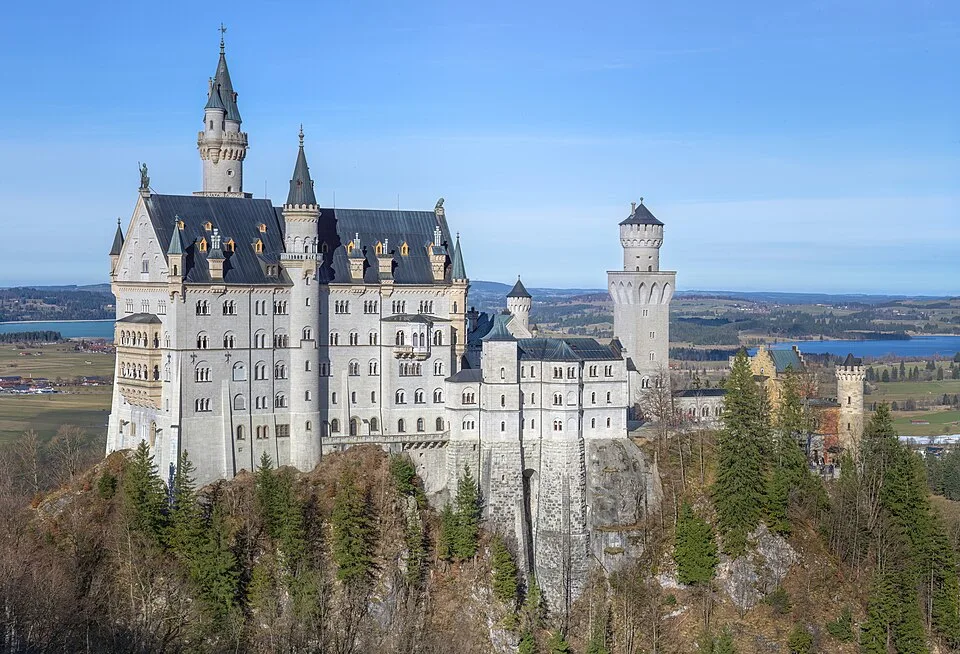
Neuschwanstein Castle 2024-02
Neuschwanstein Castle 2024-02 | Wilfredor (CC0)
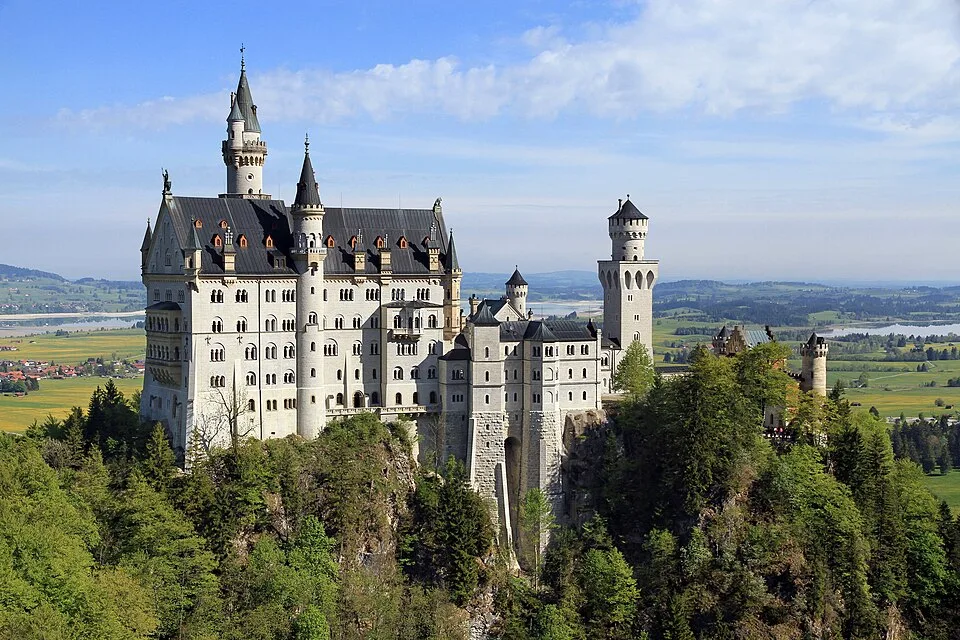
Schloss Neuschwanstein 2013
Schloss Neuschwanstein 2013 | Thomas Wolf, www.foto-tw.de (CC BY-SA 3.0 de)
Neuschwanstein Castle from Marienbrücke, 2011 May
Neuschwanstein Castle from Marienbrücke, 2011 May | Ximonic, Simo Räsänen post-processing & Tauno Räsänen photograph (CC BY-SA 3.0)

Neuschwanstein is not medieval archaeology but 19th-century historicism at full volume. Its global fame (especially in German and Chinese search) makes it an unavoidable gap for a heritage atlas tracking what people actually look up.

중요성

Neuschwanstein distils 19th-century Romantic nationalism into stone — Wagner, Bavarian identity, and fairy-tale tourism in one cliff-top package. Its influence on popular culture (including theme-park castle silhouettes) exceeds any authentic medieval fortress in search volume.

증거와 해석

확립된 사실과 논쟁 중인 사항을 구분합니다.

잘 확립된 사실

2
  • Ludwig's building accounts and correspondence document room programmes and Wagnerian themes.
  • Structural surveys confirm iron and brick core behind medievalising stonework.

논쟁 중인 해석

1
  • Circumstances of Ludwig's 1886 death in Lake Starnberg remain discussed in Bavarian historiography.

커뮤니티 사진

당신의 경험을 공유하세요

이 유적지를 방문하셨나요? 다른 탐험가들을 위해 사진을 업로드해 보세요.

이 페이지 인용 방법

Atlas Anatolia. (1869). Neuschwanstein Castle. Atlas Anatolia. https://atlasanatolia.com/ko/site/neuschwanstein

콘텐츠는 CC BY-SA 4.0 라이선스에 따라 제공됩니다 — 재사용 시 출처 표시가 필요합니다.

출처

  • Schloss Neuschwanstein — Hojer, Gerhard (2011)
  • Bavarian Palace Department — Neuschwanstein링크

자주 묻는 질문

Neuschwanstein Castle은(는) 어디에 위치해 있나요?

Neuschwanstein Castle은(는) Germany에 위치해 있습니다.

Neuschwanstein Castle의 연대는 언제인가요?

Neuschwanstein Castle의 연대는 대략 1869 서기 – 1886 서기로 거슬러 올라갑니다.

Neuschwanstein Castle과(와) 관련된 고대 문명은 무엇인가요?

Neuschwanstein Castle은(는) Bavarian 문명과 관련이 있습니다.

Neuschwanstein Castle이(가) 중요한 이유는 무엇인가요?

Neuschwanstein distils 19th-century Romantic nationalism into stone — Wagner, Bavarian identity, and fairy-tale tourism in one cliff-top package.

Neuschwanstein Castle은(는) 유네스코 세계유산인가요?

Neuschwanstein Castle은(는) 현재 유네스코 세계유산 목록에 등재되어 있지 않습니다.