
콘텐츠로 건너뛰기
Atlas Anatolia
디그
뉴스술라웨시 빙하기 치아에서 빈랑 사용 25,000년 전까지 소급카스타모누 폼페이오폴리스 바실리카에서 로마 모자이크와 에로스 두상 발견
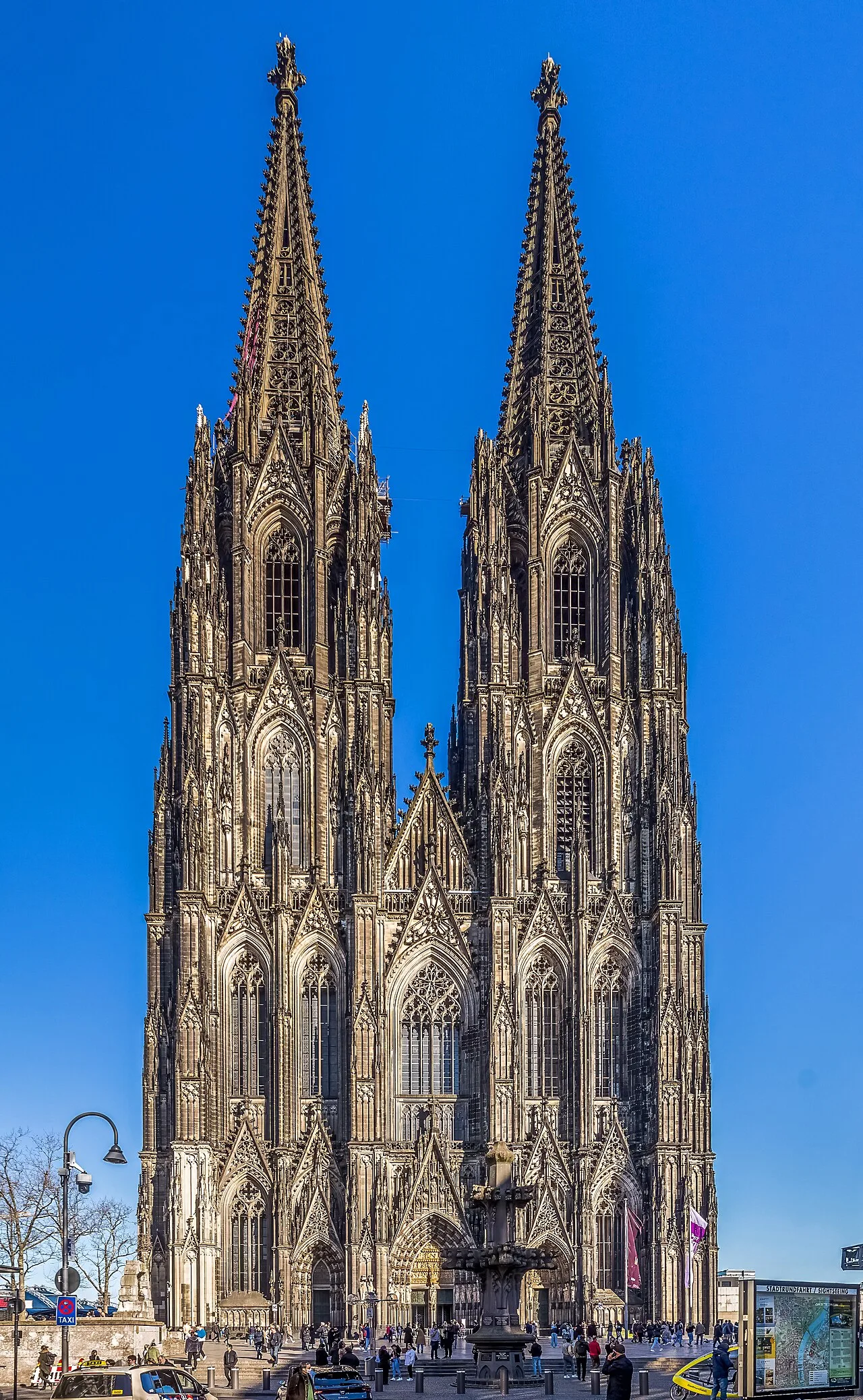
The twin Gothic spires and west façade of Cologne Cathedral, Germany

Wikimedia Commons

Country Record

Earliest Known Site in Germany

유산기념물유네스코주요

Cologne Cathedral

Seyfi Cem Baskin

Kölner Dom1248 서기 – 1880 서기

The masterpiece of German Gothic architecture and the most-visited landmark in Germany — a twin-spired cathedral begun in 1248 to enshrine the relics of the Three Kings. Left unfinished for centuries, it was completed in 1880 to its original medieval plans, and for four years stood as the tallest building in the world.

41
관심 87

Begun

1248 CE, under Archbishop Konrad von Hochstaden

Completed

1880, to the rediscovered medieval plans (halted 1473–1842)

Houses

The Shrine of the Three Kings (relics of the Magi)

Height

157 m — tallest building in the world, 1880–1884

Wartime

Survived ~14 bomb hits in WWII while the city was flattened

UNESCO

World Heritage Site (1996); briefly "in danger" 2004–2006

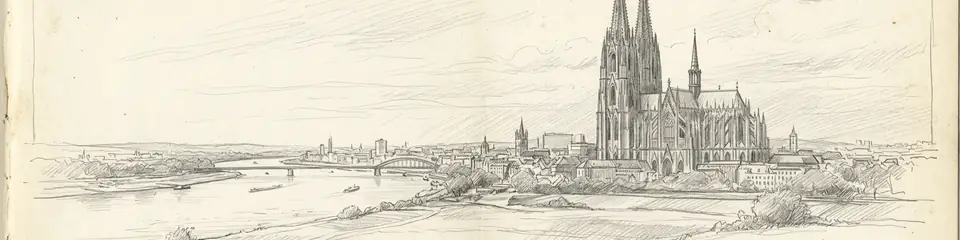
Graphite pencil sketch banner of Cologne Cathedral

“Cologne Cathedral is one of the greatest achievements of Gothic architecture and the most visited monument in Germany, drawing millions of pilgrims and tourists each year.”

위치

개요

Cologne Cathedral rises beside the Rhine in the centre of Cologne, its two openwork spires dominating the city skyline. It was begun in 1248 under Archbishop Konrad von Hochstaden to provide a fittingly monumental home for one of medieval Europe's most prized relics: the bones believed to be those of the Three Kings, or Magi, which had been brought to Cologne from Milan in 1164 by Archbishop Rainald of Dassel. The relics, housed in the great gilded Shrine of the Three Kings completed around 1225, made Cologne one of the foremost pilgrimage destinations of the medieval West.

The cathedral was conceived on an enormous scale in the High Gothic style, inspired by the French cathedrals of Amiens and Beauvais. The choir was consecrated in 1322, but the immense ambition of the design outran the money and patience available, and in 1473 construction was halted with the south tower only partly built. For more than three centuries a medieval crane stood atop the unfinished tower, a famous landmark of an incomplete cathedral.

The building was finally completed in the nineteenth century during a wave of Romantic nationalism and Gothic revival. Crucially, the original medieval plans for the west façade were rediscovered, allowing the cathedral to be finished essentially as its medieval builders had intended. Work resumed in 1842 and the structure was completed in 1880, an event celebrated as a moment of German national unity. On completion its 157-metre towers made it the tallest building in the world, a title it held until 1884.

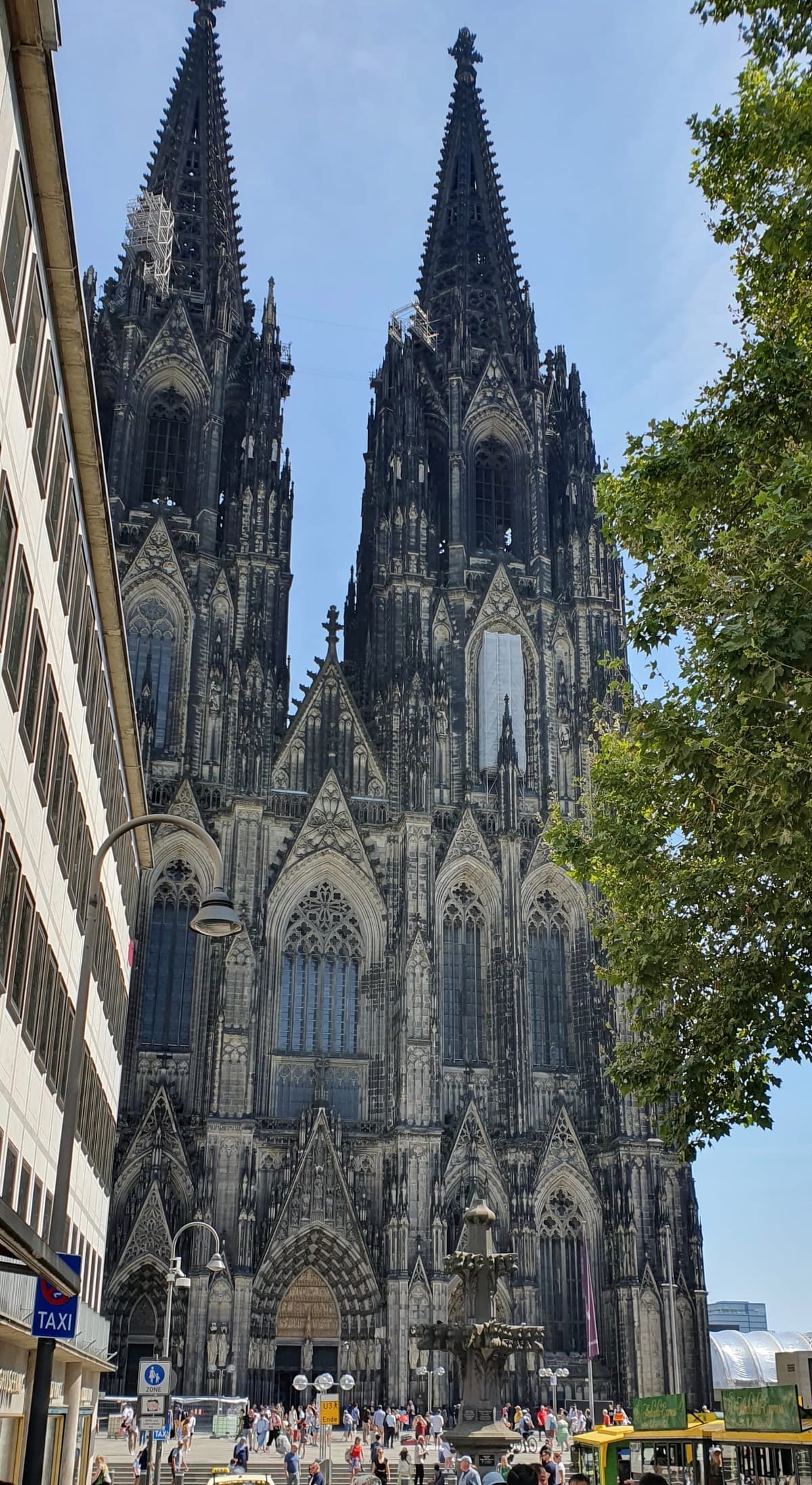
During the Second World War, Allied bombing flattened much of central Cologne, but the cathedral, though hit by some fourteen bombs, remained standing amid the rubble, an image that became a symbol of survival. Restoration of war damage and the constant battle against weathering and pollution mean that the cathedral is, famously, never entirely free of scaffolding. It was inscribed as a UNESCO World Heritage Site in 1996, and was placed briefly on the List of World Heritage in Danger (2004–2006) over plans for nearby high-rise buildings that threatened its setting.
중요성

Cologne Cathedral is one of the greatest achievements of Gothic architecture and the most visited monument in Germany, drawing millions of pilgrims and tourists each year. As the shrine of the Three Kings it was a pillar of medieval Christian pilgrimage, and its scale and verticality represent the High Gothic aspiration to build toward heaven taken to its limit. Its history is also a remarkable story of continuity across six centuries: begun by medieval masons, abandoned, and then completed in the nineteenth century to the very plans those masons had drawn, it links the medieval and modern worlds in a single building. Its survival through the destruction of the Second World War turned it into a symbol of endurance. UNESCO inscribed it as a World Heritage Site in 1996 as a masterpiece of human creative genius and a powerful testimony to the strength and persistence of European Christianity.

증거와 해석

확립된 사실과 논쟁 중인 사항을 구분합니다.

잘 확립된 사실

4
  • Construction began in 1248 and the choir was consecrated in 1322, dated by cathedral records; work halted in 1473 with the south tower unfinished, where a medieval crane remained for over three centuries.
  • The original medieval plan for the west façade survives and was used to complete the cathedral in the 19th century, so the finished building (1880) follows the medieval design — confirmed by comparison of the surviving parchment plans with the executed work.
  • The Shrine of the Three Kings, a large gilded reliquary completed c. 1225, survives behind the high altar and is one of the largest medieval reliquaries in the West; the relics were brought from Milan in 1164.
  • The cathedral was struck by approximately fourteen aerial bombs during the Second World War yet remained standing; photographs of the period document it intact amid the ruins of central Cologne.

논쟁 중인 해석

1
  • Whether the bones in the Shrine of the Three Kings are genuinely ancient is a matter of faith and tradition rather than proof; examinations have reported textiles and remains of considerable age, but the identification with the biblical Magi cannot be verified.

커뮤니티 사진

당신의 경험을 공유하세요

이 유적지를 방문하셨나요? 다른 탐험가들을 위해 사진을 업로드해 보세요.

관련 이야기

이 페이지 인용 방법

Atlas Anatolia. (1248). Cologne Cathedral. Atlas Anatolia. https://atlasanatolia.com/ko/site/cologne-cathedral

콘텐츠는 CC BY-SA 4.0 라이선스에 따라 제공됩니다 — 재사용 시 출처 표시가 필요합니다.

그래프

관련 유적지와 스토리로의 연결.

출처

  • Cologne Cathedral and the Gothic of Northern Europe — Clark, William W. (2006)
  • The Cologne Cathedral — Wolff, Arnold (1999)

자주 묻는 질문

Cologne Cathedral은(는) 어디에 위치해 있나요?

Cologne Cathedral은(는) Germany에 위치해 있습니다.

Cologne Cathedral의 연대는 언제인가요?

Cologne Cathedral의 연대는 대략 1248 서기 – 1880 서기로 거슬러 올라갑니다.

Cologne Cathedral과(와) 관련된 고대 문명은 무엇인가요?

Cologne Cathedral은(는) Holy Roman Empire 문명과 관련이 있습니다.

Cologne Cathedral이(가) 중요한 이유는 무엇인가요?

Cologne Cathedral is one of the greatest achievements of Gothic architecture and the most visited monument in Germany, drawing millions of pilgrims and tourists each year.

Cologne Cathedral은(는) 유네스코 세계유산인가요?

예 — Cologne Cathedral은(는) 유네스코 세계유산으로 등재되어 있습니다.