
콘텐츠로 건너뛰기
Atlas Anatolia
디그
뉴스술라웨시 빙하기 치아에서 빈랑 사용 25,000년 전까지 소급카스타모누 폼페이오폴리스 바실리카에서 로마 모자이크와 에로스 두상 발견
Meroë — Sudan

Wikimedia Commons (CC BY-SA)

Country Record

Longest Recorded History in Sudan

네크로폴리스유네스코주요

Meroë

Seyfi Cem Baskin

Medewi800 기원전 – 350 서기

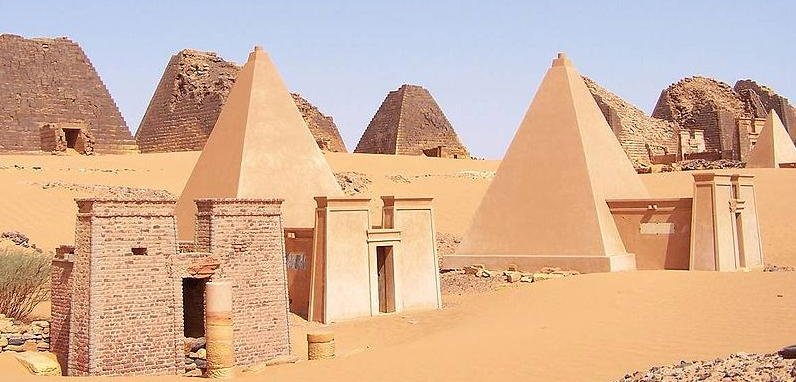
Ancient capital of the Kingdom of Kush, Meroë flourished from 800 BCE to 350 CE, famed for its steep-sided pyramids, advanced iron industry, and role as a trade nexus linking Africa, the Mediterranean, and the Middle East.

322
관심 60

위치

River Nile State · Nubia · 수단

16.94°N · 33.75°E · 아프리카

Built

circa 800 BCE (major expansion after 300 BCE)

Civilization

Kingdom of Kush (Meroitic period)

Discovered

Known since antiquity; first modern archaeological survey by Frédéric Cailliaud in 1821, excavated by Giuseppe Ferlini (1834) and John Garstang (1909–1914)

Status

UNESCO World Heritage Site (2011)

Iron Production

One of the largest iron production centers of the ancient world, with slag heaps exceeding 5,000 tons

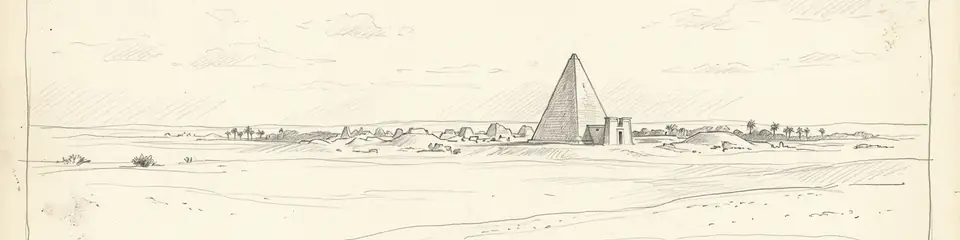
Graphite pencil sketch banner of Meroë

“As the heart of the Kushite kingdom after the decline of Napata, Meroë represents a vital African civilization that rivaled Egypt and Rome.”

위치

개요

Discovery and Early Exploration

Knowledge of Meroë persisted through classical authors such as Herodotus and Strabo, but its location was obscured until the early 19th century. In 1821, the site was identified by the French explorer Frédéric Cailliaud. The first major excavation, however, was the destructive treasure hunt by Giuseppe Ferlini in 1834, who shattered the tops of several pyramids in a quest for gold, discovering the famous cache of jewelry now in Berlin. Systematic archaeological work began in the early 20th century with John Garstang’s extensive excavations (1909–1914), which revealed the royal city, temples, and the so-called ‘Roman bath’. Subsequent campaigns by Peter Shinnie (1965–1975) and later Sudanese and international teams have greatly expanded understanding of this remarkable site.

Historical Context

Meroë emerged as the southern capital of the Kingdom of Kush after the decline of Napata, likely due to environmental shifts and strategic repositioning. From approximately 300 BCE, Meroë became the political, economic, and religious heart of the kingdom. The Meroitic period is distinguished by a break from Egyptian cultural dominance, evidenced by the development of a local script (the oldest written language in sub-Saharan Africa) and unique artistic styles. The kingdom maintained extensive trade networks, exporting gold, ivory, ebony, and slaves, while importing luxury goods from the Mediterranean, Arabia, and India. Meroë’s rulers, including powerful queens known as Candaces, often acted as diplomatic and military players, notably clashing with Roman Egypt in the 1st century BCE.
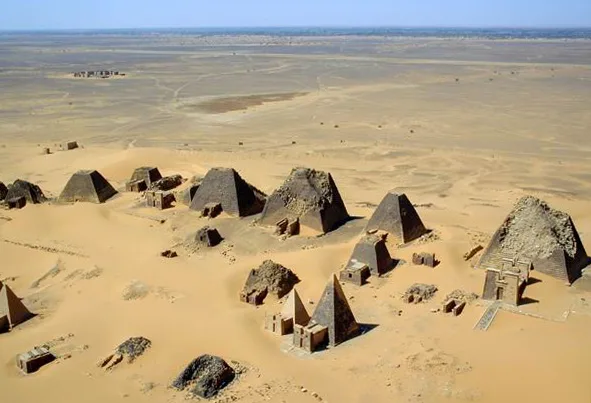
Sudan Meroe Pyramids 2001
Sudan Meroe Pyramids 2001 | Photographer: B N Chagny (CC BY-SA 1.0)
"Beyond Egypt the river divides; it flows on through the country of the Ethiopians and reaches the city of Meroë, said to be the capital of all Ethiopia. Round about it are great pyramids and palaces."
— Strabo, Geography XVII.2.2, on Meroë (c. 7 BCE)

Architectural Marvels

Meroë is best known for its royal necropolis, comprising over 200 pyramids clustered in three groups. Unlike their Egyptian counterparts, Meroitic pyramids are steeper, smaller, and built from local sandstone, with offering chapels on the eastern side. The pyramids housed the remains of kings, queens, and high-ranking elites from the 3rd century BCE onward. Within the royal city, Garstang exposed the remains of palaces, the Amun temple, and a distinctive water complex often called the ‘Roman bath’, which blended Hellenistic and local hydraulic engineering. The city’s layout, encircled by a defensive wall, indicates careful urban planning, with evidence of residential quarters, workshops, and administrative centers.
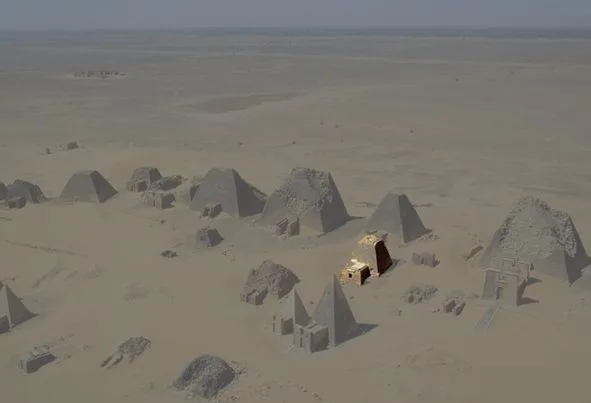
Sudan Meroe Pyramids 2001 N18
Sudan Meroe Pyramids 2001 N18 | Wikimedia Commons (CC BY-SA 1.0)

Economy and Iron Production

One of Meroë’s most significant contributions was its massive iron industry, supported by abundant local timber and iron ore. The city is surrounded by huge slag heaps, estimated at over 5,000 tons, attesting to centuries of smelting. Archaeologists have identified numerous furnaces and workshops, leading to Meroë’s designation as the ‘Birmingham of Africa’. The iron produced was likely traded widely, arming the Kushite military and fueling agricultural expansion. The kingdom’s agrarian base relied on a sophisticated system of irrigation and the saqia waterwheel, introduced around the 3rd century BCE, which enabled cultivation along the Nile and in the fertile Butana region.

Decline and Legacy

The decline of Meroë remains a subject of scholarly debate. By the 4th century CE, the kingdom faced pressures from the rising Axumite empire, which launched an invasion around 350 CE, toppling the capital. Environmental factors, including possible overgrazing and deforestation, may have exacerbated economic decline. The Meroitic script fell out of use, and the region fragmented. Meroë’s legacy, however, endures in the archaeological record and in the cultural practices of modern Sudan. Recognized as a UNESCO World Heritage Site in 2011, Meroë stands as a testament to the ingenuity of an African civilization that rivaled its northern contemporaries.
중요성

As the heart of the Kushite kingdom after the decline of Napata, Meroë represents a vital African civilization that rivaled Egypt and Rome. Its pyramids, iron production, and unique script underscore its innovation, while its absorption of Egyptian, Greek, and indigenous influences highlights the interconnectedness of the ancient world.

증거와 해석

확립된 사실과 논쟁 중인 사항을 구분합니다.

잘 확립된 사실

3
  • Over 200 steep-sided pyramids in three necropolis groups, serving as tombs for royalty and elites from the 3rd century BCE to the 4th century CE.
  • Extensive slag heaps and workshop areas confirm large-scale iron smelting using locally sourced ore and charcoal.
  • The Meroitic script, developed by the 2nd century BCE, is one of the oldest written languages in sub-Saharan Africa, with over 1,000 known texts.

학술적 추론

2
  • Powerful queens (Candaces) likely ruled independently or as co-regents, as depicted in royal iconography and described in classical sources.
  • Agricultural intensification using the saqia waterwheel supported a large population and urban growth in the Butana region.

논쟁 중인 해석

2
  • The primary cause of Meroë’s decline: whether due to an Axumite invasion around 350 CE, environmental degradation from overgrazing and deforestation, or a combination of factors.
  • The extent to which Meroitic culture was an independent development versus a continuation of Napatan traditions with Egyptian influences.

발견과 발굴

Modern Conservation and Research

지휘 Sudanese NCAM and international teams

Ongoing projects by the Sudanese National Corporation for Antiquities and Museums (NCAM) and international partners, including UNESCO, focus on pyramid stabilization, site management, and excavation of previously unstudied areas.

1834–1834

Ferlini’s Treasure Hunt

지휘 Giuseppe Ferlini

Italian adventurer Giuseppe Ferlini demolished pyramid tops in search of gold, recovering a remarkable hoard of jewelry that first brought Meroë to European attention, though causing significant damage.

1909–1914

Garstang’s Scientific Excavations

지휘 John Garstang

John Garstang undertook the first systematic large-scale excavations of the royal city, exposing palaces, the Amun temple, the ‘Roman bath’, and the city walls, establishing a framework for subsequent research.

1965–1975

Shinnie’s Multidisciplinary Missions

지휘 Peter L. Shinnie

Peter Shinnie led a University of Calgary team focusing on urban layout, domestic architecture, and the iron-working industry, applying modern archaeological methods.

커뮤니티 사진

당신의 경험을 공유하세요

이 유적지를 방문하셨나요? 다른 탐험가들을 위해 사진을 업로드해 보세요.

관련 이야기

이 페이지 인용 방법

Atlas Anatolia. (800). Meroë. Atlas Anatolia. https://atlasanatolia.com/ko/site/meroe

콘텐츠는 CC BY-SA 4.0 라이선스에 따라 제공됩니다 — 재사용 시 출처 표시가 필요합니다.

그래프

관련 유적지와 스토리로의 연결.

출처

  • Welsby, D. A. (1996), The Kingdom of Kush: The Napatan and Meroitic Empires — Derek A. Welsby (1996)
  • Shinnie, P. L. (1967), Meroe: A Civilization of the Sudan — Peter L. Shinnie (1967)
  • Edwards, D. N. (2004), The Nubian Past: An Archaeology of the Sudan — David N. Edwards (2004)
  • Török, L. (1997), The Kingdom of Kush: Handbook of the Napatan-Meroitic Civilization — László Török (1997)
  • Rehren, T. (2001), 'Iron and carbon: preliminary work on the iron smelting at Meroe', Sudan & Nubia, 5, pp. 56–59. — Thilo Rehren (2001)
  • UNESCO World Heritage List: Archaeological Sites of the Island of Meroe링크

자주 묻는 질문

Meroë은(는) 어디에 위치해 있나요?

Meroë은(는) River Nile State, Nubia, Sudan에 위치해 있습니다.

Meroë의 연대는 언제인가요?

Meroë의 연대는 대략 800 기원전 – 350 서기로 거슬러 올라갑니다.

Meroë과(와) 관련된 고대 문명은 무엇인가요?

Meroë은(는) Nubian / Kushite 문명과 관련이 있습니다.

Meroë이(가) 중요한 이유는 무엇인가요?

As the heart of the Kushite kingdom after the decline of Napata, Meroë represents a vital African civilization that rivaled Egypt and Rome.

Meroë은(는) 유네스코 세계유산인가요?

예 — Meroë은(는) 유네스코 세계유산으로 등재되어 있습니다.