
콘텐츠로 건너뛰기
Atlas Anatolia
디그
뉴스술라웨시 빙하기 치아에서 빈랑 사용 25,000년 전까지 소급카스타모누 폼페이오폴리스 바실리카에서 로마 모자이크와 에로스 두상 발견
Waterfront façade of Dolmabahçe Palace on the Bosphorus, Istanbul

Wikimedia Commons (CC BY-SA 4.0)

Country Record

Longest Recorded History in Turkey

유산복합 단지주요

Dolmabahçe Palace

Seyfi Cem Baskin

Dolmabahçe Sarayı1843 서기 – 1938 서기

The 19th-century Ottoman palace on the Istanbul Bosphorus — 285 rooms, crystal staircase, and the deathbed of Atatürk — draws heavy Turkish Wikipedia traffic and completes the city's Ottoman palace story beside [Topkapı](/site/topkapi-palace).

21
관심 71

위치

튀르키예

41.04°N · 29.00°E · 유럽

Built

1843–1856 under Abdülmecid I

Architects

Garabet and Nigoğayos Balyan (Armenian-Ottoman)

Rooms

285; waterfront length ~600 m

Atatürk

Died here 10 November 1938; room preserved

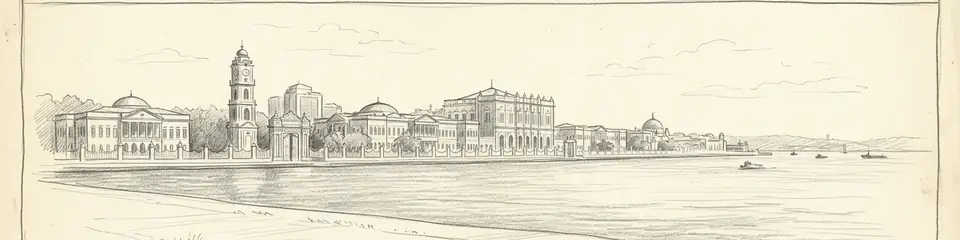
Graphite pencil sketch banner of Dolmabahçe Palace

“Dolmabahçe marks the Ottoman Empire's 19th-century pivot toward European court culture — Bosphorus façade, crystal, and ceremonial scale replacing Topkapı's secluded courtyards.”

위치

개요

Dolmabahçe Palace stands on the European shore of the Bosphorus in Beşiktaş, Istanbul, where the Ottoman sultans moved after centuries at the Topkapı complex. Sultan Abdülmecid I ordered construction in 1843; architects Garabet and Nigoğayos Balyan delivered a hybrid of Ottoman tradition and European Baroque/neoclassical forms along a 600-metre waterfront façade.

The Ceremonial Hall (Muayede Salonu) holds one of the world's largest Bohemian crystal chandeliers — a gift from Queen Victoria. The crystal staircase in the Ambarlı Hall shows Balyan iron-and-glass skill. Abdülhamid II preferred Yıldız Palace, but later sultans returned; Mustafa Kemal Atatürk died here on 10 November 1938 — his room is preserved.

The palace opened as a museum in 1952 while remaining symbolically charged for the Turkish Republic. It is not a UNESCO site but dominates domestic heritage tourism and TR-language search alongside Sultanahmet monuments.

중요성

Dolmabahçe marks the Ottoman Empire's 19th-century pivot toward European court culture — Bosphorus façade, crystal, and ceremonial scale replacing Topkapı's secluded courtyards. Atatürk's death chamber links imperial decay to republican founding in one building, explaining its outsized Turkish search volume.

증거와 해석

확립된 사실과 논쟁 중인 사항을 구분합니다.

잘 확립된 사실

2
  • Imperial decrees and Balyan family archives document construction costs and European material imports.
  • Republican records preserve Atatürk's death in the palace and subsequent museum conversion.

학술적 추론

1
  • Move from Topkapı reflects 19th-century diplomatic need for European-style state rooms — inferred from reform-era policy.

커뮤니티 사진

당신의 경험을 공유하세요

이 유적지를 방문하셨나요? 다른 탐험가들을 위해 사진을 업로드해 보세요.

이 페이지 인용 방법

Atlas Anatolia. (1843). Dolmabahçe Palace. Atlas Anatolia. https://atlasanatolia.com/ko/site/dolmabahce-palace

콘텐츠는 CC BY-SA 4.0 라이선스에 따라 제공됩니다 — 재사용 시 출처 표시가 필요합니다.

출처

  • A History of Ottoman Architecture — Goodwin, Godfrey (1971)
  • Turkish National Palaces — Dolmabahçe링크

자주 묻는 질문

Dolmabahçe Palace은(는) 어디에 위치해 있나요?

Dolmabahçe Palace은(는) Turkey에 위치해 있습니다.

Dolmabahçe Palace의 연대는 언제인가요?

Dolmabahçe Palace의 연대는 대략 1843 서기 – 1938 서기로 거슬러 올라갑니다.

Dolmabahçe Palace과(와) 관련된 고대 문명은 무엇인가요?

Dolmabahçe Palace은(는) Ottoman 문명과 관련이 있습니다.

Dolmabahçe Palace이(가) 중요한 이유는 무엇인가요?

Dolmabahçe marks the Ottoman Empire's 19th-century pivot toward European court culture — Bosphorus façade, crystal, and ceremonial scale replacing Topkapı's secluded courtyards.

Dolmabahçe Palace은(는) 유네스코 세계유산인가요?

Dolmabahçe Palace은(는) 현재 유네스코 세계유산 목록에 등재되어 있지 않습니다.