
콘텐츠로 건너뛰기
Atlas Anatolia
디그
뉴스술라웨시 빙하기 치아에서 빈랑 사용 25,000년 전까지 소급카스타모누 폼페이오폴리스 바실리카에서 로마 모자이크와 에로스 두상 발견
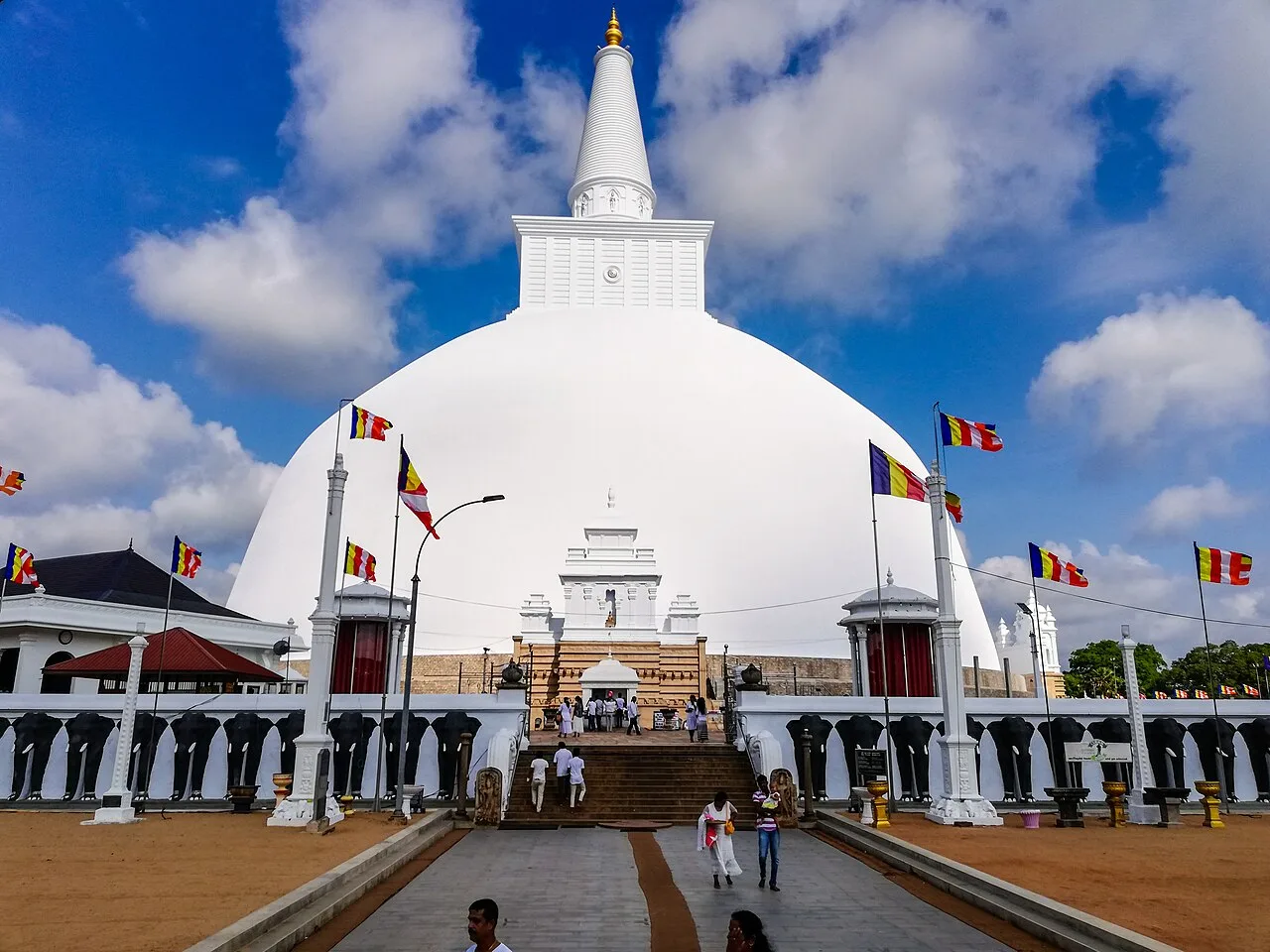
The Ruwanwelisaya stupa at Anuradhapura, Sri Lanka

Wikimedia Commons

Country Record

Oldest City in Sri Lanka

도시유네스코

Anuradhapura

Seyfi Cem Baskin

අනුරාධපුර377 기원전 – 1017 서기

The first great capital of Sri Lanka and one of the oldest continuously inhabited cities of South Asia — for over a thousand years the seat of Sinhalese kings and a centre of Theravada Buddhism, home to colossal brick stupas rivalling the pyramids in scale, vast monasteries, sophisticated irrigation reservoirs, and the sacred Bodhi tree grown from the very tree under which the Buddha attained enlightenment.

311
관심 66

위치

스리랑카

8.34°N · 80.41°E · 아시아

Capital

Founded c. 4th c. BCE; capital of Sri Lanka for ~1,300 years

Sacred Bodhi tree

Jaya Sri Maha Bodhi, planted 3rd c. BCE — oldest dated planted tree on Earth

Jetavanaramaya

Stupa originally ~122 m tall — among the tallest ancient structures

Buddhism introduced

By Mahinda (son of Ashoka) under King Devanampiya Tissa, 3rd c. BCE

Irrigation

Vast reservoirs (tanks) and canals; the biso-kotuwa valve-pit

UNESCO

World Heritage Site 1982

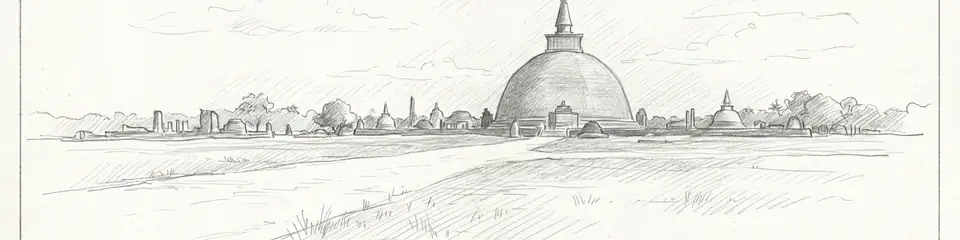
Graphite pencil sketch banner of Anuradhapura

“Anuradhapura is one of the most important ancient cities of South Asia and the cradle of Sinhalese Buddhist civilisation.”

위치

개요

Anuradhapura lies in the dry northern plain of Sri Lanka. According to the island's chronicles, it was established as the royal capital by King Pandukabhaya in the 4th century BCE, and it remained the political and religious heart of the island for some 1,300 years, until the capital was moved to Polonnaruwa in the early 11th century CE after invasions from southern India. At its height it was one of the largest and most sophisticated urban centres in the ancient world, with a population in the tens of thousands sustained by an extraordinary network of reservoirs and canals.

The city's history is inseparable from the arrival of Buddhism in Sri Lanka. In the 3rd century BCE, during the reign of King Devanampiya Tissa, the missionary Mahinda — son of the Indian Mauryan emperor Ashoka — is said to have converted the king and introduced Theravada Buddhism to the island. Shortly afterward, a cutting from the sacred Bodhi tree at Bodh Gaya in India — the tree under which the Buddha attained enlightenment — was brought to Anuradhapura and planted. This tree, the Jaya Sri Maha Bodhi, still grows in the city and is documented as the oldest living human-planted tree in the world with a known planting date, tended continuously for over two thousand years.

Anuradhapura is dominated by its dagobas (stupas), some of the largest brick structures ever built. The Ruwanwelisaya (Ruwanweli Maha Seya), built by King Dutugemunu in the 2nd century BCE, is a vast white hemispherical monument. The Jetavanaramaya, built in the 3rd century CE, originally rose to around 122 metres, making it at the time one of the tallest structures in the world after the great pyramids of Egypt, and the largest stupa anywhere. The Abhayagiri and Jetavana monasteries were major centres of Buddhist learning that drew monks and pilgrims from across Asia; the Chinese pilgrim Faxian stayed at Abhayagiri around 410 CE and described thousands of resident monks.

Underpinning the city was a hydraulic civilisation of remarkable sophistication. Sri Lankan engineers built enormous artificial reservoirs (tanks) such as the Tissa Wewa and Abhaya Wewa, fed by long canals, to store monsoon water and irrigate rice agriculture through the dry season. The precise control of water — including the invention of the biso-kotuwa, a valve-pit mechanism for regulating outflow from deep reservoirs — supported a dense population and is regarded as one of the great achievements of ancient engineering. After Anuradhapura was abandoned as capital, it was largely reclaimed by jungle and rediscovered and cleared by archaeologists in the 19th and 20th centuries.

중요성

Anuradhapura is one of the most important ancient cities of South Asia and the cradle of Sinhalese Buddhist civilisation. As the place where Theravada Buddhism was first established in Sri Lanka — from which it later spread across Southeast Asia — it is among the most sacred sites in the Buddhist world, and the Jaya Sri Maha Bodhi is venerated as a direct living link to the Buddha's enlightenment. Its monuments rank among the greatest engineering achievements of antiquity: the Jetavanaramaya was, when built, among the tallest structures on Earth, and the city's vast reservoir-and-canal irrigation system represents one of the most advanced hydraulic civilisations of the ancient world, sustaining a major population in a seasonally dry climate for over a millennium. The continuity of religious practice and the survival of detailed chronicles (the Mahavamsa and Dipavamsa) make Anuradhapura an exceptional source for the history of both Buddhism and ancient urbanism. It was inscribed as a UNESCO World Heritage Site in 1982.

증거와 해석

확립된 사실과 논쟁 중인 사항을 구분합니다.

잘 확립된 사실

3
  • The colossal brick stupas — the Ruwanwelisaya, Jetavanaramaya, and Abhayagiri — survive and have been surveyed; the Jetavanaramaya is confirmed as one of the largest brick structures of the ancient world, originally rising to roughly 122 metres.
  • The reservoir-and-canal irrigation system, including large tanks such as Tissa Wewa and the sophisticated biso-kotuwa sluice mechanism for regulating water pressure, is documented archaeologically and demonstrates advanced ancient hydraulic engineering.
  • The Chinese Buddhist pilgrim Faxian visited around 410 CE and recorded his stay at the Abhayagiri monastery, describing a thriving community of thousands of monks — an independent external account corroborating the city's role as a major Buddhist centre.

학술적 추론

1
  • A population in the tens of thousands at the city's height is inferred from the scale of the monuments, the extent of the urban area, and the agricultural capacity of the irrigation network, since direct census data do not survive.

논쟁 중인 해석

1
  • The traditional founding dates and early regnal chronology derive largely from the Sinhalese chronicles (the Mahavamsa and Dipavamsa), compiled centuries after the events; while broadly supported by archaeology, the precise dates of the earliest kings and the Bodhi tree planting are debated against the limited independent evidence.

커뮤니티 사진

당신의 경험을 공유하세요

이 유적지를 방문하셨나요? 다른 탐험가들을 위해 사진을 업로드해 보세요.

이 페이지 인용 방법

Atlas Anatolia. (377). Anuradhapura. Atlas Anatolia. https://atlasanatolia.com/ko/site/anuradhapura

콘텐츠는 CC BY-SA 4.0 라이선스에 따라 제공됩니다 — 재사용 시 출처 표시가 필요합니다.

출처

  • Anuradhapura: The British-Sri Lankan Excavations — Coningham, Robin (2006)
  • Sinhalese Monastic Architecture — Bandaranayake, Senake (1974)

자주 묻는 질문

Anuradhapura은(는) 어디에 위치해 있나요?

Anuradhapura은(는) Sri Lanka에 위치해 있습니다.

Anuradhapura의 연대는 언제인가요?

Anuradhapura의 연대는 대략 377 기원전 – 1017 서기로 거슬러 올라갑니다.

Anuradhapura과(와) 관련된 고대 문명은 무엇인가요?

Anuradhapura은(는) Sinhalese 문명과 관련이 있습니다.

Anuradhapura이(가) 중요한 이유는 무엇인가요?

Anuradhapura is one of the most important ancient cities of South Asia and the cradle of Sinhalese Buddhist civilisation.

Anuradhapura은(는) 유네스코 세계유산인가요?

예 — Anuradhapura은(는) 유네스코 세계유산으로 등재되어 있습니다.