
コンテンツへスキップ
Atlas Anatolia
ニュースIce Age teeth in Sulawesi push betel-nut use back as far as 25,000 yearsRoman mosaic and Eros head uncovered in the basilica at Pompeiopolis, Kastamonu
Vermilion torii gate tunnel at Fushimi Inari-taisha, Kyoto

Wikimedia Commons (CC BY-SA 4.0)

遺産聖域注目

Fushimi Inari-taisha

Seyfi Cem Baskin

伏見稲荷大社711 西暦 – 2024 西暦

The head shrine of Inari worship on Mount Inari in Kyoto — famous for thousands of vermilion torii gates lining forest paths — ranks fourth among missing sites in our multilingual pageview audit and is Japan's most photographed Shinto sanctuary.

21
関心 79

所在地

Japan

34.97°N · 135.77°E · アジア

Founded

Tradition dates to 711 CE on Mount Inari

Torii

Thousands of donor gates line mountain paths

Deity

Inari — kami of rice, foxes (kitsune) as messengers

Status

Head shrine (taisha) of Inari worship nationwide

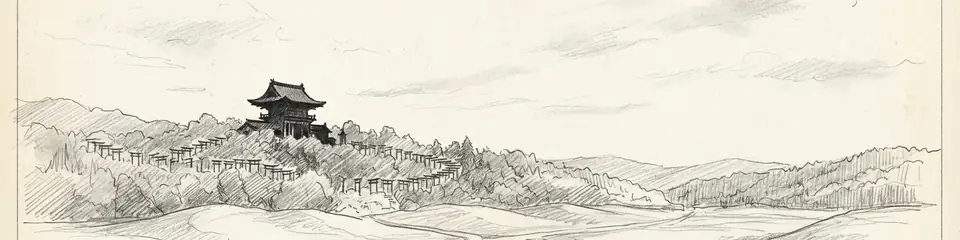
Graphite pencil sketch banner of Fushimi Inari-taisha

“Fushimi Inari documents how Shinto parish networks scaled through merchant patronage — each torii a dated donation record in wood and lacquer.”

所在地

概要

Fushimi Inari-taisha stands at the base of Mount Inari in Fushimi ward, Kyoto, Japan. Tradition credits the Hata clan with founding the shrine in 711 CE on the first day of the horse in the second month — an early date for Inari, kami of rice, sake, and prosperity. The shrine became the principal Inari institution, with tens of thousands of sub-shrines across Japan bearing its name.

Vermilion torii gates donated by merchants and devotees since the Edo period form tunnels along paths ascending the wooded mountain to inner shrines and stone fox (kitsune) statues — Inari's messengers. The main hall (honden) was rebuilt in 1499 and 1589; the Romon gate dates to 1589 patronage. Unlike Buddhist temples on the atlas, Fushimi Inari remains an active Shinto site with daily ritual, New Year pilgrimages, and festival processions.

The shrine is not individually UNESCO-listed but lies within the cultural landscape of Kyoto. Its torii corridors dominate image search and travel media for Japan. Pair with Kiyomizu-dera and Himeji Castle for Kyoto sacred architecture and feudal Japan.

重要性

Fushimi Inari documents how Shinto parish networks scaled through merchant patronage — each torii a dated donation record in wood and lacquer. Its mountain paths fuse landscape pilgrimage with vernacular economics (rice, trade) in ways Buddhist temple complexes parallel but do not duplicate.

証拠と解釈

確立された事実と議論が続く事柄を区別する。

確立された事実

2
  • Medieval and Edo-period donor inscriptions on torii record dates, names, and dedications.
  • Shrine registers and imperial patronage documents name 1499/1589 rebuild phases.

学術的推論

1
  • Merchant donations expanded torii corridors as Inari cult spread with urban commerce.

コミュニティ写真

あなたの体験を共有する

この遺跡を訪れたことがありますか?写真をアップロードして魅力を共有しましょう。

このページの引用方法

Atlas Anatolia. (711). Fushimi Inari-taisha. Atlas Anatolia. https://atlasanatolia.com/ja/site/fushimi-inari

コンテンツはCC BY-SA 4.0ライセンスの下で提供されています — 再利用の際は出典表示が必要です。

出典

  • A New History of Shinto — Breen, John; Teeuwen, Mark (2010)
  • Fushimi Inari Taisha — official siteリンク

よくある質問

Fushimi Inari-taishaはどこにありますか?

Fushimi Inari-taishaはJapanに位置しています。

Fushimi Inari-taishaの年代はいつ頃ですか?

Fushimi Inari-taishaはおよそ711 西暦 – 2024 西暦のものとされています。

Fushimi Inari-taishaはどの文明に関連していますか?

Fushimi Inari-taishaはYamato Japan, Tokugawa文明に関連しています。

Fushimi Inari-taishaが重要な理由は何ですか?

Fushimi Inari documents how Shinto parish networks scaled through merchant patronage — each torii a dated donation record in wood and lacquer.

Fushimi Inari-taishaはユネスコ世界遺産ですか?

Fushimi Inari-taishaは現在ユネスコ世界遺産には登録されていません。