
Vai al contenuto
Atlas Anatolia
NotizieIce Age teeth in Sulawesi push betel-nut use back as far as 25,000 yearsRoman mosaic and Eros head uncovered in the basilica at Pompeiopolis, Kastamonu
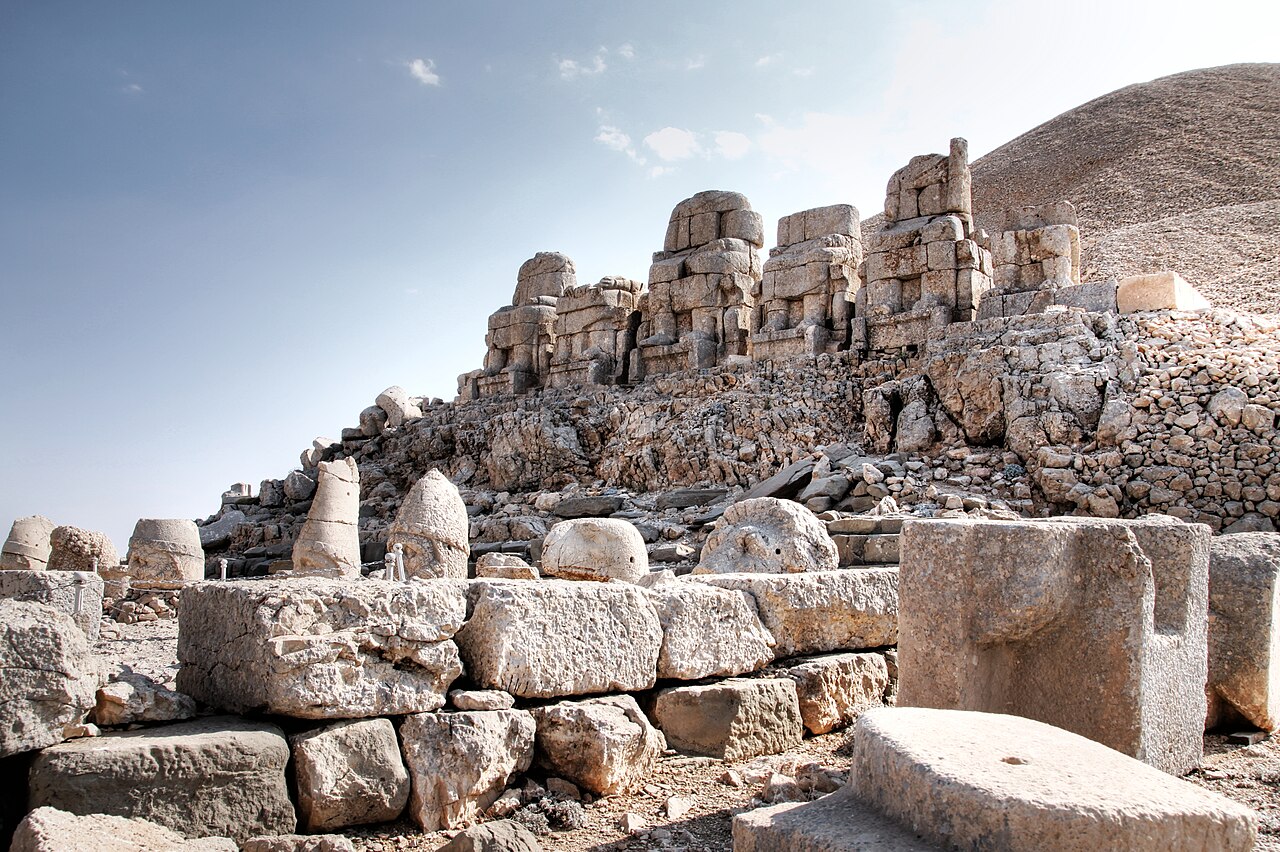
Colossal stone heads at the East Terrace of Mount Nemrut

Wikimedia Commons (CC BY-SA)

MonumentoUNESCOIn evidenza

Nemrut Dağ

Seyfi Cem Baskin

Nemrut Dağı69 a.C. – 34 a.C.

A remote mountaintop sanctuary at 2,134 meters elevation, featuring colossal stone heads of gods and King Antiochus I of Commagene. One of the most dramatic archaeological sites in the world.

411
Interesse 66

Posizione

Adıyaman · Southeastern Anatolia · Turchia

37.98°N · 38.74°E · Asia

Elevation

2,134 m

Statue Height

8–10 m (seated)

UNESCO Status

World Heritage Site (1987)

Builder

Antiochus I of Commagene

Construction Period

c. 62-34 BCE

Number of Colossal Statues

10 (5 on each terrace)

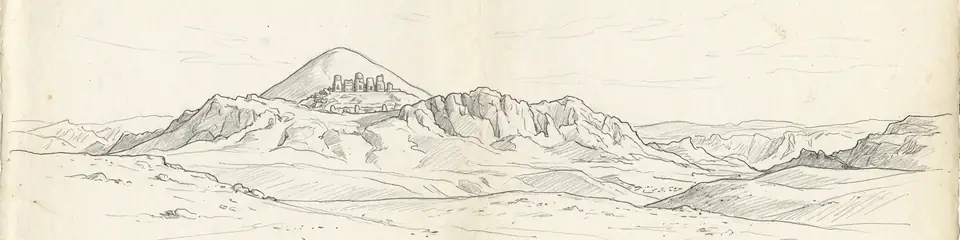
Graphite pencil sketch banner of Nemrut Dağ

Nemrut Dağ is one of the most visually dramatic archaeological sites in the world.”

Da Wikipedia

Mount Nemrut is a 2,134-metre-high mountain in southeastern Turkey, notable for the summit where a number of large statues are erected around what is assumed to be a royal tomb from the 1st century BC. It is one of the highest peaks in the eastern Taurus Mountains.

Leggi l'articolo completo su Wikipedia

Posizione

Panoramica

Nemrut Dağ is located in Adıyaman Province in southeastern Türkiye. At its summit (2,134 meters), King Antiochus I Theos of the Kingdom of Commagene (c. 69–34 BCE) built an elaborate funerary sanctuary combining Persian and Greek religious elements.

The site consists of a tumulus (artificial mound) of crushed rock, approximately 50 meters high and 150 meters in diameter, flanked by terraces on the east and west sides. Each terrace features a row of colossal seated figures, approximately 8–10 meters high, representing Antiochus himself alongside a syncretistic pantheon that includes Zeus-Oromasdes, Apollo-Mithras-Helios-Hermes, Artagnes-Heracles-Ares, and the goddess Commagene.

"I, the great king Antiochus, have had this sanctuary founded as proof of my devotion to the gods and my reverence for their divine power."
— Antiochus I of Commagene, Nomos Inscription, c. 70 BCE

The heads of these statues have toppled from their bodies over centuries due to earthquakes and weathering, creating the iconic scene of massive stone heads resting on the ground, facing the rising or setting sun.

The site is particularly famous for the dramatic effect of sunrise and sunset, when the colossal heads are illuminated against the mountain landscape.
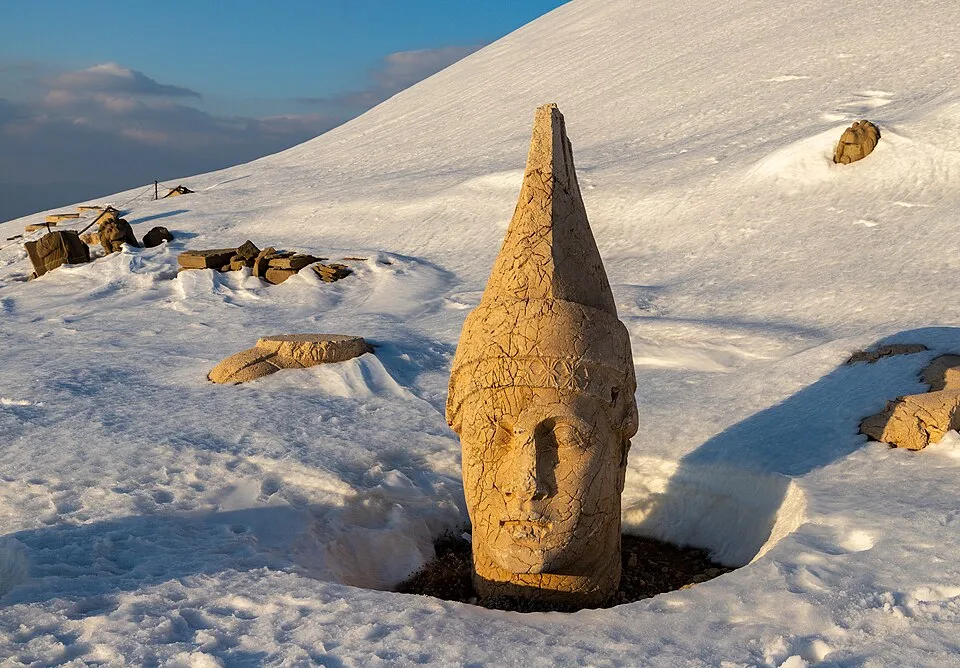
APOLLON NEMRUT MOUNTAIN
APOLLON NEMRUT MOUNTAIN | Mkrc85 (CC BY-SA 4.0)

The architectural program is meticulously ordered. The East and West Terraces each host a row of five colossal seated statues representing syncretic deities: Zeus-Oromasdes, Apollo-Mithras-Helios-Hermes, and Artagnes-Heracles-Ares, flanked by statues of King Antiochus I and a deified eagle and lion. Behind these figures stand rows of finely carved relief stelae (dexiosis scenes) depicting Antiochus shaking hands with various gods, symbolizing his divine affinity. The entire complex was a hierothesion, a sacred burial site for the royal cult, maintained by a priesthood whose living quarters and economic support likely came from the fertile lands in the Kahta valley below.

Despite its grandeur, the sanctuary had a short active life, closely tied to the reign of Antiochus I. Following the kingdom's annexation by Rome in 72 CE, the site was abandoned. The colossal heads were deliberately toppled, likely by iconoclasts in the late Roman or early Christian period, severing the statues from their bodies. Its remote location preserved it from systematic plundering, but also led to its obscurity until its modern rediscovery. The monument stands as a testament to a brief, brilliant moment of cultural synthesis before the political realities of the Roman Empire reshaped the region.
Perché è importante

Nemrut Dağ is one of the most visually dramatic archaeological sites in the world. It represents the unique cultural fusion of the Commagene Kingdom — a small but ambitious state that blended Greek and Persian traditions into a distinctive royal cult. The colossal statuary demonstrates the creative synthesis possible at the crossroads of civilizations. The site was inscribed as a UNESCO World Heritage Site in 1987.

Evidenze e interpretazione

Distinguere ciò che è ben consolidato da ciò che rimane dibattuto.

Fatti ben consolidati

4
  • Inscriptions at the site identify the builder as King Antiochus I of Commagene.
  • The pantheon depicted combines Greek and Persian deities in syncretic pairings.
  • The tumulus is an artificial mound of crushed limestone, approximately 50 m high.
  • The site's extensive cult inscription, the Nomos, is carved on the backs of the colossal statues and on stelae, detailing the religious and legal ordinances of the royal cult.

Deduzioni accademiche

1
  • The tumulus likely contains the burial chamber of Antiochus I, though it has never been found.

Interpretazioni dibattute

1
  • Whether the burial chamber exists within the tumulus or was placed elsewhere remains unresolved.

Scoperta e scavo

1881

Rediscovery

Diretto da Karl Sester

German engineer Karl Sester reported the site to scholars.

1882

First investigation

Diretto da Puchstein & Humann

Otto Puchstein and Karl Humann made the first detailed study and drawings.

1953

American expedition

Diretto da Theresa Goell

Theresa Goell conducted extensive excavations and documentation.

2001

Geophysical Survey of Tumulus

Diretto da German Archaeological Institute (DAI) and University of Karlsruhe

A comprehensive geophysical survey using ground-penetrating radar and seismic methods was conducted to locate the burial chamber without excavation.

Foto della comunità

Condividi la tua esperienza

Hai visitato questo sito? Carica le tue foto per aiutare gli altri a scoprirlo.

Storie correlate

Come citare questa pagina

Atlas Anatolia. (69). Nemrut Dağ. Atlas Anatolia. https://atlasanatolia.com/it/site/nemrut-dag

Contenuto con licenza CC BY-SA 4.0 — è richiesta l'attribuzione in caso di riutilizzo.

Grafico

Collegamenti a siti e storie correlati.

Leggi l'articolo completo su World History Encyclopedia
World History Encyclopedia · CC BY-NC-SA

Fonti

  • Nemrud Dagi: The Hierothesion of Antiochus I of CommageneDonald H. Sanders (1996)
  • UNESCO World Heritage — Nemrut DağCollegamento

Domande frequenti

Dove si trova Nemrut Dağ?

Nemrut Dağ si trova in Adıyaman, Southeastern Anatolia, Türkiye.

A quando risale Nemrut Dağ?

Nemrut Dağ risale all'incirca al 69 a.C. – 34 a.C..

Quali civiltà sono associate a Nemrut Dağ?

Nemrut Dağ è associato alla civiltà Commagene.

Perché Nemrut Dağ è importante?

Nemrut Dağ is one of the most visually dramatic archaeological sites in the world.

Nemrut Dağ è un sito Patrimonio Mondiale dell'UNESCO?

Sì — Nemrut Dağ è iscritto nella lista del Patrimonio Mondiale dell'UNESCO.